What nobody tells you about Jungfraujoch
I’ve now done the trip to Jungfraujoch three times: once in genuine sunshine, once in a whiteout that cost me the better part of CHF 240, and once on a partly-cloudy day that turned out fine by luck rather than judgement. Nobody who sells this excursion tells you it’s a gamble. It is one, and it’s worth saying so plainly before you commit a full day and a serious amount of money to it.
The price is higher than the marketing suggests
The “Top of Europe” branding implies a single ticket. It’s actually a stack of connections — train to Interlaken, train to Lauterbrunnen or Grindelwald, then up through Lauterbrunnen or Grindelwald to Kleine Scheidegg, and only then the final cogwheel climb to 3,454 m. Add it up from Zurich HB and a standard return lands around CHF 220-260 depending on season and discount card.
A Swiss Travel Pass or Half Fare Card takes the edge off but doesn’t cover the whole route — the last Jungfraujoch Railway stretch is only discounted, never included. If you want the arithmetic done properly before you book anything, our full Jungfraujoch guide breaks down every leg and every pass combination.
For that money you get roughly ninety minutes to two hours actually at the summit once you factor in the queue for the Sphinx observatory lift and the walk through the ice palace tunnels. It’s not a scam, but it’s not the “essential Swiss experience for everyone” pitch either. It’s a specific, expensive excursion that rewards a very particular kind of day.
The altitude and the cloud are the real risk, not the crowds
Everyone warns you about crowds. Fewer people warn you that Jungfraujoch sits high enough to generate its own weather, independent of what Zurich or even Interlaken is doing at ground level. I’ve stood at Kleine Scheidegg in full sun and watched the summit disappear into cloud twenty minutes later. There is no refund mechanism for this. You paid for the train, the train ran, and what you see from the platform once you arrive is not anyone’s responsibility but the mountain’s.
The only sensible mitigation is checking the summit webcam the morning you travel and being willing to postpone or swap to something else. If the forecast is marginal, Mount Titlis and Mount Pilatus sit lower, cost less, and clear up faster after a front passes through — I’ve had better luck with both on borderline days. Our comparison of the three is worth reading before you fix on Jungfraujoch specifically, and if you’d rather skip the highest, priciest option altogether, Schilthorn is the cheaper, less congested alternative with its own panorama.
The queues are real, but only at specific points
The crowding isn’t evenly spread across the day. It concentrates at three chokepoints: boarding the final cogwheel train at Kleine Scheidegg between 9:30 and 11:00, the lift up to the Sphinx observatory once you arrive, and the corridor back down in early afternoon when everyone who came up on the same morning trains tries to leave at once. Travel on the first train out of Interlaken and you’ll mostly avoid the worst of it. Arrive at midday in August and you’ll queue.
What actually made it worth doing
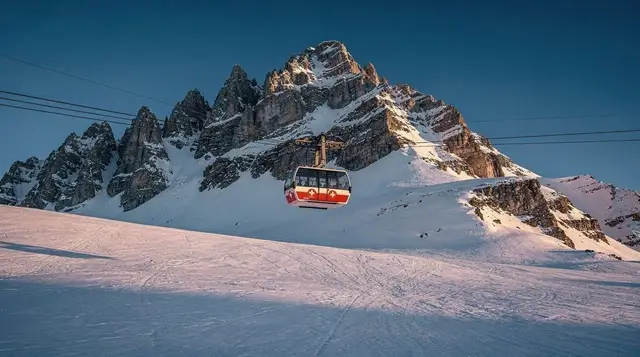
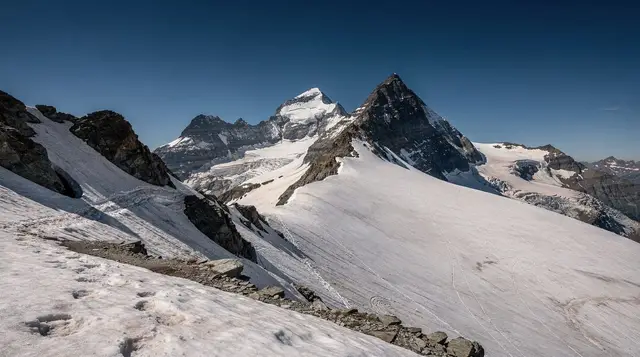
The clear-day visit was worth every franc. Standing above the Aletsch Glacier — the largest ice field in the Alps — with genuine visibility in every direction is not something the lower peaks around Zurich replicate. The Sphinx terrace views on a good day reach into France and Italy. That’s the case for going: not the ice palace, not the gift shop, not the “highest railway station in Europe” plaque, but the specific view on a specific kind of morning.
If your schedule is flexible, that’s the single biggest lever you have. Booking a fixed date weeks out and hoping removes your only real control over the outcome. If you can decide the morning of, based on the webcam, you convert an expensive gamble into a reasonable bet.
For the return leg, most people ride the train straight back to Interlaken, but building in a stop makes the day feel less like a round trip for its own sake — Grindelwald or Lauterbrunnen both work as a base, and our roundup of mountain excursions from Zurich covers how the day fits alongside options like Rigi if you’re weighing which peak deserves the one clear day in your itinerary.
Booking it, if you decide it’s worth it
For a fixed departure with the connections handled for you, the full-day trip from Zurich to the Top of Europe covers the whole route without you having to time three separate train connections yourself. There’s also a version built around a Jungfraujoch day trip with the scenic train ride as the centrepiece, which suits anyone who wants the journey treated as part of the day rather than just transport.
If you’d rather not deal with train timings or luggage at all, a private driver from Zurich to Jungfraujoch with a return via Bern turns it into a door-to-door day and lets you fold in a stop in the capital on the way back.
None of these fix the weather problem. What they buy you is one less thing to plan on a day when the only variable that matters is what the sky is doing above 3,000 m.
Practical questions about visiting Jungfraujoch
How much does a day trip to Jungfraujoch from Zurich actually cost?
Full fare from Zurich HB and back is roughly CHF 220-260 depending on the season and how you book the final Kleine Scheidegg to Jungfraujoch leg. A Swiss Travel Pass or Half Fare Card cuts the price meaningfully but doesn’t make it cheap.
Is Jungfraujoch worth it if the weather is uncertain?
No. This is the one excursion from Zurich where weather matters more than anything else. Cloud sits on the summit on a large share of days even in summer, and there is no partial refund for a whiteout.
How long does the journey to Jungfraujoch take from Zurich?
Around three hours each way by train, so roughly six hours of travel for a day that also includes an hour or two at the top. It’s a long day, not a quick detour.
Is the crowding at Jungfraujoch as bad as people say?
On a clear midsummer day, yes. The final cogwheel carriages fill up, the Sphinx observatory lift queues, and the tunnels between attractions get genuinely congested by early afternoon.
Are Jungfraujoch and Schilthorn the same kind of trip?
No. Jungfraujoch is higher, more built-up, and more expensive; Schilthorn has a shorter queue and a different view. See our comparison for the fuller picture.
What should I book instead if Jungfraujoch is out of the budget?
Mount Titlis or Mount Pilatus cost less, sit closer to Zurich, and deliver a comparable glacier-and-panorama experience without the CHF 250 price tag.
Does the Swiss Travel Pass cover the whole Jungfraujoch route?
It covers the approach as far as Kleine Scheidegg or Grindelwald but not the final Jungfraujoch Railway section, which is discounted rather than free.
Mountain excursions on GetYourGuide
Verified deep-linked GetYourGuide tours. Book through these links and we earn a small commission at no cost to you.
GetYourGuide does not provide a product photo for this activity — the image shows the meeting point, photographed by us.