Swiss Travel Pass in numbers: coverage and value
Is the Swiss Travel Pass worth it from Zurich?
It pays off from around three to four days of active train and boat travel, including one full-price return trip such as Zurich to Lucerne or Zurich to Bern. Mountain excursions like Jungfraujoch and Titlis are only 50% off with the pass, not free, so a single mountain day rarely tips the balance on its own.
The Swiss Travel Pass is sold as the answer to Switzerland’s expensive, fragmented transport pricing. It is genuinely useful, but the marketing glosses over one detail that changes the maths for most Zurich-based trips: mountain excursions are discounted at 50%, not included. This guide works through what the pass actually covers, what it does not, and at what point the price stops being a gamble and starts being a saving.
What the pass includes across the network
The Swiss Travel Pass gives unlimited second- or first-class travel on the core network run by around 90 transport companies: SBB/CFF/FFS mainline trains, most private railways, postal buses, and lake and river boats, covering roughly 15,000 kilometres of route. For a Zurich-based visitor this means a return trip on Swiss trains to Lucerne, Bern, Basel or St Gallen costs nothing extra once the pass is activated, and the same applies to the boat cruises on Lake Lucerne and Lake Thun and Brienz.
City transport is also covered. The pass works on ZVV trams and buses in Zurich, and on the equivalent networks in Basel, Bern, Lucerne, Geneva and other cities, so you are not buying a separate day ticket on top of the pass for local hops. Full detail on the Zurich side of that is in getting around Zurich on the ZVV.
Museum entry is a genuine extra rather than a footnote. Free admission applies to roughly 500 museums and collections nationwide, including Kunsthaus Zurich and the Swiss National Museum. If a museum-heavy few days is part of the plan, that alone can be worth CHF 20 to CHF 25 per venue.
The mountains: 50% off, not free
This is the part that catches people out. Jungfraujoch, the Schilthorn, Titlis, Pilatus and Stanserhorn are all marketed alongside the Swiss Travel Pass, but the pass gives 50% off these excursions, not a free ride. A Jungfraujoch return from Interlaken runs into the low hundreds of francs at full price, so the discount is worth having, but it will not on its own make the pass pay for itself.
A small number of mountain-adjacent lines are fully included rather than discounted, because they run as ordinary public transport rather than tourist excursions. The Uetliberg train from Zurich Hauptbahnhof is the clearest example: it is an S-Bahn service (S10), so it is covered in full, making the Uetliberg the one alpine-flavoured outing from Zurich that costs nothing extra with the pass.
| Excursion | Pass discount | Reservation needed |
|---|---|---|
| Jungfraujoch | 50% | No, but book ahead in high season |
| Titlis | 50% | No |
| Schilthorn / Piz Gloria | 50% | No |
| Pilatus | 50% | No |
| Rigi cogwheel train | 50% (lake boat approach fully included) | No |
| Uetliberg | Fully included | No |
| Säntis cable car | 50% | No |
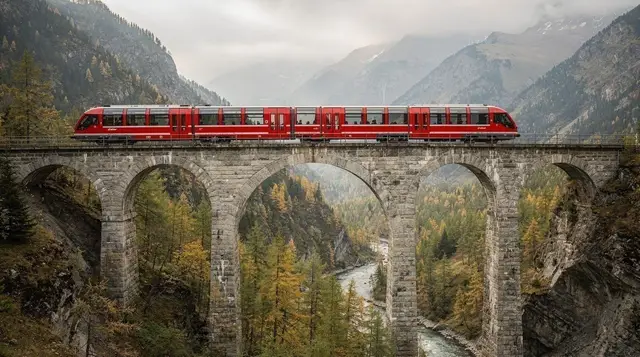
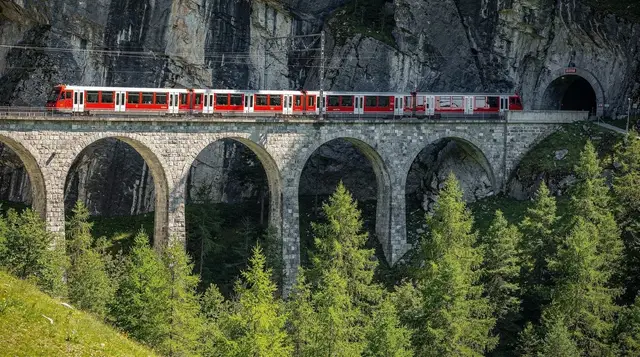
Two more things worth flagging. First, mountain railways close for scheduled maintenance in spring and, on some lines, again in autumn — check the specific railway’s calendar before building a day trip around it, since this is the single most common reason a planned mountain day falls apart. Second, the panoramic trains — Glacier Express, Bernina Express and the GoldenPass Line — are covered for the base fare, but seat reservation is compulsory and charged on top, typically CHF 29 to CHF 39 depending on route and season. The pass does not touch that fee.
Pass types and 2026 indicative pricing
The Swiss Travel Pass comes in a consecutive-day version and a Flex version, each in second or first class. Consecutive-day passes are used on back-to-back calendar days; the Flex pass lets you pick non-consecutive travel days within one month, which suits a trip built around a stationary stay with a couple of day-trip days mixed in.
| Duration | 2nd class (consecutive) | 1st class (consecutive) |
|---|---|---|
| 3 days | CHF 244 | CHF 389 |
| 4 days | CHF 295 | CHF 469 |
| 6 days | CHF 361 | CHF 574 |
| 8 days | CHF 397 | CHF 630 |
| 15 days | CHF 429 | CHF 682 |
These figures move a little each SBB timetable change, so treat them as indicative rather than fixed, and check current fares before booking. Youth (16–25) and family add-ons bring the price down further; children under 16 travel free with a paying parent under the Swiss Family Card, applied automatically at purchase.
Two related products worth knowing about: the regional Berner Oberland Pass covers a smaller area around Interlaken at a lower price, useful if Zurich is only a stopover before a Bernese Oberland base, and it is sold with a Swiss Half Fare discount built in via the Berner Oberland regional pass with half-fare pricing.
For visitors who want the full national pass pre-booked and paired with a fixed pickup and multi-day plan rather than arranging it at a ticket counter, there is also a bundled option through a customisable Swiss Travel Pass itinerary with private guiding.
Swiss Travel Pass vs Half Fare Card: the actual comparison
The Half Fare Card costs a fraction of the full pass, currently around CHF 120 for a month, but it only discounts tickets by 50% — you are still buying and paying for every journey, and there is no free museum entry. It suits a slower trip: a few nights in Zurich, one or two day trips, plenty of downtime.
The Swiss Travel Pass suits the opposite pattern: multiple destinations, a train most days, boats and city transport thrown in without a second thought. The full comparison, including which one wins for a family of four versus a solo traveller, is covered separately in Swiss Travel Pass vs Half Fare Card. If Zurich transport specifically, rather than the national network, is the question, see Zurich Card vs Swiss Travel Pass — the two overlap in the city but the Zurich Card does not extend beyond it.
For a one-off day trip rather than a multi-day pass, buying single point-to-point tickets, or the flexible Flex version of the train, bus and boat pass for scattered travel days, both remain cheaper than committing to consecutive days you will not fully use.
Worked example: does it pay off from Zurich
The clearest way to judge the pass is to price out a real itinerary against buying individual tickets. These are approximate 2026 second-class fares; always check sbb.ch for the current price before you travel.
| Item | Standalone cost (2nd class) | With pass |
|---|---|---|
| Zurich–Lucerne return | ~CHF 88 | Included |
| Lake Lucerne short cruise | ~CHF 35 | Included |
| Zurich–Bern return | ~CHF 98 | Included |
| Zurich–Basel return | ~CHF 66 | Included |
| Zurich local transport (ZVV), 3 days | ~CHF 25 | Included |
| Jungfraujoch return from Interlaken | ~CHF 224 | ~CHF 112 (50% off) |
| 3-day total (Lucerne + Bern + local) | ~CHF 252 | CHF 244 |
| 4-day total (adds Basel) | ~CHF 318 | CHF 295 |
At three days with two long return journeys and local transport folded in, the pass roughly breaks even. At four days with a third destination added, it clearly wins. A single day trip to just one nearby town, such as a straightforward Lucerne day trip or a Rhine Falls day trip, rarely justifies even the three-day pass on its own — a standard return ticket or the Half Fare Card comes out cheaper.
Where the pass earns its price fastest is a week built around several of the destinations covered in day trips from Zurich: pair a Bern day trip with a Basel day trip and a longer run out to Zermatt or the Ticino region around Lugano, and the standalone rail cost alone exceeds even the 8-day pass.
Who the pass does not suit
If the plan is a slow week based entirely in Zurich with no day trips, skip the pass — a Zurich Card or single ZVV tickets will be cheaper, and you can read the details in how many days in Zurich before deciding how much ground you actually intend to cover. If the trip leans heavily on one region rather than the whole country, a regional pass such as the Berner Oberland option above, or simply buying the Half Fare Card and paying half price per journey, usually wins.
The pass also does not cover cable cars and mountain excursions in full, private tours, or reservation fees on panoramic trains, so anyone budgeting a trip around Jungfraujoch or the Bernina Express should price those extras separately using the figures above rather than assuming the pass absorbs them. A general sense of what a realistic week costs, pass or no pass, is in Zurich travel costs.
For travellers who want a guided version of a Bernina-region day rather than working out train connections solo, a guided day tour over the Bernina Pass to Lago Bianco covers a similar route with the transport, timing and photo stops arranged for you, which some pass holders find worth paying for even on top of an unlimited-travel pass.
Buying and activating the pass
The pass can be bought online before arrival or at any Swiss railway station ticket counter, including at Zurich Airport on arrival. It must be activated before first use — either by validating it at a station machine or by entering the first travel date at the point of purchase if bought online. Once activated, first-class and second-class passes require the matching class of seating; travelling in first class on a second-class pass draws a fine from conductors, who check tickets on nearly every journey.
If travel plans are still open and a single combined product covering transport plus a guided extra is appealing, the all-in-one Swiss Travel Pass bundle packages the standard pass with add-on options in one booking, which can simplify things for a first Switzerland trip planned entirely from abroad.
Swiss Travel Pass questions answered
Does the Swiss Travel Pass cover mountain railways for free?
No. Most mountain railways and cable cars, including Jungfraujoch, Schilthorn, Titlis and Pilatus, give pass holders 50% off, not free travel. A handful of lines, such as the Uetliberg train from Zurich, are fully included because they run as ordinary S-Bahn services.
How many days of travel do I need for the pass to break even?
For most Zurich-based itineraries, break-even lands between three and four consecutive days, assuming at least one long return journey such as Zurich to Lucerne or Zurich to Interlaken plus local transport each day. Shorter trips with only city travel rarely justify the price.
What is the difference between the Swiss Travel Pass and the Half Fare Card?
The Swiss Travel Pass gives unlimited travel on covered routes plus 50% off mountain excursions and museum entry. The Half Fare Card costs far less but only discounts every ticket by 50%, so you still buy and pay for each journey. The Half Fare Card suits slower, point-to-point trips; the pass suits packed, multi-destination weeks.
Does the Swiss Travel Pass cover the Glacier Express or Bernina Express?
It covers the base rail fare on both routes, but seat reservation is compulsory and charged separately, typically an extra CHF 29 to CHF 39 per person depending on season and route. The pass does not remove this fee.
Is the Swiss Travel Pass available for fewer than three days?
No. The consecutive-day version starts at three days. There is also a Flex pass that allows a set number of travel days used within one month, useful if your trip has non-travel days built in, such as a stay in one town without day trips.
Does the pass work in Zurich city itself, on trams and buses?
Yes, the Swiss Travel Pass covers Zurich’s ZVV trams, buses and S-Bahn network, along with most other Swiss city transport networks, so you do not need a separate city ticket on travel days.
Are museums really free with the Swiss Travel Pass?
Free entry applies to around 500 museums and collections across Switzerland, including Kunsthaus Zurich and the Swiss National Museum. Some special exhibitions carry a separate supplement that the pass does not cover.
Scenic train tours on GetYourGuide
Verified deep-linked GetYourGuide tours. Book through these links and we earn a small commission at no cost to you.
GetYourGuide does not provide a product photo for this activity — the image shows the meeting point, photographed by us.