Bahnhofstrasse: what's actually on Zurich's famous shopping street
What is actually on Zurich's Bahnhofstrasse?
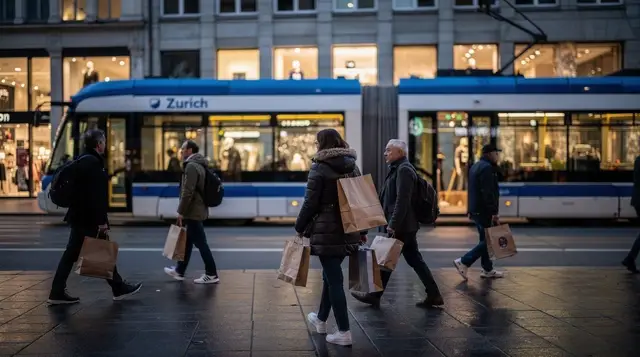
Bahnhofstrasse is a 1.4-kilometre, car-free street running from Zurich Hauptbahnhof to Lake Zurich, lined with department stores, watch and jewellery houses, and international fashion flagships. It is genuinely one of the most expensive retail streets in the world, though several streets just off it, including Niederdorf and Europaallee, are far friendlier on a budget.
A 1.4-kilometre street with an outsized reputation
Bahnhofstrasse runs in a dead straight line from the main exit of Zurich Hauptbahnhof down to Burkliplatz on Lake Zurich, and it has spent decades being described as one of the most expensive shopping streets on the planet. That reputation is about rental value per square metre, not about what a visitor actually pays to walk it: the street itself costs nothing, trams glide along the middle of it rather than cars, and plenty of people use it simply as the most pleasant route from the station to the lake. What is worth knowing before you go is what is genuinely there, what things cost if you do buy something, and which nearby streets do the same job for a fraction of the price.
If you are staying centrally, see our guide to where to stay in Zurich for how close different neighbourhoods sit to the street. For the wider old town around it, the Zurich old town walking guide covers the lanes on either side.
What you’ll actually find, storefront by storefront
The street splits roughly into two moods. The lower half, closer to the station, has the department stores and mainstream international brands. The upper half, closer to Paradeplatz and the lake, is where the watch houses, jewellers and high fashion flagships cluster. Both halves are walkable together in under half an hour, and most visitors find twenty minutes of actual window-shopping is plenty before the sameness of luxury shopfronts sets in.
The department stores: Globus and Jelmoli
Globus has its flagship near the Schweizergasse crossing, a multi-floor store with fashion, cosmetics, homeware and a food hall in the basement that is genuinely worth a stop even if you buy nothing upstairs: charcuterie, cheese counters and a decent bakery at prices that are high for Switzerland but not shocking. Jelmoli sits just off Bahnhofstrasse on Seidengasse, a five-minute walk, and covers similar ground with its own food hall and a rooftop terrace in warmer months.
Neither store is a bargain by any measure, but both are the closest thing on the street to normal retail: fixed price tags, changing rooms, and staff who are not selling five-figure watches. If department-store shopping with some local orientation appeals more than wandering alone, a shopping walk with a local host who knows which floors and counters are worth your time covers exactly this ground.
Watches, jewellery and the big fashion houses
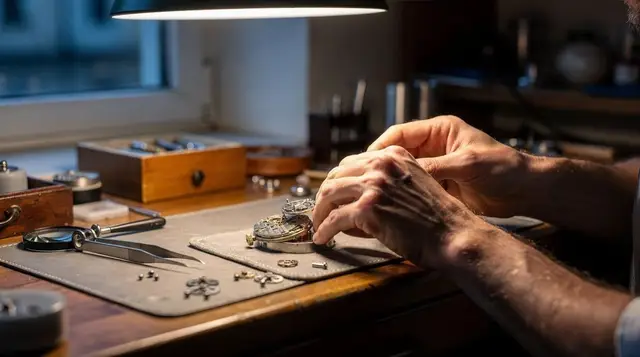
Above Paradeplatz, the street fills with the names you would expect: Chanel, Louis Vuitton, Gucci, Prada and a long run of Swiss and international watch and jewellery houses, including Bucherer’s flagship and Beyer, whose basement also houses a small horology museum that is free to enter even if you have no intention of buying a watch. Confiserie Spruengli’s main shop and cafe sits on Paradeplatz itself, and is the one stop on this stretch that most visitors can justify: a box of Luxemburgerli macarons runs to roughly CHF 15 to 20, and a coffee with a pastry at the counter is around CHF 8 to 10. It is expensive by any normal standard and still the most accessible thing on this half of the street.
For anyone actually shopping for a watch rather than looking, our separate Swiss watches buying guide covers what to expect on price, authentication and where else in Switzerland to compare before committing.
Paradeplatz and the vault myth
Paradeplatz, the small square roughly halfway along, is Bahnhofstrasse’s centre of gravity and the historical home of Switzerland’s biggest banks, UBS included. It is also the source of the street’s most repeated story: that the vaults of the major banks, built beneath the pavement here in the twentieth century, still hold enormous reserves of gold. Nobody publishes what is actually down there, which is exactly why the story persists.
A guided walk built specifically around separating the Bahnhofstrasse gold-vault myth from the documented history is a more interesting way to spend the middle of the street than another shop window, and costs less than most single items sold in the shops either side of it.
What things cost, in real francs
None of this needs to be a mystery. Here is what typical purchases actually run to, so you can judge for yourself whether Bahnhofstrasse or one of its cheaper neighbours makes sense for what you want.
| Item | Typical Bahnhofstrasse price | Notes |
|---|---|---|
| Coffee and pastry at Spruengli | CHF 8–10 | Standing at the counter; a table service adds a few francs |
| Box of 12 Luxemburgerli | CHF 15–20 | The signature Spruengli macaron, sold by weight |
| Lunch menu at a department store food hall | CHF 22–32 | Globus and Jelmoli basements |
| Entry-level Swiss watch | From CHF 400–600 | Own-brand ranges at Bucherer and similar houses |
| Mid-range mechanical watch | CHF 2,000–8,000 | Established Swiss brands, non-limited pieces |
| Silk scarf, mainstream fashion house | CHF 350–500 | Prices vary sharply by brand and print |
| Souvenir chocolate box (250g) | CHF 12–18 | Cheaper at supermarkets; see alternatives below |
For a fuller picture of what a trip to Zurich costs beyond this one street, Zurich travel costs breaks down accommodation, food and transport, and Zurich on a budget is worth reading before you assume the whole city runs at Bahnhofstrasse prices. It largely does not.
The tax-free refund, and when it’s worth the paperwork
Switzerland charges 8.1 percent standard VAT, and visitors resident outside Switzerland can reclaim it, provided a single receipt from a single shop on a single day comes to at least roughly CHF 300 and the goods leave the country unused in their original packaging. Ask for the tax-free form at the till when you pay, keep the receipt, and process the refund at a Global Blue or Planet counter at Zurich Airport before check-in, since you may need to show the goods. For anything under that threshold, which covers most souvenirs and casual purchases, the refund is not worth chasing.
When the street empties: hours, Sundays and sales
Most Bahnhofstrasse shops open around 9:00 or 9:30 and close at 19:00, with Thursday evenings often extended to 20:00 or 21:00. Saturdays generally close earlier, around 17:00 or 18:00. Sundays are the one day almost everything shuts, as Swiss trading law keeps most retail closed nationwide; the shops inside Zurich Hauptbahnhof itself are the main exception, trading under separate station rules. If a Sunday afternoon is all the time you have, plan around the station rather than the street.
Seasonal sales, known locally as Ausverkauf, run in January and again in July, and are the one time discounts on the street’s mainstream stock (rather than the ultra-luxury end) become genuinely worth timing a visit around.
Cheaper alternatives within walking distance
Niederdorf
Across the river on the old town side, Niederdorf’s narrow lanes are the antidote to Bahnhofstrasse: small independent shops, secondhand bookshops and craft stores at prices that reflect an ordinary Swiss city rather than a global luxury address. It is a five-minute walk from Bahnhofstrasse and covered in full in the Zurich old town walking guide.
Europaallee
Built over the last decade behind the Hauptbahnhof, Europaallee is Zurich’s newer retail quarter: contemporary mid-range chains, a cinema and restaurants, all at prices closer to what you would expect in any European city centre. It is under ten minutes on foot from the station end of Bahnhofstrasse.
Zurich West and the Freitag flagship
Further out in Kreis 5, Zurich West has design stores, vintage and secondhand shops, and the flagship store of Freitag, the Zurich-founded bag brand built from recycled truck tarpaulins, stacked inside a tower made of shipping containers. It is one of the few shopping destinations in the city that is also a genuine sight in its own right. The full picture of the neighbourhood is in the Zurich West guide.
If none of this is really about buying anything, the Zurich free things to do guide and Zurich markets and souvenirs cover lower-cost ways to spend the same afternoon.
If you’d rather look than buy
Plenty of visitors walk Bahnhofstrasse out of curiosity rather than intent to spend, and that is a reasonable way to use twenty minutes between other plans. If you want a Zurich outing that trades shopfronts for a lake and city view instead, a short walking and cable-car route up to a panoramic viewpoint over the lake is a cheaper and arguably more memorable use of the same hour.
For anyone whose real interest is luxury shopping rather than Zurich specifically, it is also worth knowing that Ticino has its own scene: a private luxury shopping outing in Lugano, a little over two hours away by train, has a noticeably different, more relaxed character than Bahnhofstrasse.
Getting there and making a morning of it
Bahnhofstrasse starts directly outside the main exit of Zurich Hauptbahnhof, so there is no separate journey required if you are already in the city centre. From the airport, it is one direct train to the Hauptbahnhof, covered in Zurich Airport to city centre, and getting around the wider city afterwards is explained in getting around Zurich on the ZVV.
If Bahnhofstrasse is one stop among several on a single day in the city, it slots naturally into the walking loop described in Zurich in one day or the fuller one-day Zurich itinerary. For a first visit generally, first-time mistakes in Zurich is worth reading before you assume the whole city matches this one street’s prices, and if winter timing matters, the Zurich Christmas markets guide covers the seasonal stalls that appear near the lower end of the street in December.
More shopping and market options across the city, including the categories that sit alongside this one, are gathered on the shopping and markets hub.
Bahnhofstrasse shopping FAQ
Is Bahnhofstrasse really one of the most expensive shopping streets in the world?
Yes, by rental value it regularly ranks alongside New York’s Fifth Avenue and Paris’s Avenue des Champs-Elysees in international retail surveys. That cost is reflected in the shop fronts, not necessarily in every price tag: a coffee or a scarf costs the same as elsewhere in central Zurich, it is the flagship boutiques and the square metre of pavement that carry the premium.
What are the two big department stores on Bahnhofstrasse called?
Globus, with its flagship at the Schweizergasse end, and Jelmoli, just off the street on Seidengasse. Both sell mid-range to luxury fashion, cosmetics and homeware, and both have food halls that are worth a visit even if the fashion floors are not.
Can I get a VAT refund on purchases in Zurich?
Switzerland’s standard VAT is 8.1 percent, and non-EU and non-Swiss residents can reclaim it on purchases over roughly CHF 300 from a single shop on a single day, provided the goods leave the country unused. Ask for a tax-free form at the till, then process it at a Global Blue or Planet counter at Zurich Airport before you fly.
Are shops on Bahnhofstrasse open on Sundays?
No. Swiss trading law keeps almost all shops closed on Sundays, Bahnhofstrasse included. The main exceptions are the shops inside Zurich Hauptbahnhof itself, which trade seven days a week under railway station rules.
Where can I shop in Zurich without Bahnhofstrasse prices?
Niederdorf on the other side of the river has small independent shops at ordinary prices, Europaallee behind the station has contemporary mid-range chains, and Zurich West around Kreis 5 has design stores, vintage shops and the Freitag flagship, all at a noticeably gentler cost than the main strip.
Is it true that Swiss bank gold is stored under the street?
It is one of the most repeated stories about Bahnhofstrasse, and there is a kernel of truth: major Swiss banks did build vaults beneath the pavement in the twentieth century. Whether they still hold the volumes the legend claims is not something any bank publishes, and it has become as much folklore as fact.
How long does it take to walk the whole street?
About 20 minutes at a normal pace from the Hauptbahnhof to Burkliplatz on the lake, without stopping. Budget at least an hour if you want to look in windows, and half a day if department stores or serious watch shopping are on the list.
Shopping & market tours on GetYourGuide
Verified deep-linked GetYourGuide tours. Book through these links and we earn a small commission at no cost to you.
GetYourGuide does not provide a product photo for this activity — the image shows the meeting point, photographed by us.