Fondue and raclette in Zurich: a practical guide
When and where should you eat fondue or raclette in Zurich?
Restaurants serve fondue and raclette year-round for tourists, but locals eat it mainly from October to March, when it actually feels right with the weather. Expect to pay CHF 28 to CHF 45 per person for a cheese fondue and CHF 6 to CHF 9 per portion of raclette, more in the old town than in residential neighbourhoods.
Every restaurant in Niederdorf will happily sell you fondue in July, at the same price as in January, garnished with the same laminated photo of melted cheese on the menu stand outside the door. That doesn’t mean it’s a good idea. Zurich has a real cheese season, a real price range, and a real etiquette that has nothing to do with the tourist theatre around it. This guide covers when to actually order it, what it costs, where it’s worth eating, and how not to look lost with the fork.
When fondue season actually starts in Zurich
Locals treat fondue and raclette as fixed to autumn and winter, roughly from the first cold snap in October through to the point in March when terrace season starts pulling people outdoors again. That’s not superstition. Both dishes are heavy, hot, and built to sit well in a group for two hours; on a 28°C evening in August, nobody who lives here is ordering a shared pot of melted Gruyère and Vacherin.
Tourist-facing kitchens in the old town run fondue year-round because visitors ask for it regardless of season, and it’s a menu item that keeps well. If you’re visiting in summer and want it anyway, that’s entirely fine, just expect a smaller, more anonymous menu of it, and don’t expect it to be the kitchen’s best work of the evening. Some traditional stube close the fondue section of the card completely from April to September and only reopen it once the weather turns, so a restaurant listed as a fondue specialist online may simply not be serving it if you check in July.
Raclette is slightly more flexible. Because it’s served by the portion rather than as a whole shared pot, some restaurants keep a raclette machine running through the shoulder seasons, particularly at Christmas markets and outdoor events, which run well past the core winter window.
| Period | What’s realistic |
|---|---|
| October to March | Full fondue and raclette season; widest menu choice, locals eating it too |
| December | Peak demand around Christmas markets; raclette stalls everywhere, book fondue restaurants ahead |
| April to September | Tourist-menu fondue only in old-town restaurants; many traditional kitchens pause it |
| Spring and autumn cable car closures | Alpine day trips pairing cheese with a mountain view may be disrupted; check lift schedules before booking |
That last row matters more than it sounds. A fair number of visitors plan a mountain day around a cheese lunch at altitude, and the cable cars serving those restaurants close for scheduled maintenance in spring and again in autumn. If a raclette hut or alpine restaurant is part of your plan, check the lift’s operating calendar first rather than assuming it runs every day of the year.
What you’ll actually pay
Zurich is one of the more expensive cities in Europe for eating out, and cheese dishes are not an exception. Prices below are per person unless stated, in Swiss francs, based on what’s charged in the old town and in neighbourhood restaurants further from the tourist core.
| Item | Old town / Niederdorf | Neighbourhood restaurant |
|---|---|---|
| Cheese fondue (moitié-moitié, per person, shared pot) | CHF 34–45 | CHF 28–36 |
| Fondue with kirsch and bread refill included | Often, check menu | Sometimes extra |
| Raclette, per portion (potatoes, pickles included) | CHF 8–12 per 100g portion | CHF 6–9 per 100g portion |
| All-you-can-eat raclette evening | CHF 45–55 | CHF 35–45 |
| Glass of Chasselas or Fendant | CHF 8–11 | CHF 6–9 |
A pot of fondue is usually priced and served for a minimum of two people, so a solo diner will often be charged the two-person rate or steered towards a smaller individual pot at a slightly worse price per gram. Bread is generally included and unlimited; extra sides like charcuterie or a green salad are billed separately and add CHF 8 to CHF 14.
Raclette works differently to how it’s often described abroad: it’s charged by weight or by round, not as a flat all-you-can-eat price by default. If a menu just says “raclette CHF 32”, check whether that’s one round of cheese with potatoes or an unlimited evening, because the two are priced very differently and the smaller portion often leaves people ordering seconds they didn’t budget for.
If you’re keeping half an eye on the total cost of the day, it’s worth cross-checking a cheese dinner against the wider numbers in zurich-travel-costs and zurich-on-a-budget, since a fondue evening for two with wine can easily run to CHF 120–150 and is one of the bigger single spends of a short trip.
Fondue vs raclette: they are not the same dish
Visitors sometimes expect a combined “fondue and raclette” plate, which is mostly a marketing phrase rather than how the two are actually served.
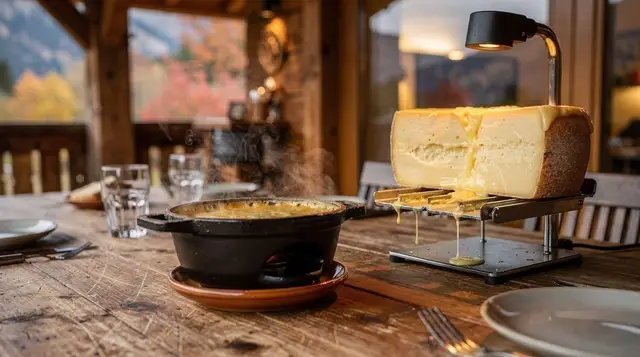
Fondue is a shared pot of melted cheese, kept warm over a small burner (a caquelon on a réchaud), that the whole table dips bread into using long forks. The classic Zurich version is moitié-moitié, a fifty-fifty blend of Gruyère and Fribourg Vacherin, seasoned with white wine, a little garlic, and a splash of kirsch. Bread is the standard dipper; some restaurants also offer boiled potato or apple as a lighter option.
Raclette is a whole wheel or half-wheel of raclette cheese, melted face-down under a heater or open flame, then scraped onto an individual plate as it softens. It’s served with boiled potatoes, gherkins, pickled onions, and sometimes dried meat, and it’s eaten by the round rather than shared from one dish. Each person gets their own plate refreshed as they go, which makes it more sociable for a mixed group with different appetites, and easier to stop when you’re full.
Menus that advertise “fondue and raclette” together are usually offering a choice between the two, or, at Christmas markets, a raclette stand next to a fondue stand rather than one combined dish. If a restaurant’s menu genuinely lists them as one plate, that’s a sign it’s built for tourists rather than reflecting how either dish is actually eaten.
Where it’s worth eating, and what to skip
Niederdorf and the old town on the Limmat’s east bank have the highest concentration of fondue restaurants in the city, and also the highest concentration of restaurants coasting on foot traffic rather than quality. A few tells help sort one from the other before you sit down.
Signs worth walking past: a menu translated into six languages taped to the window, someone standing outside inviting you in, a fondue priced above CHF 45 per person with no cheese blend named, and photos of the food on the menu itself. None of these alone is disqualifying, but two or three together usually mean the kitchen is optimised for turnover, not for the pot.
Signs of a kitchen that cares: the menu names the actual cheese blend (moitié-moitié, or a specific dairy), the wine list has more than three options by the glass, and the fondue is listed as serving a minimum of two with a clear per-person price rather than a flat “market price”. Restaurants that also do a strong lunch trade with locals, not just an evening tourist crowd, are a reasonable proxy for quality, since a place surviving on repeat local business generally can’t get away with a mediocre pot.
For a broader sense of where to eat well across the city beyond cheese specifically, zurich-food-tour-guide and eating-well-in-zurich-without-going-broke cover the wider restaurant landscape, and zurich-coffee-and-bakeries is useful for the other end of the day if a heavy cheese dinner means skipping a big lunch.
If cooking is more your interest than being served, a hosted evening in someone’s home is a genuinely different experience from a restaurant pot, and worth the alternative if you want the fondue explained rather than just delivered.
a home-hosted cheese dinner with fondue or raclette puts you at a local table rather than a tourist one, with the etiquette and the cheese choices talked through as you go, which solves most of the guesswork covered in this guide in one evening.
For a more structured, guided introduction that includes tastings alongside the meal itself, a gourmet tour through Zurich with cheese fondue included pairs the meal with a walk through the food scene rather than a single sit-down booking.
The etiquette nobody explains upfront
Fondue has more unwritten rules than most dishes, mainly because it’s eaten from one shared pot with everyone’s forks in play at once.
Use the long fondue fork to dip and swirl the bread in a figure-eight, which keeps the cheese moving and stops it from catching at the bottom. Eat off a regular fork or straight off the fondue fork depending on the restaurant’s custom; either is generally accepted, but don’t put a fondue fork that’s touched your mouth back in the shared pot. Don’t double-dip a piece of bread you’ve already bitten into. If your bread falls into the pot, the traditional forfeit is buying the table a round of kirsch or wine; most people treat this as a running joke rather than an actual bill, but it’s worth knowing the reference so you’re not confused when someone brings it up.
The crust that forms at the bottom of the pot, called la religieuse, is considered the best part by a fair number of regulars and is usually scraped off and shared once the cheese above it is finished. Don’t scrape it early. Bread and drink refills: bread is typically unlimited and included, but don’t assume the same for wine or kirsch, which are billed separately by the glass or bottle.
On drinks, white wine (a Swiss Chasselas or Fendant) or black tea are the standard pairings. The old claim that drinking anything ice-cold with fondue curdles the cheese in your stomach isn’t medically supported, but it’s repeated often enough locally that ordering a cold beer alongside fondue will occasionally get a raised eyebrow from an older server, more out of habit than actual concern.
For raclette, the etiquette is simpler: take your own portion as it’s scraped, don’t hold up the line at a self-service raclette stall while deciding, and pace yourself, since seconds and thirds are normal and the cheese keeps coming until you say stop.
The vocabulary worth knowing before you order
A short list of terms that show up on menus and save some back-and-forth with a server:
| Term | What it means |
|---|---|
| Moitié-moitié | Half-and-half fondue, usually Gruyère and Vacherin Fribourgeois |
| Caquelon | The ceramic pot the fondue is cooked and served in |
| Réchaud | The small burner that keeps the caquelon warm at the table |
| La religieuse | The crisp cheese crust at the bottom of the pot, eaten last |
| Kirsch | Cherry brandy stirred into fondue and sometimes drunk alongside it |
| Raclette (the machine) | The heater or grill used to melt the cheese wheel face-down |
| Bündnerfleisch | Air-dried alpine beef, a common side with raclette, not fondue |
Ordering in German is not required in most Zurich restaurants, since English is widely spoken, but “Käsefondue” and “Raclette” are understood everywhere and asking for the cheese blend by name (moitié-moitié) signals you know roughly what you’re getting into, which occasionally nudges service to be a little more attentive.
Doing it without a restaurant
Buying the makings for fondue or raclette and eating it self-catered is common practice among residents, particularly for a group staying in an apartment rather than a hotel. Cheese shops and larger supermarkets (Coop and Migros both stock it) sell pre-mixed fondue cheese in vacuum packs from around CHF 8 to CHF 14 for a portion for two, and raclette cheese by the slice or block. A caquelon and réchaud, or a small electric raclette grill, can be bought cheaply at any Coop or Migros homeware section, or occasionally rented through an apartment’s host.
This route is considerably cheaper than eating out, roughly a third of the restaurant price for a fondue evening for two once the equipment is a one-off cost, and it’s a genuinely normal thing to do here rather than a downgrade. It also sidesteps the entire question of which restaurant to trust.
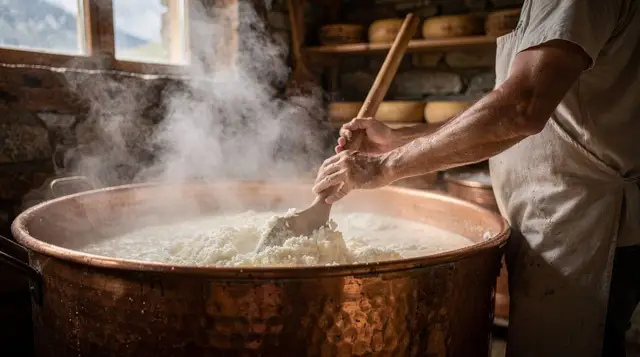
For picking up good cheese specifically, or seeing where it actually comes from, a day trip to a working dairy is a reasonable pairing with an evening of self-catered fondue back in the city. swiss-cheese-dairies-day-trip covers the dairies within reach of Zurich, and Gruyères itself, the source of one half of a classic moitié-moitié, is a full day out covered in gruyeres.
a day trip from Zurich to Gruyères covering chocolate and cheese heritage combines the cheese-country visit with the chocolate side of the same region, which is a reasonable use of a day if you’d rather see where the ingredients come from than just eat the finished dish in the city.
Christmas markets and the raclette exception
The one place fondue and raclette genuinely make sense outside the core season, and are priced more casually, is at Zurich’s Christmas markets, where raclette stalls in particular are a fixture from late November. A cup of melted raclette over potatoes or bread at a market stall runs roughly CHF 10 to CHF 16 and is eaten standing, which is a different experience entirely from a sit-down restaurant meal. zurich-christmas-markets covers timing and locations, and zurich-in-winter has the broader seasonal picture if a cheese-focused trip is part of a wider winter visit.
Planning the rest of the day around it
A heavy fondue or raclette dinner is not something to schedule before an active afternoon; most people plan it as the last meal of the day rather than a lunch stop before more walking or a train connection. If cheese is the centrepiece of an evening, keep the rest of the day lighter: a walk through zurich’s old town, a visit covered in zurich-old-town-walking-guide, or time at things-to-do/food-drink for other food stops earlier in the day, works better than trying to fit in a big hike beforehand.
For a first visit trying to work out how a cheese dinner fits into a wider schedule, how-many-days-in-zurich and zurich-3-days both slot an evening like this into a broader plan without it eating into a full day’s sightseeing. And if the trip includes a wider swing through cheese country beyond a single restaurant meal, day-trips-from-zurich lays out which regions pair naturally with it.
Fondue and raclette in Zurich: frequently asked questions
Is fondue available in Zurich in summer?
Yes, most tourist-facing restaurants in the old town serve it all year because visitors expect it. Locals rarely order it between April and September; some traditional stube close their fondue menu for summer entirely or replace it with a lighter chalet-style card.
How much does a fondue dinner really cost in Zurich?
A shared moitié-moitié fondue for two typically runs CHF 56 to CHF 90 for the pot alone, so CHF 28 to CHF 45 per person before drinks and bread refills. Old-town addresses near Niederdorf sit at the top of that range; neighbourhood restaurants in Kreis 4 or Kreis 5 are usually 15 to 20 percent cheaper.
What is the difference between fondue and raclette?
Fondue is melted cheese, wine and kirsch in a shared pot that everyone dips bread into with long forks. Raclette is a whole cheese wheel melted face-down and scraped onto your own plate with boiled potatoes, pickles and cocktail onions. They are almost never served together as one dish, despite what some tourist menus imply.
Do I need to reserve a table for fondue in Zurich?
For anywhere in Niederdorf or the old town on a Friday or Saturday between November and February, yes, a day or two ahead. Fondue is cooked to order and many kitchens cap how many pots they can run at once, so walk-ins get turned away even when tables look empty.
Is there a vegetarian fondue option?
Classic Swiss cheese fondue is already vegetarian; the only thing to check is whether the kirsch and any bouillon base are animal-free, which they usually are. Vegan cheese fondue is rare and mostly limited to a handful of specialty restaurants, not the traditional stube.
What is the etiquette if you drop your bread in the fondue pot?
The traditional forfeit is buying the table a round of kirsch or white wine, and some restaurants still hold to it as a joke rather than a real obligation. More practically, don’t double-dip, don’t let bread sit soaking, and don’t scrape the crust at the bottom until everyone is finished.
Are the fondue restaurants in Niederdorf tourist traps?
Some are. The giveaway is a laminated multilingual menu, a doorway tout, and a fondue priced well above CHF 45 per person with no listed cheese blend. A handful of genuinely good, locally run addresses sit on the same streets, so it’s about picking the specific restaurant, not avoiding the neighbourhood.
What should I drink with fondue, and is tea really forbidden?
White wine, particularly a Swiss Chasselas, or black tea are the traditional pairings; kirsch is drunk alongside, not mixed in unless the recipe calls for it. The old warning against drinking anything ice-cold with fondue, supposedly because it curdles the cheese in your stomach, has no real medical basis, but locals still avoid it out of habit.
Zurich food & drink tours on GetYourGuide
Verified deep-linked GetYourGuide tours. Book through these links and we earn a small commission at no cost to you.
GetYourGuide does not provide a product photo for this activity — the image shows the meeting point, photographed by us.