How many days do you need in Zurich?
How many days should I spend in Zurich?
Two full days cover the old town, the lake and one museum properly. Add a third day for a single mountain or waterfall excursion. Beyond three days, you get more value sleeping a night or two in Lucerne, Interlaken or the mountains than adding a fourth night in Zurich itself.
The short version
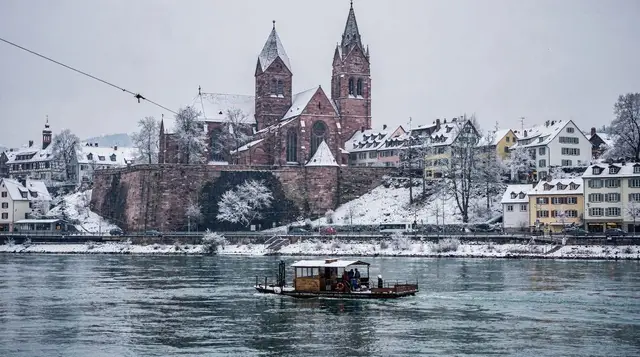
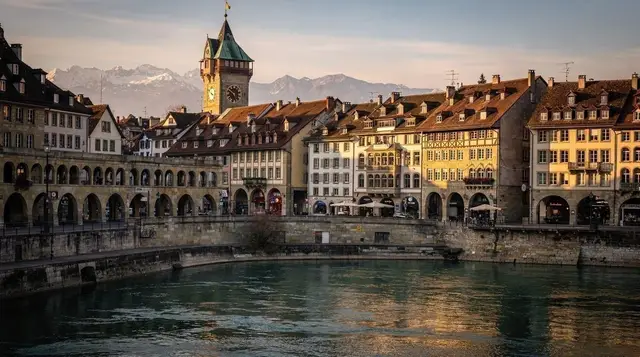
Zurich itself is a compact city. You can walk from the main station to the lake in twenty minutes, and the old town on either bank of the Limmat is small enough to cover on foot in an afternoon. The question that actually matters is not “how long is Zurich” but “how many day trips do I want, and at what point does a day trip stop making sense compared to sleeping somewhere else.” This guide breaks that down by length of stay, from a single day to a full week, and says plainly when the answer stops being “add another night in Zurich” and becomes “go and sleep in Lucerne or the mountains instead.”
Everything below assumes you’re travelling by train, which is how almost everyone gets around this region. If you haven’t sorted out tickets yet, read how to get around Zurich on the ZVV and compare passes in the Swiss Travel Pass guide before you commit to a fixed itinerary — the right pass depends on how many of these day trips you actually take.
One day in Zurich
One day is enough to see Zurich, not to experience it. A realistic single day looks like: a morning walk through the old town covering Grossmünster, Niederdorf and the guild houses along the river, lunch near the lake, an afternoon at Uetliberg for the view over the city and the Alps on a clear day, and an early evening walk along the lake promenade before dinner. That’s it. There is no time for a proper museum visit, no time for a boat trip, and definitely no time for a day trip outside the city.
If you only have one day because you’re between flights or connecting trains, this is a fine way to spend it. If you have flexibility and are choosing to give Zurich only one day, know that you’re seeing the postcard version and skipping almost everything that makes people come back. The full breakdown of what fits and what doesn’t is in Zurich in one day.
Two days in Zurich
Two days is the point where Zurich stops feeling rushed. Split it roughly like this:
| Day | Morning | Afternoon | Evening |
|---|---|---|---|
| Day 1 | Old town walking guide | Kunsthaus or Swiss National Museum | Niederdorf for dinner |
| Day 2 | Lake Zurich boat trip | Zurich West (Viadukt, Freitag tower) | Bahnhofstrasse, then the lake at sunset |
This gives you one proper museum, one boat trip, and the two very different sides of the city — the postcard old town and the industrial-turned-hip Zurich West district. A lake boat trip is worth the two to three hours it takes; the standard ZSG round trip is inexpensive if you already hold a Zürich Card or a Swiss Travel Pass, since both cover it, and only a modest add-on if you don’t.
Two days is also honestly the minimum before Zurich’s prices start to feel worthwhile rather than punishing. A coffee runs 4.50 to 5.50 CHF, a simple lunch 20 to 28 CHF, and a sit-down dinner with a drink 45 to 70 CHF per person — spread that over two days of proper sightseeing rather than one rushed afternoon and it reads less like a shock and more like the cost of the city. For a full breakdown of what things actually cost, see Zurich travel costs.
Three days in Zurich
Three days is the sweet spot for a first visit: two days in the city as above, plus one full day trip. This is where you have to choose, because trying to fit two excursions into one day trip almost always means seeing both badly.
The three most common single-day options from Zurich HB:
| Destination | Train time (one way) | What you actually get in a day |
|---|---|---|
| Lucerne | 45 min | Old town, Chapel Bridge, a boat trip on Lake Lucerne |
| Rhine Falls | ~50 min | The falls themselves, a boat close to the rock, Stein am Rhein if you’re quick |
| Bern | ~1 h | Old town, Zytglogge, the bear park |
Pick one. Lucerne is the most popular for good reason — it pairs a genuinely attractive old town with a boat trip on Lake Lucerne, and the full plan is in Lucerne day trip. The Rhine Falls is a shorter visit in absolute terms (most people are done in three to four hours including the boat), which is why some itineraries pair it with Stein am Rhein or Schaffhausen’s old town on the same day — see Rhine Falls visiting guide for how that half-and-half day actually works.
What doesn’t work in three days: Jungfraujoch. The round trip alone from Zurich is close to five hours of travel, which leaves barely any time at altitude once you’ve queued for the final cogwheel train. If Jungfraujoch matters to you, it needs its own day, which pushes you into the five-day plan below. If you want to see how Titlis, Rigi and Pilatus compare before choosing, Pilatus vs Rigi vs Titlis lays out the honest trade-offs on cost, crowds and view quality.
One more thing worth knowing before you book a mountain day: Swiss cable cars and cogwheel railways close in rotating blocks in spring and again in autumn for scheduled maintenance. It’s not the whole mountain shutting at once, usually a specific section or lift, but it’s exactly the kind of thing that ruins a single-day plan built around one summit. Check the specific lift’s operating calendar, not just the general weather forecast, before you fix the date.
Five days in Zurich
Five days is where you can stop compressing and actually add a second excursion without repeating the mistake of cramming two big things into one day. A workable structure:
- Day 1–2: Zurich city, as in the two-day plan above
- Day 3: Lucerne or the Rhine Falls
- Day 4: Jungfraujoch, as a dedicated full day
- Day 5: A second, lighter day — either a slower morning in Zurich you didn’t get to (the Swiss National Museum, the Museum of Transport in Lucerne) or a short trip to Rapperswil on the lake
Jungfraujoch deserves the caveat everyone glosses over: it’s a long day, the summit can be in cloud even when Zurich is sunny, and it’s one of the more expensive single excursions in the country. If you’d rather understand what you’re paying for before committing a whole day to it, what nobody tells you about Jungfraujoch is worth five minutes before you decide.
Five days is also the point where a guided full-day tour starts to earn its cost rather than feeling like overkill. If your fifth day is more about the journey than a single destination, a day combining the Gotthard rail line with a short hike covers ground that’s awkward to piece together on your own with regional timetables, and a guided day trip taking in the Aare Gorge and Grindelwald does the same for that corner of the Bernese Oberland.
Seven days in Zurich
At seven days, the honest advice changes: stop trying to base everything in Zurich. Two or three nights in Zurich covers the city and one or two nearby excursions comfortably; the rest of the week is better spent as one or two nights actually in the mountains or on a second lake, rather than four consecutive long round trips from a single hotel bed in Zurich.
A seven-day plan that avoids wasting days on transit:
| Nights | Base | What it covers |
|---|---|---|
| 2 | Zurich | Old town, museums, lake, Rhine Falls as a half-day |
| 2 | Lucerne or Interlaken | Lake cruise, one mountain (Rigi, Titlis or Pilatus), the town itself |
| 2 | Jungfrau region (Grindelwald, Wengen or Mürren) | Jungfraujoch or Schilthorn without a five-hour round trip tacked on |
| 1 | Back in Zurich | Buffer day, flight or onward train |
Sleeping in the mountains for a night or two, rather than commuting from Zurich each time, buys you the early-morning light before the crowds and the cloud build-up that tends to arrive by midday in summer. It also means you’re not doing a three-to-four-hour round trip on the same day you’re trying to enjoy a summit. Interlaken, Grindelwald and Lauterbrunnen all work as a base for this, and the trade-offs between them are covered in the destination guides for each.
If Zermatt or the Engadine (St. Moritz) is on your list, seven days is tight for adding them on top of the above — Zermat is roughly 3 h 15 from Zurich HB each way, which is a comfortable one-way relocation but a brutal same-day round trip. Either give Zermatt its own overnight within the seven days, dropping one of the other bases, or save it for a longer trip.
When it stops making sense to sleep in Zurich
The pattern across all of the above is consistent. Up to three days, Zurich as a single base makes sense: everything within roughly an hour’s train ride is a comfortable day trip, and your hotel cost stays predictable in one city. Past three or four days, every additional excursion that requires two hours or more each way — Jungfraujoch, Zermatt, Lugano — starts costing you a disproportionate share of the day just in transit. At that point, a night in Lucerne, Interlaken or a Jungfrau-region village saves real hours you can put toward the mountain itself rather than the train to it.
There’s also a cost angle worth being blunt about, given how expensive this region is. A mid-range Zurich hotel room typically runs 200 to 350 CHF a night; a similar room in Lucerne or Interlaken isn’t dramatically cheaper, so relocating for a night or two isn’t really a savings move — it’s a time move. You’re trading a night’s stay in Zurich for hours you’d otherwise spend on a train, not for a discount.
Before locking in a length of stay, it’s worth checking the transport pass math against your actual itinerary — a Swiss Travel Pass pays for itself differently depending on how many long-distance legs and museum entries you’re using it for, and the comparison in Zürich Card vs Swiss Travel Pass is specifically about city-only versus city-plus-excursions trips like the ones above.
A quick reference by trip length
| Length of stay | City coverage | Day trips that fit | Where to sleep |
|---|---|---|---|
| 1 day | Old town, lake, Uetliberg | None | Zurich |
| 2 days | Old town, one museum, lake boat trip, Zurich West | None, or a very short one | Zurich |
| 3 days | Full city coverage | One: Lucerne or Rhine Falls | Zurich |
| 5 days | Full city coverage, second museum | Two: e.g. Lucerne + Jungfraujoch | Zurich |
| 7 days | Full city coverage | Three or more, split across regions | Zurich + Lucerne/Interlaken + Jungfrau region |
If you want a day-by-day script rather than a framework, the ready-made 1-day, 3-day, 5-day and 7-day itineraries follow the same logic laid out here with specific timings attached.
For a first trip with limited days, it’s also worth building in something that isn’t a checklist item — a guided food tour through the old town or a bike tour with a local guide covers ground on foot or by bike that a rushed self-guided walk tends to skip, and it fits inside a single afternoon regardless of whether you’re staying two days or seven.
FAQ: how many days to spend in Zurich
Is one day enough for Zurich?
One day is enough to walk the old town, cross the Limmat a few times and see the lake promenade, but you will not fit a museum properly or a day trip. It works as a stopover between flights or trains, not as a full visit.
What is the ideal length for a first trip to Zurich?
Three days works well for most first-time visitors: two days in the city and one day trip, typically to Lucerne or the Rhine Falls. It leaves room for a slow morning and doesn’t force you to rush the old town.
How many days do I need to add Jungfraujoch or a longer excursion?
Jungfraujoch is a full day on its own, door to door from Zurich, so budget five days if you want the city plus two separate excursion days without doubling up mountains and lakes on the same day.
When should I stop day-tripping from Zurich and sleep in the mountains instead?
Once you are considering Zermatt, St. Moritz or an overnight in the Jungfrau region, sleeping there for a night saves two long train legs and gives you an early start before the crowds and the midday cloud build-up.
Is Zurich expensive enough that I should shorten my stay?
Zurich is genuinely one of the most expensive cities in Europe for food and hotels, but shortening the city stay usually just shifts the spend to Lucerne or Interlaken, which are not much cheaper. Budget for the region, not just the city.
What should I skip if I only have three days?
Skip trying to combine two mountains, or a mountain and a lake cruise, on the same day. Pick one excursion and do it properly; the travel time between attempts eats the whole afternoon.
Do spring and autumn lift closures affect a five- or seven-day itinerary?
Yes. Cable cars and cogwheel trains at Rigi, Titlis, Pilatus and the Jungfrau region close in rotating blocks for maintenance in spring and again in autumn, so check the specific lift’s status before building a day around it, not just the region’s weather.
Can I see Zurich, Lucerne, Interlaken and the Rhine Falls in one week?
Yes, seven days is enough to spend two nights in Zurich, one or two nights in Lucerne or the Jungfrau region, and still fit the Rhine Falls as a half-day on the way in or out, without a day that is entirely spent on trains.
Trip-planning essentials on GetYourGuide
Verified deep-linked GetYourGuide tours. Book through these links and we earn a small commission at no cost to you.
GetYourGuide does not provide a product photo for this activity — the image shows the meeting point, photographed by us.