Where to eat in Zurich (and what it actually costs)
What should I eat in Zurich, and how much does it cost?
Expect to pay CHF 25-35 for a main course of Zürcher Geschnetzeltes with rösti in a mid-range restaurant, and CHF 8-15 for a sausage from a stand. The Bürkliplatz market runs Tuesday and Friday mornings, and a guided food tour typically costs CHF 100-160 for several tastings.
What eating out in Zurich actually costs
Zurich is routinely near the top of the list of expensive European cities, and food is where that shows up fastest. A main course in an ordinary sit-down restaurant is CHF 28-42, a coffee is CHF 4.50-6, and a half-litre of local beer in a bar is CHF 7-9. None of this is a tourist markup — locals pay the same prices, and wages in Switzerland are correspondingly high.
The upside is that ingredient quality is generally good and portions are not stingy. This guide covers the dishes worth ordering, where the Bürkliplatz market and the city’s food halls fit into a visit, and when a guided food tour is worth the outlay. For a broader look at what a trip here costs beyond meals, see Zurich travel costs and Zurich on a budget.
Zürcher Geschnetzeltes: the dish to order
Zürcher Geschnetzeltes is strips of veal, sometimes mixed with veal kidney, cooked in a cream sauce with white wine and mushrooms. It is the one dish that carries the city’s name and the one most worth ordering if you only try one Swiss-German classic while you are here. It is almost always served with rösti rather than rice or noodles, though some restaurants offer a choice.
Prices vary a lot by setting. A canteen-style version in a Migros restaurant runs CHF 16-20. A proper restaurant version is CHF 32-42, and in the smarter old-town Stuben it can reach CHF 50-55, sometimes with the kidney left out for visitors who ask. The dish is rich, so a smaller lunch portion (often labelled “kleine Portion”) is a reasonable option if you are not planning a big dinner. Restaurants around Zurich old town tend to charge at the higher end of this range simply because of location, not because the food is meaningfully better.
If you want to understand the dish alongside other Swiss classics rather than eat it in isolation, a guided tasting session covers it with context and comparison.
a guided food tour through Zurich’s old town typically includes a Geschnetzeltes tasting alongside several other stops, which is a reasonable way to try it without committing to a full restaurant meal on top of everything else.
Rösti and how it’s actually served
Rösti is grated and pan-fried potato, cooked into a flat cake, crisped on both sides. It began as a Bernese farmer’s breakfast and is now served across Switzerland as a side or a light meal in its own right. As a side dish it comes with almost any Swiss-German main — sausages, schnitzel, Geschnetzeltes — at no extra charge in most restaurants. As a standalone dish, plain rösti with a fried egg and a rasher of bacon on top (“Rösti mit Speck und Ei”) is a common lunch, usually CHF 18-24.
Variations worth knowing: rösti with cheese melted on top (Rösti mit Käse), and a version with onions and bacon mixed through rather than on top. None of these are exotic — they are standard menu items, not something you need to seek out — but the quality does vary, and a rösti that has been sitting under a heat lamp is a different thing from one made to order. If a menu specifies “hausgemacht” (homemade), that is generally a better sign than a photo on the wall.
The Bürkliplatz market: what to expect and when to go
The market at Bürkliplatz, by the lake at the bottom of Bahnhofstrasse, runs on Tuesday and Friday mornings, roughly 6am to 11am. It is worth being clear about what it is: a working produce, cheese and flower market for residents, not a food-tourism attraction with prepared dishes and free samples at every stall. Go for the atmosphere, for cheese and fruit you could take on a picnic, and for cut flowers at prices well below what a florist charges — not expecting a meal.
If you want to combine it with something else, it sits at the lake end of Bahnhofstrasse, close to boat departure points, so a market visit pairs naturally with a walk or a Lake Zurich boat trip later the same morning. There is also a separate flea market at Bürkliplatz on Saturdays in the warmer months, which is unrelated to the food market and worth knowing about so you don’t turn up on the wrong day expecting the wrong thing.
For picnic-style shopping outside those two mornings, the food halls in the main train station and the Coop and Migros supermarkets scattered through the centre are open far longer hours and sell much of the same cheese and bread.
Zurich’s covered food halls
Zurich does not have a single famous covered food hall in the way some cities do, but there are a handful of multi-vendor food courts worth knowing about, mostly aimed at office workers and shoppers rather than tourists — which is part of why they are decent value. The food court inside Zurich Hauptbahnhof (the main station) has a dozen or so stalls covering Asian noodles, Swiss classics, salads and bakery items, with most dishes CHF 15-25 and long opening hours that include Sundays, when many restaurants elsewhere are closed.
Department stores are the other reliable option: Jelmoli on Bahnhofstrasse and the Coop and Migros restaurants dotted through the centre run self-service cafeterias with hot mains from CHF 10-16, which is meaningfully cheaper than a sit-down restaurant for a similar quality of food. These are not destinations in themselves, but they are useful to know about on a day when you want lunch without planning around it, especially near Bahnhofstrasse or after a morning in the old town.
Average prices at a glance
| Item | Typical price (CHF) | Where |
|---|---|---|
| Coffee (standing at a counter) | 4.50–6 | Cafés, bakeries |
| Bratwurst or sausage from a stand | 8–15 | Street stands, station |
| Self-service canteen main | 10–16 | Migros, Coop restaurants |
| Rösti with egg and bacon | 18–24 | Casual restaurants |
| Zürcher Geschnetzeltes (restaurant) | 32–42 | Sit-down restaurants |
| Zürcher Geschnetzeltes (old-town Stube) | 45–55 | Traditional old-town restaurants |
| Three-course dinner with wine | 70–100 per person | Proper restaurants |
| Guided food tour, several tastings | 100–160 per person | Booked tours |
These are Zurich city-centre prices; costs drop somewhat once you’re outside the centre or on day trips from Zurich to smaller towns.
Guided food tours: when they earn their price
A guided food tour costs more per bite than eating the same dishes on your own — that’s unavoidable, since you’re paying for a guide’s time and access as well as the food. What it buys is context (what you’re eating and why it’s made that way), and entry to a handful of small producers and cellars that don’t take walk-ins or aren’t obvious from the street. For a short first visit, that trade-off is usually worth it; if you’re staying a week and have time to research and book restaurants yourself, it’s less essential.
a tour built around eight tastings, including Swiss cheeses and chocolate is a reasonable way to cover a broad range of Swiss food and drink in a single afternoon rather than piecing it together restaurant by restaurant.
If your priority is seeing more of the city rather than eating your way through it, a bike tour is a different way to cover ground and still pass through some of the same food-and-market areas.
a local-guided bike tour around the city typically swings past the lakefront and old town, which is useful if you’d rather combine sightseeing with food stops than book a tour built entirely around eating.
And if you want lake and city views to go with your food-focused day rather than another tasting menu, a short cable car and lakeside walk is a lighter option.
a photo-focused walk with a cable car and panoramic lake views is a good lower-cost add-on for an afternoon that’s mostly been about eating.
Where to eat by budget
For a tight budget, supermarket hot counters (Migros, Coop) and bakeries are the honest answer — CHF 10-16 for a hot meal, CHF 6-9 for a filled sandwich, and no compromise on freshness since turnover is high. This is what many Zurich office workers actually eat on a weekday, not a downgrade tourists have to settle for.
Mid-range means the traditional Swiss-German restaurants scattered through the old town and Niederdorf, where CHF 28-42 buys a proper main course and the setting is worth something. These fill up at lunch on weekdays with local office workers, which is generally a good sign about the food.
At the top end, Zurich has a genuine fine-dining scene, including several Michelin-starred kitchens, where a tasting menu runs CHF 150-300 per person before wine. That’s a deliberate splurge category, not a default, and worth planning as a specific booking rather than walking in.
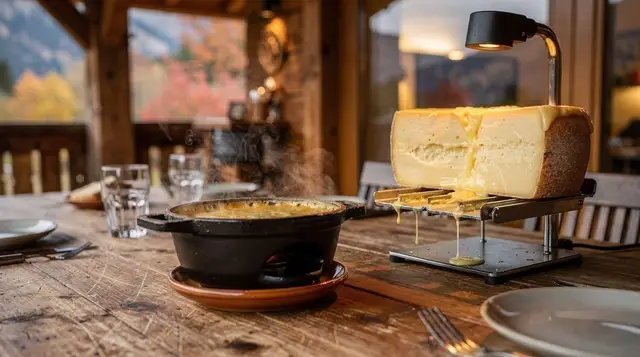
If chocolate and cheese specifically are what you’re after rather than full meals, they get separate, more detailed treatment in Swiss chocolate experiences in Zurich and Swiss cheese dairies as a day trip. For the other classic Swiss comfort food, see fondue and raclette in Zurich, and for coffee culture specifically, Zurich’s coffee and bakeries.
Practical notes
Tipping is not expected the way it is in some countries — service is included in the bill by law, and Swiss diners typically round up to the nearest convenient amount rather than adding a fixed percentage. Card payments are near-universal, including for small amounts, though carrying some cash is still sensible for market stalls and smaller stands.
Sunday opening hours are limited outside the station and tourist areas, so if you’re travelling on a Sunday, the Hauptbahnhof food court or a hotel breakfast is often the simplest plan. If you’re building a full day around food and markets, it’s worth checking how many days in Zurich makes sense so you’re not trying to fit a market morning, a food tour and a sit-down dinner into a single rushed day.
Families travelling with children will find portion sizes generous enough to split, and most restaurants are used to it without a fuss — see Zurich with kids for more on that side of things. And if souvenirs are part of the plan alongside the eating, cheese and chocolate bought at Zurich’s markets travel better than most other options.
Zurich food FAQ: prices, markets and what to order
How much does a meal cost in Zurich?
A sit-down main course in a mid-range restaurant runs CHF 28-42. A bowl of soup or a sausage from a stand is CHF 8-15. A three-course dinner with a glass of wine in a proper restaurant is CHF 70-100 per person. Zurich is consistently ranked among the most expensive cities in Europe for eating out, and the prices are not exaggerated.
What is Zürcher Geschnetzeltes?
It is strips of veal (sometimes mixed with kidney) in a cream and white wine sauce with mushrooms, almost always served with rösti. It is the closest thing Zurich has to a signature dish, and most traditional restaurants have a version on the menu, priced from around CHF 32 up to CHF 55 in the more formal old-town places.
Is rösti served with everything?
Not with everything, but it is the default side for Swiss-German main courses and appears on almost every traditional menu. Plain rösti is sometimes ordered on its own as a light meal, often with a fried egg and bacon on top, for around CHF 18-24.
When is the Bürkliplatz market open?
The main produce and flower market runs Tuesday and Friday mornings, roughly 6am to 11am, at Bürkliplatz by the lake. It is a working market for fruit, vegetables, cheese and flowers rather than a tourist food market, so go for browsing and a coffee rather than a full meal.
Are Zurich’s food halls worth visiting?
They are worth an hour if you want variety without committing to a sit-down restaurant. Expect CHF 15-25 per dish, cash and card both accepted, and a noisier, more casual atmosphere than a traditional Stube. They are a reasonable lunch option, not a bargain.
Is a guided food tour worth the price?
For a first visit, yes, mainly for the access it buys: a guide who explains what you are eating and can get you into shops and cellars you would otherwise walk past. At CHF 100-160 for several tastings it is not cheap, but it usually works out cheaper than ordering the same dishes separately across several restaurants.
Where can I eat cheaply in Zurich?
Migros and Coop supermarkets have hot food counters and self-service canteens with mains from CHF 10-16, open long hours and usually the cheapest hot meal in the city centre. Bakeries sell filled sandwiches and pastries from CHF 6-9, and department store cafeterias such as Jelmoli’s are similarly priced.
Zurich food & drink tours on GetYourGuide
Verified deep-linked GetYourGuide tours. Book through these links and we earn a small commission at no cost to you.
GetYourGuide does not provide a product photo for this activity — the image shows the meeting point, photographed by us.