A day on the Rigi in November
I nearly cancelled. It was a Tuesday in the second week of November, the sky over Zürich was the colour of a wet pavement, and the forecast for the day said “fog, clearing late, maybe.” Nobody plans a mountain trip around “maybe.” But I’d read enough about the Swiss Plateau’s autumn temperature inversions to know that grey at 400 metres and clear blue at 1,800 metres can happen on the same day, twenty minutes apart on the same train line. So I went anyway, mostly to find out if it was true.
It was true, and it’s the whole reason to do this in November rather than June.
What the fog actually does
Zürich sits in a basin, and from late October through December the air below about 1,000–1,200 metres regularly turns still and damp — locals call the resulting blanket Hochnebel. It can sit there for days. Above it, the sky is often completely clear, because the cloud layer is a lid, not a storm. The Rigi, at 1,797 metres, usually pokes well above that lid. So does the Uetliberg on a good day, though it’s a much smaller hill and doesn’t always clear the deck. The Rigi almost always does, which is part of why it earned the nickname “Queen of the Mountains” long before anyone was writing travel blogs about it.
None of this is guaranteed. Some November days the inversion doesn’t set up and the whole country is grey top to bottom. I got lucky, but the odds were good enough that I’d take the bet again.
Getting there
I went via Arth-Goldau rather than the lake route through Vitznau, mainly because the Lake Lucerne boats run a reduced winter timetable in November and I didn’t want to build my day around a sparse ferry schedule. From Zürich HB it’s a direct train to Arth-Goldau, then the Rigi Bahnen cogwheel train climbs the rest of the way to Rigi Kulm. It’s a slower, quieter way up than the summer route through Lucerne, and in November that’s an advantage rather than a compromise.
| Route | From Zurich HB | Notes |
|---|---|---|
| Via Arth-Goldau | Train, then cogwheel railway to Rigi Kulm | Runs year-round, unaffected by boat schedules |
| Via Vitznau (lake route) | Train to Lucerne, boat to Vitznau, cogwheel railway up | Slower in November; boats less frequent |
| Rigi Kaltbad cable car | From Weggis | Alternative if you’re coming from that side |
A Swiss Travel Pass or a Half Fare Card cuts the fare significantly — I was travelling on Half Fare and the full return from Arth-Goldau to the summit still wasn’t cheap, but it was noticeably less painful than the full-price ticket the couple next to me were grumbling about.
The one call I made before leaving
The Rigi Bahnen network, like most Swiss mountain railways, takes sections out of service for scheduled maintenance in spring and again in autumn. I’d read enough trip reports of people arriving to find a stretch of track or a cable car closed that I rang ahead the day before to confirm the full route to the summit was running. It was, but only because the autumn works had already finished for the season. If you’re going anywhere in the Alps between late October and early December, check the operator’s site or call first — this is the single most common thing that ruins a day up here, and it’s entirely avoidable with two minutes of checking.
The climb itself
Zürich HB was exactly as grey as promised. So was most of the Zugersee valley on the way to Arth-Goldau — flat, damp, the kind of light that makes everything look slightly sad. The cogwheel train pulled out of Arth-Goldau into more of the same, and for the first ten minutes or so I assumed the whole gamble had failed.
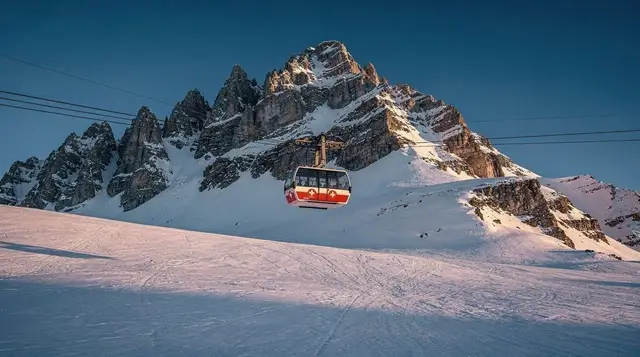
Then, somewhere around Rigi Staffel, the carriage windows went white, then grey, then suddenly blindingly bright. We’d broken through the top of the cloud layer. Below the train, an unbroken white sea stretched out to the horizon, with only the very tips of a few nearby peaks — Pilatus, distantly, the Rigi’s own lower ridges — poking through like islands. Above it: a hard blue sky and full, warm sun, which felt bizarre given it was about four degrees outside.
The carriage had maybe eight people in it. In August this train is standing-room only with a queue at Arth-Goldau; in November I had a bench to myself and could walk between carriages to see the view from both sides without asking anyone to move.
The summit
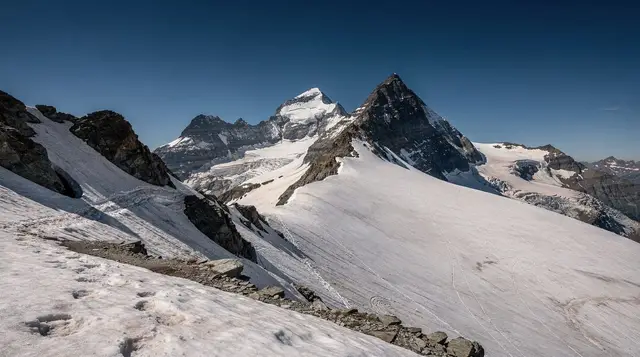
Rigi Kulm in November is not the Rigi Kulm of the postcards. Half the shops and one of the two restaurants were closed for the season. The famous panorama — the Bernese Alps, the lakes, on a clear day supposedly as far as the Black Forest — was fully visible, since there was nothing in the way except cloud far below. But it was cold, properly cold, with a wind that the tourist-season summer visitor never has to think about. I’d brought a proper coat and was still glad to duck into the one restaurant that was open for a hot chocolate after about forty minutes outside.
If the logistics of route-planning and connections aren’t something you want to manage yourself, the small-group day trip that combines the Rigi with Lucerne handles the train and cogwheel-railway connections for you, which takes some of the guesswork out of a shoulder-season visit when timetables can shift.
Staying over
I hadn’t originally planned to stay the night, but the hotel on the summit was offering rooms at roughly half what they charge in July, so I changed my ticket and stayed. Watching the cloud sea turn orange and then disappear as the sun went down, from a mountain that had a total of maybe fifteen overnight guests, was worth the extra day on its own. Breakfast the next morning was in an empty dining room with the same view, no queue, no rush.
If a night on the mountain with some downtime built in sounds appealing, there’s a two-day Rigi package that includes a wellness element, which is a reasonable way to bank an overnight stay without organising the hotel yourself. There’s also a self-guided version that pairs the Rigi with a spa stop in Lucerne, better suited if you want to set your own pace rather than follow a fixed itinerary.
What I’d tell someone going in November
Bring more layers than you think you need — the summit wind cuts through anything thin, even in bright sun. Check the weather and cloud-base forecast the night before, not just the general “rain or shine” outlook, since what matters here is the inversion layer, not the weather in Zürich itself. Call the railway to confirm the full route is open, since best time to visit doesn’t mean much if a section is shut for maintenance. And don’t expect the full range of restaurants and shops that are open from May to October — autumn in Zurich generally means a scaled-back mountain infrastructure, and November is the quietest stretch of that.
For comparison, I’ve also done Mount Pilatus and Mount Titlis at other times of year, and neither gave me the same cloud-sea effect the Rigi did that day — Pilatus is often right in the inversion layer rather than above it, and Titlis is high enough that you’re usually just in ordinary winter weather rather than watching a fog bank from above.
Visiting the Rigi in November: what to know
Is the Rigi open in November?
Yes, the cogwheel railway from Arth-Goldau runs year-round. Some restaurants, shops, and the Vitznau boat connections operate on a reduced winter schedule, and short sections can close for scheduled autumn maintenance, so it’s worth checking the Rigi Bahnen website or calling ahead before you travel.
Will I actually see above the clouds?
Often, but not always. The Swiss Plateau’s Hochnebel (low cloud/fog layer) typically sits below about 1,000–1,200 metres from late October through December, and the Rigi’s 1,797-metre summit usually clears it. Check the cloud-base or inversion forecast the night before, not just a general weather forecast.
How much can I save on accommodation in November?
I paid roughly half of what the same room on the summit costs in peak summer. Hotel rates across the Lucerne and central Switzerland region generally drop once the main hiking season ends in October.
Is it cold at the top?
Yes, noticeably more than the sunshine suggests. Even on a clear, bright day the wind at 1,797 metres in November is properly cold. A proper coat, hat, and gloves are worth carrying even if it looks warm from below.
Which route from Zurich is best in November?
The Arth-Goldau route (train plus cogwheel railway) is more reliable in November than the Vitznau lake route, since the Lake Lucerne boats run a reduced winter timetable.
Does a Swiss Travel Pass or Half Fare Card cover the Rigi?
A Swiss Travel Pass or Half Fare Card significantly reduces the fare on both the approach train and the Rigi Bahnen cogwheel railway. Full-price tickets are considerably more expensive.
How does the Rigi compare to other day trips from Zurich in November?
Of the standard day trips from Zurich, the Rigi is one of the more reliable bets for clear weather in autumn and early winter precisely because of the inversion effect — lower viewpoints and valley towns stay stuck under the same fog that covers Zürich.
Mountain excursions on GetYourGuide
Verified deep-linked GetYourGuide tours. Book through these links and we earn a small commission at no cost to you.
GetYourGuide does not provide a product photo for this activity — the image shows the meeting point, photographed by us.