Best time to visit Zurich: a month-by-month guide
When is the best time to visit Zurich?
Late May to mid-September gives the most reliable weather and full access to mountain excursions, but it's also the most expensive and crowded period. April, early May and late September to mid-October offer a good balance of decent weather, thinner crowds and lower hotel prices, though some cable cars close for a week or two of maintenance in those shoulder windows.
Choosing when to go: the trade-offs that actually matter
There’s no single correct month for Zurich. What changes, season to season, is a set of trade-offs: how much rain you’ll likely get, how full the trains and cable cars are, what a hotel room costs, and whether the mountain excursions that make Zurich worth the money are actually running. This guide works through those trade-offs month by month, then flags the one thing most itineraries get wrong: booking a day trip to a summit during its spring or autumn maintenance shutdown.
For the wider seasonal picture beyond this summary, see Zurich weather month by month. This page focuses specifically on how to pick dates.
Zurich month by month
| Month | Typical daytime temp | Rain days | Crowds | Hotel prices | Mountain lifts |
|---|---|---|---|---|---|
| January | 2-5°C | 9-10 | Low | Low | Ski areas open, valley lifts variable |
| February | 3-7°C | 9 | Low-medium (school holidays) | Low-medium | Ski areas open, good snow |
| March | 7-12°C | 10 | Medium | Medium | Mixed; lower lifts starting spring closures |
| April | 12-16°C | 11 | Medium | Medium | Many lifts closed for spring revision |
| May | 16-20°C | 12 | Medium-high | Medium-high | Most reopen by mid to late May |
| June | 19-23°C | 13 | High | High | Fully open |
| July | 22-25°C | 13 | Very high | Peak | Fully open |
| August | 21-24°C | 12 | Very high | Peak | Fully open |
| September | 18-22°C | 10 | High | High | Fully open |
| October | 12-16°C | 10 | Medium | Medium | Some lifts start autumn revision |
| November | 6-9°C | 10 | Low | Low-medium | Mixed; some closed for autumn revision |
| December | 2-5°C | 9 | Medium (Christmas markets) | Medium-high | Ski areas reopening, valley lifts variable |
These are broad averages, not forecasts for a given week; Zurich’s weather is genuinely changeable, and a fine October can beat a wet July. Treat the table as a way to set expectations, not a guarantee.
Spring (March to May): improving weather, patchy mountain access
Spring is the trickiest season to plan around, because the two things you’d want to combine — mild city weather and open mountain excursions — don’t always line up. March and early April in Zurich itself are pleasant for walking the old town, the Zurich old town walking guide routes work well once the worst of the winter cold has passed, and hotel prices are still reasonable.
The catch is the mountains. Cable cars and cogwheel railways above roughly 1,500 metres typically shut for one to three weeks each spring for scheduled maintenance, usually somewhere in the mid-April to late-May window. This is the single most common way a Zurich trip goes wrong: a family books four days in late April expecting to ride up Rigi or Pilatus, only to find the summit lift closed for revision with no published reopening date more precise than “late May.” Always check the specific operator’s site — Rigi Bahnen, Pilatus Bahnen, Titlis Bergbahnen — before locking in dates for a mountain day trip in April.
By mid to late May, most lifts are back and lower trails are usually clear of snow, though anything above 2,000 metres can still hold patches into June. May is genuinely a good month if your dates land after the reopening: warm enough for outdoor time, before the summer crowds, and before peak pricing kicks in. For a comparison of which peak suits which trip, see Pilatus vs Rigi vs Titlis.
Spring is also a reasonable time for city-based activity that doesn’t depend on altitude. A guided bike ride through Zurich’s neighbourhoods works well once the roads have dried out and before summer heat makes cycling less comfortable.
Summer (June to August): the reliable but expensive choice
June through August is when everything in and around Zurich is guaranteed to be open: every cable car, every boat on Lake Zurich, every hiking trail up to altitude. It’s also when the city and the classic day trips are at their fullest and most expensive. Hotel rates in central Zurich commonly run 30 to 50 percent above winter rates in July and August, and popular excursions like Jungfraujoch or the Rhine Falls draw their heaviest queues.
Two practical points for summer specifically. First, book timed train or cable car tickets for Jungfraujoch ahead of the day if you’re travelling in July or August; the Interlaken Ost queue for the first available slot can run well past an hour by mid-morning. Second, the Zürich Street Parade, held on a Saturday in August, fills the city’s hotels for that weekend specifically — check the date before booking if a quiet weekend in the city matters to you, and see the Street Parade guide if it’s the reason you’re coming.
Warm weather also opens up river and lake activity that isn’t available the rest of the year. Wild swimming in the Limmat is a genuine local summer habit, not a tourist gimmick, and outdoor lidos around the lake get busy on hot afternoons. If a hotter day trip appeals, an open-top look at the city paired with the Rhine Falls and an open-top Zurich city tour covers two of the region’s better outdoor stops in one day.
Summer is also the one season where the Alps genuinely deliver on the postcard version: clear high trails, full cable car service, and long daylight for day trips from Zurich that need an early start and a late return, such as Zermatt or Lugano and Ticino.
Autumn (September to November): the shoulder season worth planning around
September is arguably the best single month for a first Zurich trip: daytime temperatures are still comfortable, the worst of the summer crowds have thinned, and every mountain lift is still running on full summer schedule until the autumn revision period starts. Early October usually continues in the same vein, with the added bonus of forest and vineyard colour around Lake Thun and Brienz and along Lake Constance.
The trade-off arrives from mid-October onward, when the same maintenance logic as spring applies in reverse: lifts close for a week or two of autumn revision, usually falling somewhere within October and November, before winter ski operations begin. As with spring, the exact dates shift year to year and lift to lift, so this is the second window where checking the operator’s site directly, rather than assuming a mountain is open, saves a wasted day.
November itself is Zurich’s quietest month for prices and crowds in the city, but it’s also the greyest: short days, frequent low cloud, and higher-altitude excursions running on a reduced or paused schedule. It suits a city-and-museums trip — see the Zurich museums guide — better than a mountain-focused one. Late November also marks the start of the Christmas markets, covered in the Zurich Christmas markets guide, which shifts the character of a late-autumn visit noticeably in its final week.
For a slower-paced look at the mountains without the summer crowds, a rail-and-hike combination such as the Gotthard line train journey and hike suits September particularly well, before any autumn closures begin.
Winter (December to February): a different but genuine reason to visit
Winter Zurich isn’t a compromise version of the summer trip; it’s a different trip. The old town, with its narrow lanes and the twin towers of the Grossmünster, suits cold, clear days as well as it suits summer ones, and museums, the Kunsthaus among them, are naturally more appealing when it’s too cold to linger outside. December brings the Christmas markets; January and February bring genuinely low hotel prices and thin crowds, aside from the school holiday weeks in early February.
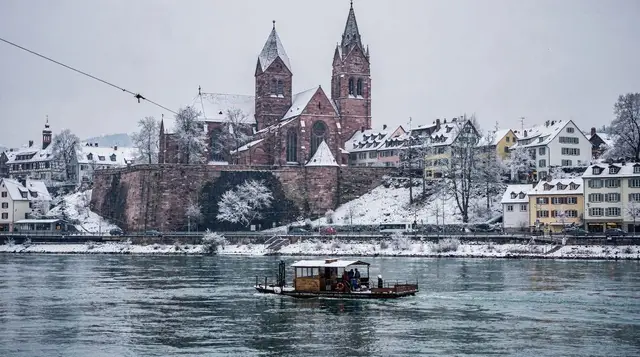
Where winter changes the plan is altitude. Ski resorts and high-altitude lifts run their normal winter service and are the best reason to head out of the city between December and March; see skiing day trips from Zurich and sledding and snowshoeing near Zurich. Lower, non-ski summits closer to the city — Uetliberg among them — can be foggy or simply unremarkable in winter rather than snow-covered and scenic, since Zurich sits low enough that snow doesn’t reliably settle in the city itself. If a snowy mountain view is the goal, go higher than the closest hill.
Lucerne makes a good winter day trip regardless of snow conditions, since much of what’s worth seeing there is indoors or lakeside; a stop at a local microbrewery, such as the one on the Lucerne microbrewery visit and tasting, is a reasonable way to fill a grey winter afternoon.
Mountain maintenance closures: the dates that catch people out
This is worth repeating on its own, because it’s the single most common planning mistake for a Zurich-based trip. Cable cars, cogwheel railways and some cable-car-dependent restaurants close for one to three weeks twice a year for scheduled maintenance: once in spring, usually somewhere between mid-April and late May, and once in autumn, usually somewhere between October and November. The exact weeks are set by each operator individually and change from year to year, so a date that worked last year isn’t a safe assumption this year.
| Mountain | Typical spring closure window | Typical autumn closure window |
|---|---|---|
| Rigi | Mid-April to early May | Late October to mid-November |
| Pilatus | Mid to late April | Late October to November |
| Titlis | April | November |
| Uetliberg | Rarely closes (it’s a train, not a cable car) | Rarely closes |
| Schilthorn | April to early May | November |
If a specific summit is the reason for your trip, check that operator’s website for the current year’s revision dates before booking transport or accommodation around it. This applies whether you’re planning independently or booking a fixed-date excursion such as the panoramic viewpoints and old town tour, which stays at lower elevation and isn’t affected by these closures.
How season affects cost, in practice
Season moves the price of accommodation more than anything else in a Zurich trip. Restaurant meals, museum entry and public transport fares stay roughly flat year-round; a Zürich Card or a Swiss Travel Pass costs the same in January as in August. For a full cost breakdown, see Zurich travel costs, and for finding a base that suits your dates, where to stay in Zurich.
| Season | Double room, mid-range hotel | Notes |
|---|---|---|
| Winter (excl. Christmas markets) | Lowest of the year | Ski resort accommodation moves the opposite way and gets expensive |
| Spring | Rising through April-May | Jumps around public holidays and trade fairs |
| Summer | Peak | July-August and Street Parade weekend highest |
| Autumn | Falling from September | Similar to spring by November |
Matching season to trip type
- A first visit built around the classic sights and one or two mountain day trips: aim for June or September, checking that your chosen summit isn’t mid-closure.
- A budget-focused trip: Zurich on a budget pairs best with January, February or November, when hotel rates are lowest.
- A winter sports trip: December through March, planning excursions at ski-resort altitude rather than low hills near the city.
- A family trip with school-age children: late July or August lines up with most European school holidays but also with peak pricing and peak queues; late June or early September avoids both if term dates allow it.
- An itinerary built specifically around the Alps: see the summer Alps five-day itinerary for a route that assumes full lift service.
None of this makes one month objectively “best.” A traveller who wants guaranteed mountain access and warm evenings should book June to August and accept the crowds and prices that come with it. A traveller who’d rather have a quiet old town and a lower bill, and who doesn’t mind skipping the highest summits, does better in November, January or February. The months to plan around carefully, rather than default into, are April, May, October and November — good value and good weather on paper, but the exact weeks when a specific cable car might be shut for maintenance.
Seasonal experiences on GetYourGuide
Verified deep-linked GetYourGuide tours. Book through these links and we earn a small commission at no cost to you.
GetYourGuide does not provide a product photo for this activity — the image shows the meeting point, photographed by us.