Zurich in autumn
Is autumn a good time to visit Zurich?
Yes, particularly late September to mid-October: foliage colours the lakeside parks and the Uetliberg, and clear mornings often put Zurich above a sea of fog visible from the Uetliberg or Mount Rigi. Late October to November is greyer and colder, and several cable cars close for two to three weeks of annual maintenance, so check operating dates before planning a day trip.
Zurich does not do a dramatic autumn. There is no single week when the whole city turns orange and everyone agrees it is the moment to visit. What happens instead is a slow three-week drift, starting on the Uetliberg’s forested slopes in late September and finishing along the lakeside promenade by mid-October, with the two ends of the season looking almost nothing alike. Late September can still deliver a 20°C afternoon on a café terrace. Mid-November delivers fog, single-digit temperatures, and cable cars taped off for annual maintenance. Both are autumn in Zurich; which one you get depends entirely on when you book.
Reading the season: what changes week by week
September in Zurich still behaves like a tail end of summer. Lake swimming at the Seebad Enge or Utoquai stays plausible into the second week, the outdoor markets run as normal, and foliage has barely started outside the higher ground. The shift becomes visible from late September: chestnut trees along the lake turn first, followed by the beech and mixed woodland on the Uetliberg through early-to-mid October.
By late October the display is mostly over at low altitude and the weather turns genuinely autumnal — grey skies, temperatures in single digits by morning, and a real chance of fog sitting over the city for days at a time. November is the transition month proper: the last leaves come down, the first snow appears on peaks above 2,000 metres, and several mountain railways and cable cars shut for scheduled maintenance, usually for two to three weeks starting in the first half of the month. None of this is exotic weather. It is closer to what Munich or Vienna does at the same time of year, just with the added local trick of the fog.
| Period | What to expect | Best for |
|---|---|---|
| Early-to-mid September | Mild, 18–23°C, minimal colour change | Lake activities, city walking |
| Late September–early October | Foliage starting, 14–19°C | Photography, first Nebelmeer mornings |
| Mid-to-late October | Peak colour at low altitude, 8–14°C | Uetliberg, vineyard villages |
| November | Bare trees, 2–8°C, fog frequent, some closures | Museums, city break, early snow trips |
The sea of fog: Zurich’s best autumn trick
The Nebelmeer is the one weather phenomenon that genuinely rewards planning around. A temperature inversion settles a flat layer of grey cloud over the Swiss plateau, usually below 900–1,000 metres, while the sky above stays completely clear. Anyone stuck under the cloud sees a dull grey morning. Anyone who climbs above it sees blue sky, sunshine, and a white sea stretching to the horizon with only the highest peaks poking through.
The Uetliberg is the easy version: 25 minutes by train from Zurich HB, a summit at 813 metres, and no guarantee — on plenty of mornings the fog sits above the summit and you just get grey. It clears the fog often enough in October and November to be worth an early train, but not reliably enough to build a whole day trip around.
Mount Rigi, reached via Lucerne (45 minutes by train from Zurich, then a cogwheel railway or cable car up), sits at 1,798 metres and clears the typical fog ceiling far more consistently. Mount Pilatus, also via Lucerne, does the same. Both mean an earlier start and a higher ticket price than the Uetliberg, but a meaningfully better chance of standing above the cloud rather than guessing whether you will.
a Gotthard line train journey combined with a hike is worth considering on a clear autumn day for the same reason: the route climbs well above the plateau, and the hiking sections pass through larch forest that turns a distinctive gold in October, different from the beech colour lower down.
Practical detail: what the fog costs you
The trade-off with fog-chasing is that it only works on genuine inversion mornings, and there is no way to be certain from Zurich itself — check a webcam for the target summit (Rigi Kulm and Pilatus both run public ones) before leaving rather than trusting the forecast for the city. On a day with no inversion, both summits are just cold and cloudy, and the ticket cost — a return trip to Rigi Kulm runs to roughly CHF 84 with a Half Fare Card, more without — buys the same grey view you would get by staying in town. Building in a webcam check the morning of, rather than booking rigidly the night before, saves wasted trips.
Wine harvest around Lake Zurich
Switzerland’s wine industry is small and almost entirely consumed domestically, which is part of why so few visitors know it exists. The harvest (Weinlese) runs through September and into October along the Goldküste — the eastern shore of Lake Zurich around Erlenbach, Meilen and Stäfa — where steep vineyards of Räuschling and Pinot Noir climb from the lakeshore. Villages hold small Winzerfest harvest festivals with local growers pouring their own wine, usually free to attend with wine sold by the glass. This is not developed for tourism in the way Alsace or the Douro is: there are no large ticketed harvest tours, and most tastings happen because you ask at a cellar door rather than book online.
The Rhine wine region near Stein am Rhein and the villages around Rhine Falls run on a similar calendar and combine easily with a half-day out of Zurich. A Rhine Falls visit paired with an open-top city tour covers the falls at their least crowded — river flow drops through autumn compared with the summer snowmelt peak — though the spray display is correspondingly less dramatic than in June.
a Rhine Falls visit combined with an open-top city tour is a reasonable way to see both in one day without arranging your own train connections, though it costs more than doing the same route independently on a Half Fare Card.
Vermicelles and what else to eat
Vermicelles is the dessert most associated with Swiss autumn: sweetened chestnut purée forced through a press into thin strands over whipped cream, made with fresh Ticino chestnuts that come into season from late September. It looks unlike anything else on a Swiss café menu and tastes considerably better than the description suggests. Confiserie Sprüngli (multiple branches, including the Paradeplatz flagship) and Conditorei Schober serve it seasonally for roughly CHF 8 to 12 a portion, generally available from October through into winter.
Roast chestnuts (Marroni) appear as street stalls around the old town and near Bahnhofstrasse from October, sold in paper cones for CHF 4 to 6. Game dishes — venison, hare — start appearing on restaurant menus as the Jagdsaison (hunting season) runs through autumn, typically served with Spätzli and braised red cabbage. None of this is hard to find without planning; it simply replaces the summer lake-terrace menus that dominate June to August.
Cable car and lift closures: the detail that ruins the most days
This is the least glamorous fact about Swiss autumn and the one most likely to derail a trip built around a single mountain. Cable cars and mountain railways close for scheduled revision — routine safety maintenance — twice a year, in spring and again in autumn, typically for two to three weeks starting sometime in November, though exact dates shift year to year and lift to lift. A trip planned around, say, Mount Titlis or the Schilthorn in mid-November can arrive to find the cable car simply not running, with no workaround beyond a hiking trail that may itself already have snow.
The fix is checking the specific operator’s published maintenance dates before booking anything — trains, hotels, or activities — around a particular summit from late October onwards. September and the first half of October carry essentially no closure risk; the second half of November carries the most.
Day trips that hold up regardless of the weather
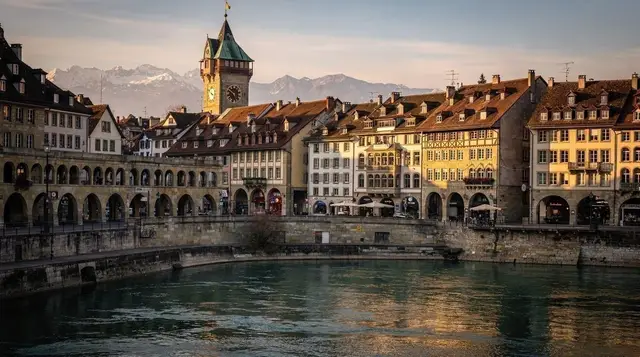
Trips that do not depend on a single viewpoint or a clear sky are the safer autumn bet. Bern, the federal capital 56 minutes away by train, works as a city day out whatever the weather is doing, with the old town’s arcades giving genuine shelter from rain — something most Swiss towns lack.
a private day trip from Zurich to Bern removes the train timetable from the equation, which matters more in autumn when connections to onward mountain destinations get less frequent.
The Aare Gorge and Grindelwald area also work well into October: the gorge walk is largely sheltered by rock overhangs, and Grindelwald’s lower-altitude paths stay walkable well after the higher lifts have gone into maintenance.
a combined lakes, Aare Gorge and Grindelwald day trip covers three distinct landscapes in one outing, useful when a single-summit plan carries closure risk.
For a lower-key option that stays entirely at city altitude, an urban bike tour with a local guide through the old town and along the lakeshore works on all but the wettest days and gives a good sense of how the foliage timing differs between the sheltered old town streets and the open lakefront.
an urban bike tour of Zurich with a local guide is a reasonable half-day option that does not depend on mountain weather at all.
Getting around and what to book in advance
Autumn does not change how the ZVV network or the Swiss Travel Pass work, but shorter daylight hours matter more for planning: sunset moves from around 19:30 in early September to before 17:00 by late November, which compresses how much a single day trip can cover, particularly to anything east or south where the return train matters. Checking the Swiss Travel Pass guide against a Half Fare Card is worth doing before an autumn trip specifically, since fewer long summer day trips can mean the pass pays for itself less easily than in July or August — see the Swiss Travel Pass versus Half Fare comparison for the actual numbers.
Hiking gear matters more than it does in summer: the best hikes near Zurich guide notes which routes turn muddy or icy first as temperatures drop, and paths that are straightforward in September can need proper boots by mid-November.
Where autumn fits against the rest of the year
Compared with the best time to visit Zurich overall, autumn sits below the May–June and September peak-shoulder window for reliable weather, but above winter for daylight and above summer for hotel prices, which typically drop 10 to 20% from the July–August peak once September ends.
The month-by-month weather guide has the specific rainfall and temperature averages if a trip needs to be pinned to particular weeks rather than “autumn” in general. For a broader sense of what a multi-day autumn visit can cover, the three-day Zurich itinerary adapts reasonably well to shorter daylight and cooler temperatures without needing major changes.
Two blog posts from people who have done this specific season here are worth reading before committing to a fog-chasing plan: a morning on the Uetliberg and a day on the Rigi in November, both of which describe the actual hit rate of the Nebelmeer rather than the marketing version.
Zurich in autumn: frequently asked practical questions
When does autumn foliage peak around Zurich?
Usually the last week of September through the third week of October, depending on the year. Lower-altitude spots such as the lakeside promenade and Zürichhorn turn later than the forested slopes of the Uetliberg, so the display shifts gradually over about three weeks.
What is the Nebelmeer and where do I see it from Zurich?
Nebelmeer means sea of fog: a layer of low cloud sits over the Swiss plateau while the sky above stays clear. The Uetliberg (813 m) clears it on some mornings; Mount Rigi (1,798 m) and Mount Pilatus, both reached via Lucerne, clear it far more reliably because they sit well above the typical fog ceiling.
Which cable cars close in autumn for maintenance?
Many Swiss mountain lifts close for two to three weeks in spring and again in autumn (typically mid-November) for scheduled revision work, which is when accidents are prevented rather than caused. Dates vary by year and by lift, so check the specific operator’s website before booking a day trip built around one summit.
What is Vermicelles and where can I try it in Zurich?
Vermicelles is a Swiss autumn dessert of sweetened chestnut purée pressed into thin noodle-like strands over whipped cream, traditionally made with fresh Ticino chestnuts from around late September onwards. Confiserie Sprüngli and Conditorei Schober both serve it seasonally, usually costing CHF 8 to 12 for a portion.
Is the wine harvest around Lake Zurich open to visitors?
Yes. Villages on the Goldküste and Rhine wine regions, including Erlenbach, Meilen and Stäfa, hold small harvest festivals (Winzerfest) in September and October, and some growers open cellar doors for tastings. It is low-key compared with French or Italian harvest tourism, with no large ticketed events to plan around.
Do I need different clothing for Zurich in autumn than in summer?
Layers and a waterproof jacket. September can still reach 20°C in the afternoon, while November mornings sit close to freezing with persistent damp fog. Pack for a 10 to 15°C swing within a single day, especially on mountain excursions where altitude adds another temperature drop.
Are day trips from Zurich still worthwhile once the leaves have gone?
Yes, though the itinerary changes. Late November trades foliage for early snow at altitude, so trips built around a train journey, a gorge walk, or a city like Bern or Basel hold up better than trips built around a single viewpoint that may be shut for maintenance.
Seasonal experiences on GetYourGuide
Verified deep-linked GetYourGuide tours. Book through these links and we earn a small commission at no cost to you.
GetYourGuide does not provide a product photo for this activity — the image shows the meeting point, photographed by us.