Zurich weather month by month: temperatures, rain and snow
What is the weather like in Zurich month by month?
Zurich has a temperate climate with warm, humid summers (peaks around 24-25°C in July and August) and cold, grey winters (highs of 3-5°C, occasional light snow). Rain falls fairly evenly all year, roughly 9-12 days a month, so no month is reliably dry. Mountain destinations reachable from Zurich are noticeably colder and snowier than the city itself, especially above 1,500 m.
How Zurich’s climate actually behaves
Zurich sits at 408 m on the Swiss Plateau, between the Alps and the Jura, and its climate is temperate and fairly damp rather than extreme. There’s no true dry season and no true monsoon: rain is spread across the calendar, arriving as short, sharp summer storms or as flat, grey drizzle in winter. What changes far more than rainfall is temperature, daylight and, critically, altitude. A day that’s mild and overcast in the city can be genuinely cold and snowy an hour away by train, which matters a lot if your plans include day trips from Zurich into the mountains.
The figures below are long-term averages, not guarantees. Treat them as planning ranges and check a short-range forecast the day before you travel, especially for anything above 1,000 m.
Zurich city climate at a glance
| Month | Avg high | Avg low | Rainy days | Sunshine hours/day |
|---|---|---|---|---|
| January | 3°C | -2°C | 11 | 2.0 |
| February | 5°C | -1°C | 10 | 3.0 |
| March | 10°C | 2°C | 11 | 4.0 |
| April | 14°C | 5°C | 11 | 5.0 |
| May | 19°C | 9°C | 12 | 6.0 |
| June | 22°C | 12°C | 11 | 7.0 |
| July | 25°C | 14°C | 10 | 7.5 |
| August | 24°C | 14°C | 10 | 7.0 |
| September | 20°C | 11°C | 9 | 5.5 |
| October | 14°C | 7°C | 9 | 4.0 |
| November | 8°C | 3°C | 10 | 2.0 |
| December | 4°C | -1°C | 11 | 1.5 |
Two things stand out. First, rainy days barely move across the year — even the driest months, September and October, still average nine. Second, sunshine hours swing far more than temperature does: December gets a fifth of the daylight quality of July, which is why Zurich winters feel duller than the thermometer alone suggests. For a broader seasonal breakdown, see best time to visit Zurich.
Winter: December to February
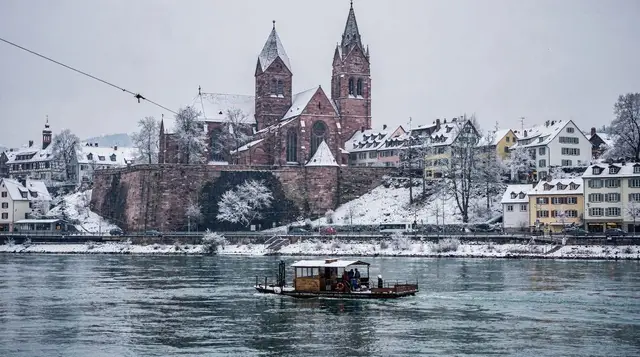
City winters in Zurich are cold, grey and often damp rather than dramatically snowy. Highs sit between 3°C and 5°C, with overnight lows regularly below freezing. Snow does fall in the city, but it’s inconsistent — a dusting one week, none the next, and rarely lasting more than a day or two before it turns to slush on the pavements. Fog is common along the Limmat and around the lake in December and January, sometimes sitting for days at a time (locally this low-lying fog is called Nebel).
What this means practically: pack for wet cold rather than dry cold, a warm waterproof coat does more work than a ski jacket in the city itself. December is also when Zurich’s Christmas markets run, and the cold adds to rather than spoils the atmosphere at Werdmühleplatz and the main station concourse.
Head uphill and winter turns into a different season altogether. Resorts and viewpoints above roughly 1,200-1,500 m hold a reliable snowpack from late November into April — see skiing day trips from Zurich and sledding and snowshoeing near Zurich for specifics.
Jungfraujoch, at 3,454 m, can have snow underfoot on any date in the calendar; read the honest expectations in the Jungfraujoch guide before booking. For a scenic winter rail day that mixes valley and mountain, the Gotthard line train journey with a hike runs through some of the most dramatic winter scenery accessible from Zurich HB.
Spring: March to May
Spring is Zurich’s most changeable season. March can still feel like winter, with highs around 10°C and a real chance of a late cold snap; by May, highs regularly reach 19°C and the lakeside promenades fill up. Rain stays frequent throughout — May is actually the wettest month of the year by rainy-day count, at around 12 days, even though the rain itself tends to be lighter than winter’s persistent drizzle.
The detail that catches visitors out: many mountain railways and cable cars in the region schedule their annual maintenance closures for April and into May, exactly when the weather starts to look inviting. Titlis, Pilatus, Rigi and Schilthorn installations each close for a window of one to three weeks at some point in spring — the dates move year to year and by operator, so check the specific lift before building an itinerary around it. This is worth doing before you buy anything; see Mount Titlis guide, Mount Pilatus guide and Mount Rigi guide for the current pattern.
Lower-altitude activity is a safer spring bet. The Uetliberg ridge above the city (see the Uetliberg guide) is usually walkable by March, and boat services on Lake Zurich generally resume for the season around Easter. If you want to cover ground on two wheels while the weather is still mild rather than hot, the guided city bike tour is a reasonable way to get oriented before venturing further out.
Summer: June to August
This is Zurich’s warmest and sunniest stretch, and also its most crowded and, at the top end, its most expensive for accommodation. July and August average highs of 24-25°C, but heatwaves pushing past 30°C occur most years and can last the better part of a week. Air conditioning is far from universal in Zurich’s older hotels and flats, so a heatwave here is more uncomfortable than the numbers alone suggest.
Despite the heat, June is nearly as rainy as any winter month on a day-count basis, and Swiss summers are known for sudden, heavy afternoon thunderstorms that can end a hike or an open-air event with little warning — worth remembering if you’re planning anything at altitude, since storms build fast over the Alps and a clear morning is no guarantee of a clear afternoon. This is also the best window, weather-wise, for anything requiring visibility: paragliding, via ferrata, or higher glacier crossings.
Summer heat is exactly when the Limmat and Lake Zurich earn their keep — locals swim in both, and the quiet side of Lake Zurich and a morning on the Uetliberg are both worth reading before you go.
For a clear-sky activity that depends on stable summer conditions, the tandem paragliding flight over the Alps only runs when visibility and wind allow, so summer gives it the best odds. If you’d rather cover more ground by rail and trail while the days are long, the day trip taking in Swiss lakes, the Aare Gorge and Grindelwald makes sense of a long midsummer day.
August also brings Street Parade, which pushes accommodation prices higher than the weather alone would justify — book well ahead if the dates overlap with your trip.
Autumn: September to November
September is arguably Zurich’s most pleasant month: highs around 20°C, only nine rainy days on average, and noticeably less crowded than summer. Both September and October share that distinction of being the driest months of the year by day-count, even though the reduced daylight — down to four hours of sunshine a day by October — makes the season feel shorter than it is.
By November the shift is unmistakable: highs drop to around 8°C, fog returns to the lowlands, and the light thins out well before 5pm. Autumn shares spring’s trap of mountain-lift maintenance windows, usually in October or November this time; the same operators listed above (Titlis, Pilatus, Rigi, Schilthorn) publish updated closure dates each year, so check before travelling rather than assuming last year’s calendar still applies.
Autumn’s clear, cooler days are good for hiking without summer’s storm risk — see best hikes near Zurich — and for scenic rail trips where the colours are part of the appeal, including anything through the Aare Gorge and waterfalls. If you’d rather let someone else drive and narrate, the private day trip from Zurich to Bern avoids the need to time trains around shortening daylight. For a faster-paced outdoor day before winter closes the higher trails, the e-bike adventure in Interlaken is one of the last reliably dry-trail options of the season.
The altitude effect: why the mountains run their own weather
Temperature in this region drops by roughly 0.6°C for every 100 m of elevation gained, and that single fact does more to determine your day than the season on the calendar. A mild 18°C afternoon in Zurich can be close to freezing at 3,000 m, with wind chill making it feel colder still.
| Location | Approx. altitude | Typical winter high | Typical summer high | Snow season |
|---|---|---|---|---|
| Zurich city | 408 m | 3-5°C | 24-25°C | Rare, brief |
| Uetliberg | 870 m | 1-3°C | 21-23°C | Occasional, light |
| Rigi | 1,800 m | -3 to 0°C | 17-19°C | Nov-Apr |
| Titlis | 3,020 m | -10 to -6°C | 5-8°C | Year-round snowfield |
| Jungfraujoch | 3,454 m | -15 to -10°C | 2-5°C | Year-round snow underfoot |
This is also why a single city forecast is nearly useless for planning a mountain day. Before booking anything above 1,500 m, check that specific summit’s own webcam and forecast, not Zurich’s. It also explains why cloud behaves so differently by altitude: the city can sit under flat grey Nebel for days in winter while Rigi or Uetliberg pokes up into clear sunshine above it — a phenomenon locals specifically chase, and one reason a day on the Rigi in November can outperform a grey day in town.
What each season is actually good for
| Goal | Best months | Why |
|---|---|---|
| City sightseeing, walking tours | May-Sep, or Dec for markets | Long days or festive atmosphere offset the crowds/cold |
| Skiing and snow sports | Dec-Mar | Reliable base above 1,200-1,500 m |
| Alpine hiking, via ferrata | Jun-Sep | Trails clear of snow, huts open |
| Lake swimming | Jun-Aug | Water temperature realistically swimmable |
| Scenic rail journeys | Year-round, best visibility Apr-Oct | Storms more likely in high summer |
| Budget travel | Nov, Jan-Feb (excl. holidays) | Lower hotel demand, shorter days |
| Photography, clear Alpine views | Autumn mornings, winter high-pressure spells | Less summer haze |
Packing and planning notes
Layering matters more than any single “best” jacket. A waterproof shell earns its place in every month, since even the driest months average nine rainy days. In winter, add insulated layers and grippy footwear for icy pavements rather than assuming Alpine-grade gear is needed in the city itself. In summer, pack for both a 30°C afternoon and a sudden thunderstorm on the same day — a compact umbrella beats a heavy coat.
If your itinerary depends on a specific cable car, funicular or mountain railway, check that operator’s own maintenance calendar before booking transport or accommodation around it — this is the single most common way a well-planned Swiss trip gets disrupted, more than the weather itself. For getting between these microclimates efficiently, see Swiss trains explained and the Swiss Travel Pass guide.
Common questions about Zurich’s weather
What is the coldest month in Zurich?
January is typically the coldest, with average highs around 3°C and lows dipping below freezing overnight. Snow in the city is possible but usually thin and short-lived, melting within a day or two.
What is the hottest month in Zurich?
July and August are the warmest, with average highs of 24-25°C. Heatwaves above 30°C happen most summers and can last several days, and Zurich’s older buildings are rarely air-conditioned.
Does it snow in Zurich city?
Occasionally, mainly between December and February, but city snow rarely settles for more than a day or two. For reliable snow you need altitude: resorts above roughly 1,200-1,500 m hold a snowpack through winter.
When do the mountains around Zurich get snow?
High-altitude spots such as Jungfraujoch and Titlis can see snow in any month, but a consistent base for skiing usually forms from late November and lasts into April. Lower peaks such as Rigi and Uetliberg are far less reliable.
Is there a rainy season in Zurich?
Not a distinct one. Rain is spread across the year, with a slight peak in early to midsummer when afternoon thunderstorms are common. Winter precipitation is lower in volume but greyer and longer-lasting.
Why do some cable cars close in spring and autumn?
Zurich-area mountain railways and cable cars typically shut for one to three weeks in spring (April-May) and autumn (October-November) for scheduled maintenance. This is separate from weather and catches visitors out, so always check the specific operator’s calendar before travelling.
What is the sunniest time of year in Zurich?
May to September brings the most daylight and the highest share of sunshine, though even midsummer months average only a partly sunny 7 to 7.5 hours a day, since cloud and haze are common in the Swiss Plateau.
What should I pack for Zurich regardless of season?
A layer against rain. Some form of waterproof jacket or umbrella earns its space in the bag in every month of the year, since no month in Zurich has fewer than about nine rainy days on average.
Seasonal experiences on GetYourGuide
Verified deep-linked GetYourGuide tours. Book through these links and we earn a small commission at no cost to you.
GetYourGuide does not provide a product photo for this activity — the image shows the meeting point, photographed by us.