Three countries, one lake, and a currency you’ll change twice
Lake Constance — the Bodensee to everyone who lives around it — is the rare Swiss day trip that isn’t really Swiss at all. Zurich sits about an hour from the western tip of the lake, but most of what people come for lies on the German and Austrian shores: Constance’s old town, Mainau’s gardens, Meersburg’s half-timbered lanes, Lindau’s harbour, and Bregenz’s floating stage below the Pfänder. The Swiss side, around Romanshorn, is flatter and quieter, and mostly useful as a ferry terminal rather than a destination in its own right.
The three-country layout is the appeal, but it also means the trip doesn’t behave like a normal day trip from Zurich. You’ll spend Swiss francs on the train out, switch to euros the moment you set foot in Constance, and switch currencies again if you carry on to Bregenz — Austria uses the euro too, so at least that leg doesn’t add a third currency, just a second border. None of this is complicated once you know it’s coming; it’s the kind of detail that catches people out precisely because Switzerland’s visa and Schengen rules make the crossing itself feel like a non-event.
Getting there from Zurich
Trains from Zurich HB reach Constance in around 1 hour 15 minutes, usually changing at Winterthur or running via Kreuzlingen on the Swiss side of the border. Swiss trains run on the same clockface timetable you’ll find everywhere else in the country, so there’s rarely a wait longer than half an hour even off-peak.
The Swiss Travel Pass covers the Swiss legs of this trip — Zurich to Kreuzlingen or Romanshorn, plus any Swiss-flagged lake boats — but it stops being useful the moment you’re on German or Austrian rail or water. Budget for a separate, usually modest, ticket once you cross. A Half Fare Card knocks the Swiss portion down further but does nothing for the German or Austrian legs either. Day-to-day travel costs in Zurich already run high; the euro side of this trip is, refreshingly, often cheaper once you’re actually there.
| Town | Country | Time from Zurich HB | Getting onward |
|---|---|---|---|
| Constance (Konstanz) | Germany | ~1h15 by train | Ferry to Meersburg, bus to Mainau |
| Meersburg | Germany | ~1h30 (train + ferry) | Ferry back to Constance |
| Lindau | Germany | ~1h50–2h by train | Regional trains along the German shore |
| Bregenz | Austria | ~2h by train | Seasonal lake boats to Lindau/Constance |
| Romanshorn | Switzerland | ~1h10 by train | Swiss-flagged boats across the lake |
Constance: the anchor town
Constance is the obvious base, and the only town on the lake big enough to feel like a proper city rather than a pretty stop. Its old town survived the Second World War almost untouched — the story goes that it was never bombed because the lights stayed on and Allied crews mistook it for neutral Swiss territory across the water, whether or not that’s the full explanation. The result is a genuine medieval core: narrow streets, the Konstanz Minster, and a harbour promenade with the Imperia statue turning slowly at its end.
A guided walk pays off here more than in most towns on this list, because the historical layers — Council of Constance, Reformation-era executions, Cold War-adjacent border oddities — aren’t obvious from the street. The Constance guided city tour covers the old town in a couple of hours, and the Konstanz: the proverbial city tour takes a more anecdotal route through the same streets if you’d rather hear the odder local stories than a straight chronology.
Constance also straddles the border in an unusual way: walk south from the centre and you’re in the Swiss town of Kreuzlingen without any real transition — no checkpoint, just a change of shop signage and currency. It’s a useful reminder of how thin the Schengen border actually is here.
Mainau: the flower island
A short bus or boat ride from Constance, Mainau Island is worth planning around rather than squeezing in. The island’s palm gardens, Italian rose garden, and Baroque palace grounds were maintained for generations by the Bernadotte family (descendants of the Swedish royal line), and the results are genuinely well kept rather than a theme-park version of a garden. Adult admission runs roughly EUR 25–28 depending on the season, which sounds steep for a garden until you’ve walked the whole site — it takes most people three to four hours to do it properly, including the butterfly house and arboretum.
Spring brings the tulip displays, summer the roses and dahlias, and the island stays open with reduced hours into December for a Christmas market that leans harder into lights and mulled wine than most German markets. It’s not a good half-hour stop; either commit to most of a day or skip it in favour of a town.
Meersburg: the view everyone photographs
Across the lake from Constance, reached by a 15-minute car-and-passenger ferry, Meersburg is smaller and steeper, built up a hillside with a genuinely old castle — the Altes Schloss claims to be one of the oldest inhabited castles in Germany — looking down over the harbour. It’s the single most photogenic stop on this shore, half-timbered houses stacked above the water, but it’s also compact enough to see on foot in an hour if you’re not stopping for wine.
Meersburg sits in vineyard country, and the Meersburg private tour with wine tasting combines the old-town walk with a tasting from the surrounding slopes — a reasonable way to turn a short stop into an afternoon rather than rushing back for the next ferry. Without a booked activity, budget an hour for the town itself and don’t plan to linger past the last convenient ferry back if Constance is your base for the night.
Lindau: the Bavarian island
Lindau is the odd one out geographically — a genuine island town, connected to the mainland by a causeway, sitting in Bavaria rather than Baden-Württemberg. The harbour entrance, marked by a lighthouse and a stone lion, has an Alpine backdrop on clear days that none of the other lakeside towns can match, since the Austrian mountains rise almost directly behind it.
It’s reachable from Constance by regional train in around 40–50 minutes along the German shore, or by a slower and more scenic seasonal boat. The Lindau private guided walking tour covers the harbour, old town and the former town hall’s painted facade in a couple of hours, which is roughly the right amount of time for the island unless you’re stopping to eat.
Lindau is also where the buggy option comes in if walking the shoreline holds less appeal than driving it — the buggy rental for Lake of Constanz highlights is a novelty way to cover ground between Lindau and nearby villages rather than a practical way to reach the town from Zurich.
Bregenz: the floating stage
Bregenz, on the Austrian shore, is the furthest point most Zurich-based visitors will realistically reach in a day — figure on 2 hours each way by train, which makes it a stretch to combine with anything else. The reason to come is the Seebühne, a stage built out over the water for the Bregenz Festival each July and August, staging opera on a genuinely enormous floating set. Outside festival dates the stage still stands and can be seen from the lakeside promenade, but the spectacle is really a summer-festival draw rather than a year-round sight.
The Pfänder cable car above the town gives a proper overview of the lake’s shape across three countries on a clear day, which is a useful way to make sense of the geography if you’ve spent the rest of the trip at water level. Bregenz doesn’t currently have a bookable guided activity on this list, so it works best as a standalone half-day rather than bolted onto Constance and Meersburg in the same visit.
Romanshorn and the quiet Swiss shore
Romanshorn is the practical counterpoint to all of the above: a working Swiss lake port with a car-ferry link to Friedrichshafen, decent train connections back to Zurich, and very little to detain a visitor beyond a lakeside walk and a harbour worth passing through rather than stopping for. It’s mentioned here mainly because it’s where the Swiss Travel Pass coverage actually ends, and because it’s a sensible last stop before heading back if you’ve spent the day on the German or Austrian side and want a Swiss-ticketed final leg home.
Seeing the lake from the water
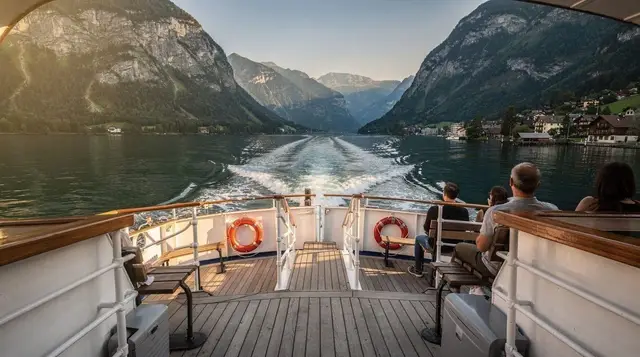
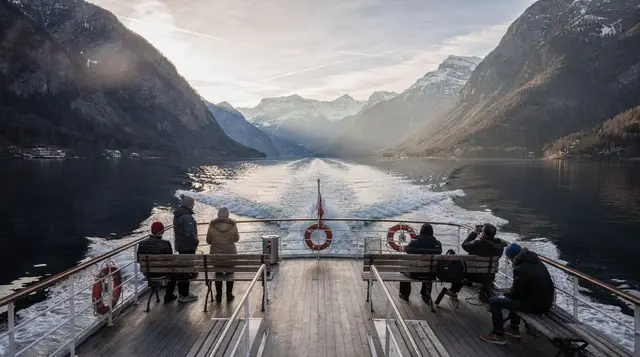
Beyond the point-to-point ferries between towns, dedicated sailing trips give a different view of the shoreline than any train window. The sundowner sailing trip on Lake Constance runs in the evening, which suits a base in Constance or Meersburg better than a strict Zurich day trip, since it pushes your return train later. For a daytime option that fits more easily around a Zurich round trip, look at the sailing departures scheduled earlier in the day rather than the sunset crossing.
Fitting Lake Constance into a longer Swiss trip
On its own, Lake Constance sits awkwardly against the rest of a Zurich-based itinerary — it’s not on the way to the mountains, and the currency switch adds friction that a same-country trip like Rhine Falls or Stein am Rhein doesn’t have. It works best as a dedicated day (or two), ideally combined with an overnight in Constance so the return train isn’t dictating the whole schedule.
If you’re building out a first Zurich itinerary and only have a few days total, Lake Constance is a reasonable trade against a second alpine excursion rather than an addition on top of one — few visitors manage both a full mountain day and a full lake day without the trip feeling rushed. Compare it against St Gallen and Appenzell, which sit roughly on the way and can be tacked onto a Lake Constance day if the train timing works, or against Basel, which offers a similar three-country-border novelty (Switzerland, Germany and France meet at a single point there) without the boat schedules to plan around.
Whatever else the day includes, keep half an eye on Zurich’s weather and season patterns before booking a boat crossing — a grey, blustery day on open water is a worse experience than the same weather in a sheltered old town, and Lake Constance’s boat timetables thin out noticeably outside the May-to-September window.
Lake Constance day trip: trains, borders and money
Is Lake Constance in Switzerland, Germany or Austria?
All three. The shoreline is split between Switzerland (Romanshorn, Kreuzlingen, Arbon), Germany (Constance, Meersburg, Lindau) and Austria (Bregenz), and that three-country mix is the reason to visit rather than a complication.
Can I do Lake Constance as a day trip from Zurich?
Yes for one shore, tight for all three. Zurich to Constance takes about 1h15, and a same-day loop to Meersburg or Lindau is realistic; adding Bregenz on the same day leaves very little margin if a connection runs late.
Do I need euros as well as Swiss francs?
Yes. Constance, Meersburg, Lindau and Bregenz are all in the eurozone. Cards work in most places, but carry some cash euros for kiosks, toilets and smaller ferry ticket windows.
Is the Swiss Travel Pass valid on Lake Constance boats?
Only on Swiss-flagged services and Swiss rail up to the border, such as Zurich to Kreuzlingen or Romanshorn. German and Austrian operators price separately.
How do I get from Constance to Meersburg or Lindau?
A car-and-passenger ferry runs constantly between Constance (Staad) and Meersburg in about 15 minutes. Lindau is around 40–50 minutes by regional train along the German shore, or longer by seasonal boat.
Is Mainau Island worth the entrance fee?
If you enjoy gardens, yes — adult admission is roughly EUR 25–28 and the site takes three to four hours to see properly. It’s a poor fit for a quick, passing stop.
Do I need my passport to cross into Germany or Austria?
No routine checkpoint exists — all three countries are in Schengen — but carry a valid passport or ID anyway, both for occasional spot checks and for hotel check-in.
Which town should I pick if I only have time for one?
Constance for old-town streets and easy ferries, Meersburg for the best single view, or Lindau for an island town with an Alpine backdrop. Bregenz is worth the extra distance mainly during the summer festival season.