A small town that photographs better than it explains itself
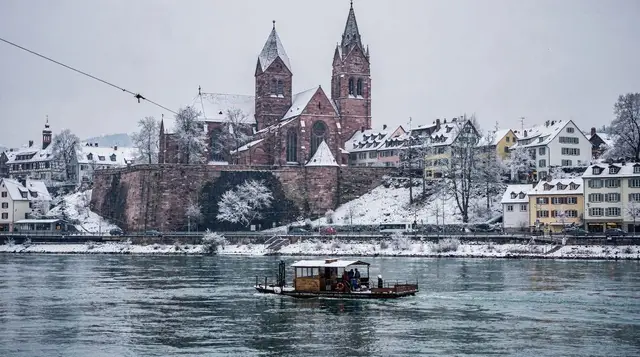
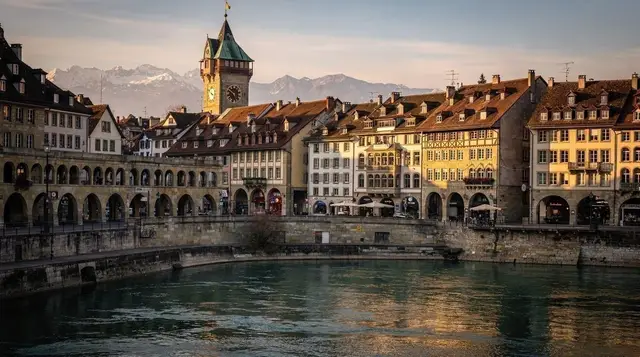
Stein am Rhein sits at the point where the Rhine flows out of the Untersee, the western arm of Lake Constance, and narrows back into a proper river on its way towards the Rhine Falls. The old town is compact — you can walk end to end in under ten minutes — but its Rathausplatz is lined with houses whose façades are covered in painted murals, oriel windows and gilded signage, most of it repainted and restored rather than original medieval work. That’s worth saying plainly: the paint you see today is largely 19th- and 20th-century restoration over a genuinely medieval street plan. It doesn’t make the town less worth seeing, but it does explain why the colours look so crisp for a settlement first recorded in the 8th century.
The honest pitch is this: Stein am Rhein is not a destination that fills a full day on its own. It’s a very good two-to-three-hour stop, and it earns its place on an itinerary mainly because it sits so close to the Rhine Falls and to Schaffhausen. Treat it as a pairing, not a headline, and it delivers. Treat it as a full-day trip by itself and you’ll be looking for something to do by early afternoon.
Getting there from Zurich
There’s no direct train from Zurich HB to Stein am Rhein; you’ll change at least once, most commonly at Winterthur, and sometimes again at Etzwilen. Total journey time runs around 1 hour 10 minutes, and trains are frequent enough — roughly hourly — that you don’t need to plan around a single connection. A guided day tour that takes in Zurich’s own sights, the Lindt chocolate factory and the Rhine Falls before finishing in Stein am Rhein removes the need to work out connections yourself, which is worth considering if you’re short on time or travelling with people who’d rather not manage three train changes in a day.
If you’re building your own route, the more common pattern is Zurich to the Rhine Falls first, then a short hop on to Stein am Rhein, rather than the reverse. Both the Swiss Travel Pass and the Half Fare Card cover the regional trains involved, and neither route requires seat reservations.
| From Zurich HB | Approx. journey time | Typical route |
|---|---|---|
| Rhine Falls (Neuhausen) | ~50 min | Direct or one change |
| Stein am Rhein | ~1 h 10 min | One change, usually Winterthur |
| Schaffhausen | ~40 min | Direct |
| Constance (Germany) | ~1 h 30 min | Via Schaffhausen |
For full timetable detail and pass comparisons, see the guide to Swiss trains and the Swiss Travel Pass guide.
The Rathausplatz and the painted houses, on foot
The Rathausplatz is the reason most people come. It’s a short, cobbled square rather than a grand piazza — you can stand at one end and see the other — but the density of painted façades is genuinely unusual. Look for the Haus zum Weissen Adler and the Rathaus itself, both carrying frescoes that mix biblical scenes with civic imagery. None of this needs a guide to appreciate; it’s a square built for slow walking and looking up, not for a checklist of named buildings.
A short guided option exists if you’d rather have context than guess at the murals: the 60-minute walk with a local guide through the old town covers the square, the town gates and the approach to the castle, and fits comfortably into a half-day itinerary without eating into time you’d rather spend at the Rhine Falls.
Beyond the square, the town’s old fortifications are still partly visible — sections of wall and two surviving gates, the Untertor and Obertor — and the Kloster St. Georgen, a former Benedictine monastery, now houses a small museum of local history and furnished period rooms. It’s a reasonable wet-weather fallback but not essential if you’re pressed for time.
One practical note: the town is genuinely small, and by early afternoon in July and August, tour groups arriving from the Rhine Falls can fill the Rathausplatz shoulder to shoulder for an hour or two. Arriving before 10:30, or visiting outside peak summer, gets you a noticeably quieter version of the same walk.
Hohenklingen Castle
Above the town, a marked path climbs through vineyards to Hohenklingen Castle, roughly 20 to 30 minutes on foot depending on pace. The climb is steady rather than steep, on a mix of path and quiet road, and it’s the best vantage point in the area for looking back over the old town’s roofline and out towards Lake Constance. The castle itself is largely intact rather than a picturesque ruin, and it keeps a restaurant on site through the warmer months — typically April to October — with terrace seating that makes the climb worthwhile even if you’re not planning to eat.
Hours are seasonal and change from year to year, so it’s worth checking current opening times before committing to the walk, particularly outside the main season when the restaurant and sometimes the castle itself can be closed. There’s no lift or shuttle; if the climb isn’t realistic for you, the view from the riverside promenade below is a reasonable substitute, even without the elevation.
Combining Stein am Rhein with the Rhine Falls
This is the pairing that makes Stein am Rhein worth the detour. The Rhine Falls at Neuhausen are about 15 minutes away by train, or roughly an hour by river boat, and most visitors who make the trip from Zurich do both in a single day rather than treating them as separate outings.
The boat cruise linking Stein am Rhein, the Rhine Falls and the lake is the scenic way to connect the two, running along a stretch of river that’s genuinely pretty rather than merely a means of transport — reed banks, small villages and, depending on the season, a fair number of swans. It takes longer than the train and runs on a seasonal timetable rather than year-round, so check departure times before planning your day around it, especially outside the summer months.
If you’d rather stay on the Rhine Falls side and treat the boat as the main event rather than transport, a short 30-minute boat tour right at the base of the falls gets close enough to the spray to be worth a rain jacket even on a dry day. For anyone who’d rather have the whole day organised rather than juggling train and boat timetables, a private day trip covering the Rhine Falls and Stein am Rhein handles transport and pacing, at a higher cost than doing it independently but with none of the timetable-watching.
For more detail on the falls themselves, see the Rhine Falls visiting guide and the dedicated Rhine Falls day trip guide.
Lake Constance, and the boat option
Stein am Rhein sits right at the mouth of the Untersee, and in summer, passenger boats run from the town along the lake towards Constance in Germany. It’s a pleasant extension if you have a full day and want to see more of the lake, but it adds several hours and, since Constance is across the border in Germany, means keeping identification on hand even within the Schengen area. For most visitors doing a single day trip from Zurich, the Rhine Falls pairing makes more sense than pushing on to Constance, which works better as its own outing from Lake Constance or from St. Gallen.
Eating and drinking, honestly
Stein am Rhein is not a budget stop. The cafés and restaurants directly on the Rathausplatz charge for the view as much as the food — a coffee and cake can run CHF 12 to 16, and a proper sit-down lunch with a drink is more often CHF 30 to 45 per person than the CHF 20 you might hope for. The food itself is generally competent rather than remarkable: Swiss café standards, a few fish dishes drawing on the Rhine and lake, and the usual rösti and schnitzel options you’ll find across the region.
Better value, if you’re not fussed about eating on the square itself, is a short walk to the streets just off the Rathausplatz, where prices drop noticeably without much loss in quality. A picnic bought in Zurich or Winterthur and eaten on the riverside promenade is also a legitimate option and one that costs a fraction of a restaurant meal — Switzerland doesn’t restrict picnicking in its public riverside spaces.
| Item | Typical price (CHF) |
|---|---|
| Coffee and cake, Rathausplatz | 12–16 |
| Sit-down lunch, Rathausplatz | 30–45 |
| Sit-down lunch, side streets | 20–30 |
| Museum entry (Kloster St. Georgen) | 8–12 |
| Castle restaurant main course | 25–38 |
Where Stein am Rhein falls short
To be fair to anyone planning around this guide: Stein am Rhein is genuinely small, and its main square can feel like a stage set once a coach tour or two has arrived — busy, photographed constantly, and with a fairly narrow range of things to actually do beyond looking at the buildings and eating. There’s no major museum on the scale of anything in Zurich or Bern, and the castle, while worth the climb, is a modest sight rather than a dramatic one. If you’re coming from a city with grander medieval architecture, or you’ve already seen several Swiss old towns, Stein am Rhein’s charm may register as pleasant rather than remarkable.
It’s also worth knowing that some restaurants and the castle facilities scale back or close outright in winter, roughly November to March, which thins out what there is to do outside the main season considerably. If you’re visiting Switzerland in winter primarily for the mountains, Stein am Rhein is easy to skip without much loss; it’s a fair-weather, warm-season stop.
Practical details
Stein am Rhein has no train station shops of note and limited late-evening options, so it’s not a place to plan an overnight stay around unless you specifically want a quiet base — there are a handful of guesthouses in the old town, generally at a premium given the location. Toilets are available near the Rathausplatz and at the train station. Cash and card are both widely accepted, in line with the rest of Switzerland, and English is spoken at most cafés and the museum ticket desk, though not universally among older residents.
If you’re combining the day with mountain or lake sights further afield, it’s worth checking St. Gallen and Appenzell as alternative eastern Switzerland stops with a different character — more working town and less postcard square, though they cover a different part of the region and don’t include Stein am Rhein itself.
For planning the rest of your Zurich stay, see how many days in Zurich, the three-day Zurich itinerary, and the broader day trips from Zurich guide, which places Stein am Rhein among the region’s other options like Lucerne, Basel and Liechtenstein. If cost is the deciding factor, the Zurich travel costs guide and the Swiss Travel Pass versus Half Fare comparison are worth reading before you buy any tickets.
For getting around Zurich itself before or after the trip, see getting around Zurich on the ZVV, and for a sense of why the connections work as reliably as they do, the blog post on why Swiss trains run on time is a good, non-technical read. Finally, if you’re weighing whether to prioritise a stop at the Rhine Falls over Stein am Rhein when time is tight, the best time to visit Zurich guide covers seasonal closures that affect both.
Frequently asked questions about visiting Stein am Rhein
How do I get to Stein am Rhein from Zurich?
By train from Zurich HB, usually with one change at Winterthur or, on some connections, at Etzwilen or Schaffhausen. Total journey time is around 1 hour 10 minutes. A Swiss Travel Pass or Half Fare Card covers the trip; there’s no need to book ahead.
Is Stein am Rhein worth visiting if I’ve already seen the Rhine Falls?
Yes, if you have an extra hour or two. The two sights are only about 15 minutes apart by train, and the painted old town is a completely different kind of attraction from the waterfall — quieter, slower, and good for wandering without an itinerary.
Can I visit Stein am Rhein and Lake Constance in the same day?
Yes. Stein am Rhein sits right where the Rhine leaves Lake Constance, and boats run from the town towards Constance in summer. Combining both with Zurich in one day is possible but tight — expect a long day with limited time in each place.
How much time do I actually need in Stein am Rhein?
Two to three hours covers the old town at an unhurried pace, including the climb to Hohenklingen Castle. Add another hour if you plan to eat a proper meal on the Rathausplatz rather than grab a coffee.
Is Hohenklingen Castle open to the public?
Yes, seasonally. The castle keeps a restaurant and viewing terrace open through the warmer months, roughly April to October, with reduced or no hours in winter. Check current opening times before making the climb, since they change year to year.
What does a day in Stein am Rhein cost?
Budget roughly CHF 60 to 110 per person, covering a train ticket from Zurich, a museum or castle entry, and a modest lunch. A sit-down meal on the Rathausplatz alone can run CHF 30 to 45 with a drink, since Stein am Rhein is not a budget destination.
Is Stein am Rhein touristy?
The Rathausplatz and the main street get busy with day-trip groups from late morning to mid-afternoon in summer, particularly when a Rhine Falls tour stops there. Arrive before 10:30 or visit outside July and August for a quieter version of the same town.