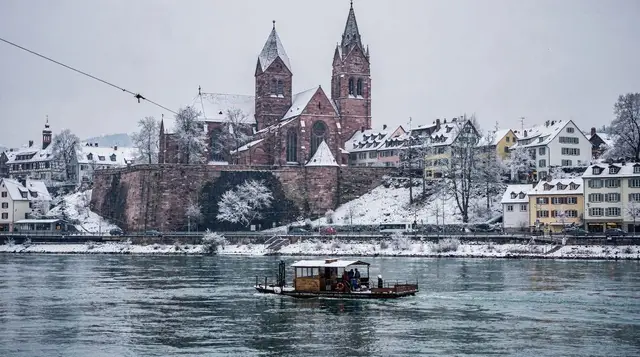
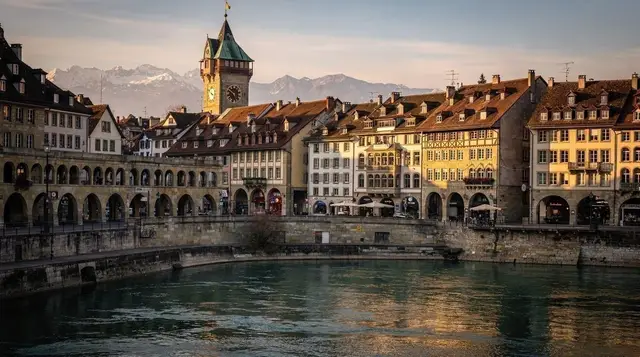
Lake Lucerne is not one lake so much as three arms meeting at odd angles, which is why the paddle steamers take so long to get anywhere and why the scenery keeps changing shape as you go. This guide covers the lake itself, by boat: the calm northern shore at Weggis and Vitznau, the historic run past Brunnen to the Rütli meadow, and the two set-piece lifts — Bürgenstock’s cliffside elevator and Stanserhorn’s open-top cable car — that turn a lake crossing into a half-day out. For Lucerne town itself, see the separate Lucerne day trip guide; this page assumes you have already arrived and are heading for the water.
A lake built for a boat, not a car
Driving around Lake Lucerne is possible but slow and largely pointless — the roads hug the shore, tunnel through headlands, and rarely give you the view you came for. The lake was a transport corridor long before it was a scenic one: goods and pilgrims moved along it by boat for centuries, which is why towns like Weggis, Vitznau and Brunnen face the water rather than a road. The Lake Lucerne Navigation Company (SGV) still runs a working timetable of modern boats and five historic paddle steamers, and that timetable, not a car, is the sensible way to see the lake.
The trade-off is time. A paddle steamer to Brunnen takes around two hours from Lucerne; the train covers the same distance along the shore in under 30 minutes. You are paying in hours for the view from the water, which on a clear day is the point, and on a wet one is not.
Getting from Zurich to the water
Trains from Zurich HB to Lucerne run several times an hour and take about 45 minutes — reliably enough that a day on Lake Lucerne barely needs planning around the outbound leg. Lucerne’s main station sits directly on the lakefront; the SGV boat piers are a two-minute walk from the platforms, clearly signed. See Swiss trains explained if this is your first time using the network, and the Swiss Travel Pass guide if you are weighing up a multi-day pass against paying as you go.
One honest note on passes: the Zürich Card covers transport within the city of Zurich only. It does nothing on Lake Lucerne boats or Central Switzerland trains, and treating it as a general Switzerland pass is a common and costly first-timer mistake.
Weggis and Vitznau: the calm side of the lake
Weggis and Vitznau sit on the sheltered northern shore, both roughly 50 minutes to just over an hour from Lucerne by boat, and both reachable faster by train or postbus if you are short on time. Weggis has the longer lakeside promenade, a public lido for swimming in summer, and a genuinely mild microclimate that lets palm trees survive the winter — a novelty the tourist board leans on hard, and one that is at least true. Vitznau is smaller and busier with day groups, mainly because it is the departure point for the Rigi cogwheel railway, Europe’s oldest mountain rack railway.
Neither town has a headline sight. What they offer is a lakeside lunch, a swim, and a slower pace than Lucerne’s old town. If Rigi is on your list, doing it from here makes sense: a guided hike from Weggis up to Rigi Kaltbad, riding the cogwheel train back down turns the mountain into a half-day loop rather than a there-and-back. For the fuller picture of Rigi’s routes and viewpoints, see the Mount Rigi guide and the Rigi destination page.
Rigi from the water, not just the summit
Most visitors treat Rigi as a mountain to be climbed and photographed from the top. From the lake it works differently: the whole massif rises directly out of the water on the north shore, and a slow boat past Vitznau gives you the scale of it without the queue for the summit train. If your time is limited to a single lake loop, seeing Rigi from the deck of a boat and skipping the summit is a reasonable trade — the Pilatus vs Rigi vs Titlis comparison covers which mountain earns the extra hours for different priorities.
Brunnen and the Axenstrasse shoreline
Brunnen sits about two hours from Lucerne by boat, at the point where the lake narrows into its most dramatic stretch — steep, forested cliffs on both sides, with the old Axenstrasse road cut into the rock above the water. This is the most scenic single run on the lake and the reason the slower paddle steamers are worth choosing over the faster catamarans if you have the time.
Brunnen itself is a modest resort town rather than a destination in its own right, but it is the natural base for continuing onto the Lake Uri arm — the narrowest, steepest section of Lake Lucerne, running south towards Flüelen. A return cruise on the Lake Uri arm between Brunnen and Flüelen covers this stretch without needing to change boats or plan a separate leg from Lucerne.
The Rütli meadow: where the story is told
The Rütli meadow is a single sloping field above the lake, reachable only by boat or on foot, with a flagpole, a small chapel, and views back down the Lake Uri arm. By any conventional measure there is not much to see. Its significance is historical rather than visual: this is the traditional site of the 1291 oath said to have founded the Swiss confederacy, and it remains a place of genuine national symbolism — school groups and civic ceremonies still gather here, not just tourists.
Whether it is worth the stop depends on what you are after. If Swiss history interests you, or you are already sailing this arm of the lake towards Brunnen or Flüelen, the detour costs little. If you are simply collecting scenery, the meadow itself will not add much that the surrounding cliffs do not already give you from the boat.
Bürgenstock and the Hammetschwand Lift
The Bürgenstock ridge rises steeply from the lake’s southern shore, and reaching its plateau is an attraction in its own right, separate from the resort hotel up top. A funicular climbs from the lakeside to the plateau; from there, the Hammetschwand Lift — an open-air exterior elevator built into the cliff face — continues up the final rock wall to a viewing platform with a clear run down the lake towards Lucerne. It was, when built in 1905, the tallest outdoor lift in Europe, and the exposed ride up the cliff still makes the point.
Below the plateau, a paved cliff path (the Bürgenstock Felsenweg) runs along the rock face at a gentler gradient, with the same drop to the lake below. It suits anyone who wants the views without the funicular-and-lift combination, or who wants a guide to explain what they are looking at: a private guided walk along the Bürgenstock cliff path is the way to do that without working out the connections yourself. Budget CHF 30–36 for the funicular and lift combined ticket, and confirm the current fare before you go — Bürgenstock Resort, which operates both, revises pricing most years.
Stans and the Stanserhorn
Stans is reached from Lucerne by train, not boat — about 15 minutes, roughly CHF 9 second class — which makes it an easy add-on rather than a detour. From Stans, a funicular and then the open-top Cabrio cable car climb to the Stanserhorn summit at 1,898 metres. The Cabrio’s roofless upper deck is the actual selling point: it is the only cable car of its kind in Switzerland, and riding it with the wind on your face is a different experience from a standard closed gondola.
The summit itself is smaller and quieter than Pilatus or Rigi — a restaurant, a short ridge walk, marmots in season, and views across to the higher peaks around Engelberg. It rewards the ride more than the destination. A half-day trip on the open-top Cabrio cable car to the Stanserhorn summit covers the full ascent from Lucerne as a single booking. For comparison with the region’s other big mountain days, see the Mount Pilatus guide and best mountain excursions from Zurich.
Boat fares, timetables and passes
Fares below are indicative for 2026 second-class travel; SGV revises its tariff annually, so check the current timetable before booking a day around a specific sailing.
| Route | Approx. sailing time from Lucerne | Approx. 2nd-class return fare |
|---|---|---|
| Lucerne–Weggis | 50 min | CHF 38 |
| Lucerne–Vitznau | 1 h 10 | CHF 44 |
| Lucerne–Brunnen | 2 h | CHF 62 |
| Lucerne–Rütli (via Brunnen) | 2 h 20 | CHF 68 |
| Lucerne–Kehrsiten (for Bürgenstock) | 25 min | CHF 20 |
| Lucerne–Stans (train, for Stanserhorn) | 15 min | CHF 9 |
| Pass | Covers Lake Lucerne boats | Typical cost |
| Swiss Travel Pass | Yes, full SGV network included | From CHF 244 (3-day, 2nd class) |
| Half Fare Card | 50% off boat fares | CHF 120 (one month) |
| Saver Day Pass | No — regional trains only | From CHF 29 (advance purchase) |
| Zürich Card | No — Zurich city transit only | CHF 27 (24h) |
Boat fares also stack with onward connections: a paddle steamer to Vitznau followed by the Rigi railway, or a boat to Kehrsiten followed by the Bürgenstock funicular, are usually sold as separate tickets rather than one combined fare, so budget for both legs.
When the lifts close for maintenance
The single most common way to waste a day on Lake Lucerne is to build a trip around the Bürgenstock lift or the Stanserhorn cable car and arrive during their scheduled maintenance closure. Both operators close for a week or two in spring and again in autumn for revision — dates vary year to year and are usually only confirmed a few months out. Boats keep running through these windows; it is specifically the lifts that stop. If a trip depends on reaching a summit or platform rather than just being on the water, check the operator’s current schedule before booking transport or accommodation around it. This is less of an issue from June to September, when both normally run without interruption.
Planning one day versus two
One day on Lake Lucerne, done from Zurich, comfortably fits a single loop: train to Lucerne, boat to Weggis or Vitznau, lunch, boat back, train home. That is a full but unhurried day at a total cost, including boat fares and food, of roughly CHF 90–120 per person.
Adding the Rütli meadow, Bürgenstock or Stanserhorn to the same day is tight rather than impossible — the Brunnen–Rütli run alone takes most of a morning or afternoon, and the Bürgenstock or Stanserhorn lifts each want two to three hours including the approach. Trying to combine two of the three in a single day from Zurich, rather than from Lucerne itself, usually means arriving late and rushing the return train.
Splitting the lake over two days, ideally with a night in Lucerne rather than a return to Zurich each evening, removes the rush: one day for the northern shore and Rigi or Weggis, a second for Brunnen, the Rütli meadow and either Bürgenstock or Stanserhorn. For a fuller regional plan that fits the lake alongside Lucerne town and the surrounding mountains, see the Zurich two-day itinerary and day trips from Zurich.
E-bike hire is a lower-cost alternative worth mentioning for the shoreline sections between towns: an e-bike route linking several lakes around Lucerne, combined with a Lake Lucerne cruise replaces some of the boat and train legs with cycling for anyone who prefers it.
Punctuality is one thing Switzerland delivers on reliably, boats included — see why Swiss trains run on time for the operational reasons behind it, most of which apply to the SGV timetable as well.
Lake Lucerne FAQ: boats, the Rütli meadow and mountain lifts
How do I get from Zurich to Lake Lucerne without a car?
Take the train from Zurich HB to Lucerne — 45 minutes, direct, several times an hour. From Lucerne station it is a two-minute walk to the lake promenade, where SGV boats depart for every place in this guide.
Which lakeside town is better, Weggis or Vitznau?
Weggis is flatter, has a longer lakeside promenade and a public lido; Vitznau is the departure point for the Rigi cogwheel railway and feels busier with day-trip groups. Neither has a must-see sight on its own — pick Weggis for a quiet lunch, Vitznau if you are combining the boat with Rigi.
Is the Rütli meadow worth the detour?
It is a single sloping meadow with a flagpole and a small chapel, not a sight in the conventional sense — its point is that this is where the Swiss confederacy is said to have been founded in 1291. Worth the stop if the story interests you or you are already sailing past on the Brunnen run; not worth a dedicated round trip on its own.
How much does the Bürgenstock funicular and Hammetschwand Lift cost?
Reaching the Bürgenstock plateau from the lake by funicular, then riding the outdoor Hammetschwand Lift up the final cliff face, comes to roughly CHF 30–36 return as of 2026. Confirm the current combined fare before travelling, since Bürgenstock Resort revises pricing most years.
Is the Stanserhorn cable car worth it, or should I do Pilatus or Rigi instead?
Stanserhorn’s open-top Cabrio cable car is the novelty — nowhere else in Switzerland rides you up a mountain with no roof — but the summit itself is quieter and less developed than Pilatus or Rigi. Choose Stanserhorn for the ride, Pilatus for the more dramatic summit views, Rigi for a gentler day combined with a lake crossing.
Does the Swiss Travel Pass cover the Lake Lucerne boats?
Yes, the standard SGV boat network on Lake Lucerne is included in the Swiss Travel Pass at no extra charge, which makes the pass worth considering if you are also using trains for Rigi, Pilatus or Stanserhorn on the same trip. A Half Fare Card only gets 50 percent off boat fares, not free travel.
When do the Bürgenstock and Stanserhorn lifts close for maintenance?
Cable cars and funiculars across central Switzerland routinely close for a week or two in spring and again in autumn for scheduled revision. Exact dates move year to year and are published on each operator’s site only a few months ahead, so check before booking a trip built around one lift, especially outside June to September.
Can I do Lake Lucerne as a day trip from Zurich, or do I need to stay over?
A single day works for one loop: Zurich to Lucerne, a boat to Weggis or Vitznau and back, home by early evening. Adding the Rütli meadow, Bürgenstock or Stanserhorn in the same day is tight; splitting the lake over two days, or overnighting in Lucerne, gives a less rushed trip.