Car rental in Switzerland: vignette, parking and closed passes
Is it worth renting a car in Switzerland from Zurich?
Rarely for the classic day trips: the vignette costs CHF 40 a year, city parking runs CHF 4-6 an hour, and passes like the Susten, Grimsel and Furka close from around late October to May. For Lucerne, the Rhine Falls, Bern or Zermatt, the train is usually faster, cheaper and less stressful.
Every travel forum has someone insisting a rental car is the only way to see Switzerland properly. Most of the time, for a Zurich-based trip, that advice is wrong. The country’s trains are frequent, punctual and go almost everywhere a visitor wants to be; a car adds a compulsory annual toll, city parking that costs more than the fuel, and mountain roads that simply close for half the year. This guide sets out the real costs and the real limits before you book anything.
What a hire car actually costs on top of the sticker price
The daily rate quoted by a rental company is only the starting point. Before you compare it with a train ticket, add these:
| Extra cost | Typical amount | Notes |
|---|---|---|
| Motorway vignette | CHF 40 per calendar year | Covers December to January the following year; no short-term option |
| Full insurance excess reduction | CHF 15-30 per day | Base excess on the cheapest tariffs is often CHF 1,000-2,000 |
| Fuel | CHF 1.85-2.00 per litre (petrol) | Switzerland is not cheap for fuel compared with neighbouring countries |
| City parking | CHF 3.60-6 per hour, CHF 30-50 per day | Zurich, Lucerne, Bern and Basel city centres |
| Cross-border top-up | Varies | Some rentals restrict or surcharge trips into Liechtenstein, Germany or Italy |
A small car for three days in August, picked up at Zurich Airport, commonly comes to CHF 250-350 once the vignette, reduced-excess cover and one tank of fuel are included, before a single parking fee. A Swiss Travel Pass for the same three days, covering trains, boats and most mountain transport, costs less than that for one adult and needs no parking at all. If you’re weighing the two properly, the Swiss Travel Pass guide and the head-to-head in Zurich Card vs Swiss Travel Pass lay out the maths in full.
Swiss rental quotes read very differently once the extras are added, so ask each company for the excess amount, the cross-border rules and the fuel policy for a Zurich Airport pick-up. Check whether the vignette is already on the windscreen, and whether reduced-excess cover is included in the total shown at payment. To line up offers on those points, you can browse Zurich pick-ups on Localrent before choosing.
The vignette: one sticker, one price, no exceptions
Switzerland does not have tolled motorways in the usual sense. Instead, every vehicle using the national motorway network (the green signs, not the blue ones for ordinary roads) needs a vignette. It costs CHF 40, comes as a physical sticker for the windscreen or as an e-vignette registered against the numberplate, and it is valid for fourteen months: from 1 December of the previous year to 31 January of the following one. There is no day pass and no way to pay per journey.
If your rental car is picked up in Zurich, Basel or Geneva, the company has almost certainly already applied the vignette and built the cost into the price. The trap is picking up a car just across the border — Freiburg, Konstanz or Colmar are all popular for slightly cheaper rates — because those cars frequently arrive without one.
Driving even a short stretch of Swiss motorway without a valid vignette risks an on-the-spot fine of CHF 200, in addition to having to buy the vignette anyway. If your plan involves crossing from Germany, it’s worth reading Switzerland visa and Etias alongside your rental terms, since border crossings and vehicle paperwork sit close together in most people’s planning.
Liechtenstein uses the same vignette as Switzerland, which matters if a Liechtenstein day trip is on the itinerary — no extra sticker needed there.
Parking: the cost that catches people out
Zurich’s Altstadt and the streets around the Hauptbahnhof are almost entirely blue-zone parking, meaning residents park free with a permit and everyone else pays by the hour with a maximum stay, often two hours. Realistic numbers for August 2026:
| Location | Type | Approximate cost |
|---|---|---|
| Blue zone, city centre | Street, time-limited | CHF 3.60/hour, 2-hour max |
| Parkhaus Hauptbahnhof | Underground, supervised | CHF 4.50/hour, CHF 46/day |
| Parkhaus Urania | Underground, supervised | CHF 4/hour, CHF 42/day |
| Zurich Airport, short stay | Terminal car park | CHF 6/hour, CHF 58/day |
| Täsch (for Zermatt) | Open-air, supervised | Around CHF 16/day |
Lucerne, Bern, Basel and Lugano all run similar systems: cheap or free on the outskirts near a park-and-ride, expensive and time-limited right where you actually want to be. If your base is central Zurich, a car sitting in a CHF 45-a-day garage while you use it twice in five days is a poor trade against a five-day Swiss Travel Pass, which is covered properly in the Swiss Travel Pass guide.
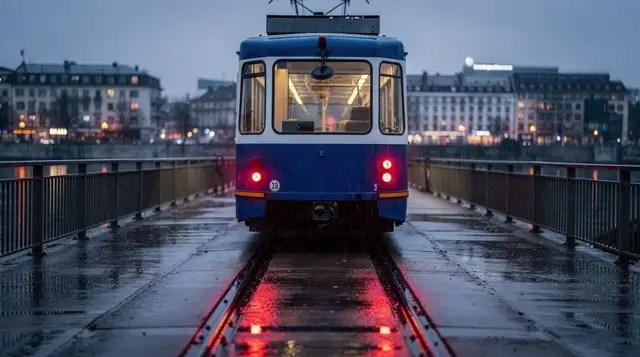
For getting around Zurich itself day to day, the tram and bus network is dense enough that a car is a liability rather than a convenience — see getting around Zurich on the ZVV for how the local ticketing works, and Zurich Airport to city centre for why the train from the airport (about ten minutes to the Hauptbahnhof) beats a rental pick-up and drive in almost every case.
Mountain passes: closed for longer than most visitors expect
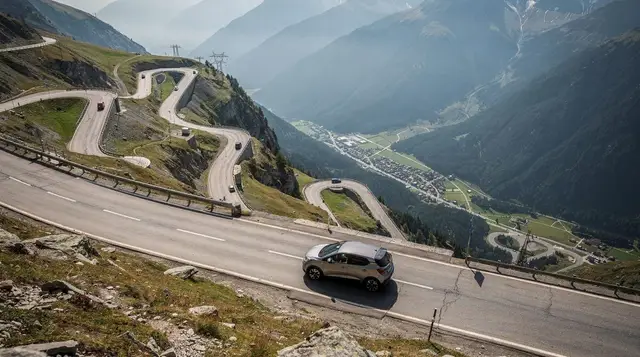
This is the detail that ruins the most itineraries. Several of the high alpine passes that look dramatic on a map are physically closed to all traffic for roughly half the year, and the closure dates shift with the snow, not the calendar.
| Pass | Typical closure | Typical reopening |
|---|---|---|
| Susten Pass | Late October / November | May / June |
| Grimsel Pass | Late October / November | May / June |
| Furka Pass | Late October | May / June |
| Great St Bernard Pass (road) | November | May |
| Klausen Pass | Late October / November | May / June |
| Gotthard Pass (old road) | October / November | May / June |
The Gotthard road tunnel stays open year-round and is the usual winter alternative to the old pass road. Even outside the closure window, passes shut for a few hours during spring and autumn for avalanche control or resurfacing work, sometimes with no warning beyond a sign at the base. If a scenic drive over one of these passes is the whole point of renting a car, check a live Swiss pass-status page on the morning you travel, not the week before. The rail equivalents — the Glacier Express and the Bernina Express — run through tunnels and stay open through winter, which is exactly why they exist as routes in the first place.
Even without full closures, alpine driving in Switzerland in winter means snow chains, studded or winter tyres (legally required in season), and hairpin roads that take far longer than the distance suggests. A journey that looks like ninety minutes on the map can take three hours with traffic behind a slow vehicle on a single-lane pass road.
When a car genuinely makes sense
There are real cases where hiring a car beats the train from Zurich:
- A group of three or four splitting the daily rate, fuel and parking between them, especially for a loop covering several villages with thin bus timetables — parts of the Appenzell hills or the valleys around Gstaad and Adelboden, for instance.
- Early starts or late finishes that fall outside train timetables, such as a pre-dawn departure for a hike where the first train would arrive two hours after sunrise.
- Multiple stops in one day that aren’t well connected by rail, like combining a couple of smaller villages around Lake Thun that each have infrequent bus links.
- Carrying gear — skis, hiking equipment for several people, or luggage for a longer trip with no interest in using left-luggage lockers along the way.
If a road trip along Lake Geneva or through the vineyards is more the goal than the destination itself, a rental with a fixed, scenic route can be worth it purely for the experience — a vintage car rental with a picnic included around Lausanne is built exactly for that kind of unhurried afternoon rather than for covering distance efficiently.
When the train wins — which is most of the time
For the destinations that make up the bulk of a Zurich-based trip, the train is faster door to door once you account for finding parking at the other end.
| Destination | Train time from Zurich HB | Car time (typical, no traffic) |
|---|---|---|
| Lucerne | 45 minutes | 50 minutes, plus parking |
| Rhine Falls (Schaffhausen) | About 50 minutes | 55 minutes, plus parking |
| Bern | About 1 hour | 1h10, plus parking |
| Basel | About 1 hour | 1h05, plus parking |
| St Gallen | About 1 hour | 1h05, plus parking |
| Interlaken Ost | About 2 hours | 2h10, plus parking |
| Lugano | About 2 hours | 2h45 (through the Gotthard tunnel), plus parking |
| Zermatt | About 3h15 (car-free resort) | Not possible beyond Täsch |
On every one of these routes the train arrives at or near the destination’s centre, while a car still needs somewhere to park, usually at a cost, before the visit actually starts. The Lucerne day trip, Rhine Falls visiting guide, Basel day trip and Zermatt day trip guides all assume the train as the default, because for a single traveller or couple it almost always is.
For anyone doing several of these trips across a week, a Swiss Travel Pass or the Swiss Half Fare Card for cutting every train ticket by half tends to undercut a rental car on pure cost, without the vignette, insurance excess or parking search. The full comparison of passes sits in how Swiss trains work and day trips from Zurich.
A car-free way to cover distance and see more
If the appeal of a car is really about setting your own pace rather than needing four wheels specifically, a couple of alternatives from Zurich cover similar ground without any of the vignette, parking or pass-closure problems above.
An e-bike rental around Interlaken gets you between the region’s lakes at your own speed, and a gravel bike rental in Zurich works well for exploring the city’s outskirts and lakeside villages in an afternoon. Near the German border, a buggy rental on the Lake Constance shoreline is a lighter-touch way to cover the same flat terrain a car would, without the motorway vignette at all since much of that route stays off the tolled network.
Booking a rental if you still want one
If, after all that, a car still fits your plan — a rural loop, an early hiking start, or simply preferring to drive — a few practical points from renters who’ve done it:
- Book the vignette-inclusive rate. Nearly all Swiss-based agencies (Zurich Airport, Zurich HB, Basel, Geneva) build it in; confirm this explicitly if picking up abroad.
- Check the excess before the counter upsell. The advertised daily rate usually carries a high excess; deciding on reduced cover in advance, rather than under pressure at the desk, is cheaper.
- Avoid a car if your trip is Zurich-centred with day trips only. The vignette and parking maths rarely work out against a rail pass for that pattern, as shown above.
- Confirm winter tyre requirements if travelling between November and April; Swiss law expects appropriate tyres in wintry conditions and police do check.
- Check pass status the morning of any alpine drive. Weather can close a route with only a few hours’ notice in shoulder season.
None of this makes a rental car a bad idea outright — it simply isn’t the default that a Switzerland trip needs, and for the classic Zurich itinerary of Lucerne, the Rhine Falls, Bern and the mountain excursions, the train is the cheaper, faster and less stressful option nearly every time.
Car rental in Switzerland: questions travellers ask
Do I need a vignette to drive in Switzerland?
Yes. Every vehicle using a Swiss or Liechtenstein motorway needs a vignette stuck to the windscreen, or the digital version registered to the numberplate. There is no daily or weekly option: it covers a full calendar year regardless of how many days you actually drive.
How much does the Swiss motorway vignette cost in 2026?
CHF 40 for a car, valid from 1 December of the previous year to 31 January of the following year. Rental companies in Switzerland usually include it in the price; cars picked up just across the border in Germany or France often do not, so check before you cross into the motorway network.
Which mountain passes close in winter?
The Susten, Grimsel, Furka, Great St Bernard and Klausen passes typically close from late October or November to May or June, depending on snowfall. The Gotthard Pass road (not the tunnel) also shuts. Closures are announced with little notice, so check a live pass-status site the morning you plan to drive.
Is parking expensive in Zurich?
Yes. Blue-zone street parking in the city centre runs around CHF 3.60 an hour with a maximum stay, and supervised car parks such as those under the Hauptbahnhof or on Talstrasse charge CHF 4-6 an hour, often CHF 40-50 for a full day.
Can I drive to Zermatt?
Not into the resort itself. Zermatt is car-free, so you park at Täsch (roughly CHF 16 a day) and take a shuttle train for the final few minutes. Most visitors find it simpler to take the train the whole way from Zurich.
Is it cheaper to rent a car or take the train from Zurich?
For a single traveller or a couple doing one or two day trips, the train usually comes out cheaper once fuel, the vignette, parking and rental excess are added up. A car starts to pay off for groups of three or four covering several rural destinations with little public transport, such as parts of Appenzell or the Bernese Oberland valleys.
Do I need a car for day trips from Zurich?
No. Lucerne, the Rhine Falls, Bern, Basel, St Gallen and even Interlaken are all reachable directly from Zurich HB by train, generally in under two hours, with no parking to find at the other end.
What documents do I need to rent a car in Switzerland?
A full driving licence held for at least a year, a credit card in the driver’s name for the deposit, and your passport. Visitors from outside the EU sometimes also need an International Driving Permit alongside their national licence; check with the rental company before travelling.
Transport passes & transfers on GetYourGuide
Verified deep-linked GetYourGuide tours. Book through these links and we earn a small commission at no cost to you.
GetYourGuide does not provide a product photo for this activity — the image shows the meeting point, photographed by us.