Glacier experiences in Switzerland: what's still there
Which Swiss glacier is easiest to visit from Zurich?
Mount Titlis above Engelberg is the closest, reachable in around 1 hour 15 minutes by train plus a short bus and gondola ride, with a glacier cave and viewing platform included in the lift ticket. Zermatt's Klein Matterhorn and Glacier 3000 near Montreux both go further and cost more but show a larger stretch of ice, and the Aletsch Glacier requires the longest day but is the one actually worth the extra effort.
Switzerland’s glaciers are not all equally reachable, and they are not all equally there any more. Some, like the ice on Mount Titlis, sit inside a well-run tourist operation with a cave and a viewing platform rebuilt every year. Others, like the Morteratsch Glacier above Pontresina, are retreating fast enough that the walking path to the ice front gets longer almost every season. This guide compares the five glacier trips reachable from Zurich in a day or with one overnight, what each one actually shows you, and where the retreat is visible rather than theoretical.
None of this is a ranking of which glacier is “best”. It is a comparison of travel time, cost, and what you get for it, so the choice matches the day you actually have.
The five options at a glance
| Glacier | Nearest base | Travel time from Zurich HB | What you see | Return lift ticket |
|---|---|---|---|---|
| Titlis | Engelberg | About 1h15–1h30 by train and bus | Glacier cave, snow park, viewing platform at 3,020 m | Roughly CHF 100 |
| Klein Matterhorn / Theodul Glacier | Zermatt | About 3h15 by train | Glacier ski area, viewing platform at 3,883 m, Matterhorn views | Roughly CHF 130–150 |
| Glacier 3000 | Col du Pillon, near Les Diablerets | About 2h30–3h via Montreux | Peak Walk suspension bridge, glacier snow slope | Roughly CHF 80–90 |
| Aletsch Glacier | Fiesch or Bettmeralp | About 2h, plus a cable car change | Largest glacier in the Alps, UNESCO-listed panorama | Roughly CHF 65–75 |
| Morteratsch Glacier | Pontresina | About 3h30–4h via the Bernina line | Valley walk to the current ice front, retreat markers | Free path, no lift required |
Prices move with the season and fuel surcharges on mountain lifts, so treat these as a planning range rather than a quote. Half Fare Card holders get roughly 50 percent off most of the train legs and a discount on several of the lifts; check the specific lift’s own policy before assuming the card applies.
Titlis: the easy one, and it shows
Titlis above Engelberg is the glacier trip built for a single day from Zurich. The train to Engelberg, then the gondola sequence up to the Titlis station at 3,020 metres, runs on a schedule tight enough that you can be on the glacier terrace and back in the city for dinner. The revolving Rotair cabin on the final stage is the one genuinely distinctive part of the ride; the rest of the infrastructure, including the glacier cave carved fresh into the ice each year and the snow park with its sledging runs, is designed for volume, and it looks it on a clear Saturday.
a guided day trip to the Titlis glacier and cave from Zurich removes the need to work out the Engelberg connection yourself, which matters more here than at the other four because the bus-to-gondola changeover at Engelberg station is easy to misjudge on a first visit.
What you will not get at Titlis is a sense of scale. The glacier itself is small and heavily managed; you are standing on and inside a maintained tourist installation, not looking at an untouched ice field. For that, keep reading. See also our full Mount Titlis guide and the wider best mountain excursions from Zurich for how it compares to Pilatus and Rigi, neither of which has glacier ice any more.
Zermatt and the Klein Matterhorn: the big one, and the expensive one
The Klein Matterhorn cable car out of Zermatt climbs to 3,883 metres, making it the highest cable car station in Europe and the one glacier trip on this list where the Matterhorn itself is part of the view rather than something you travel past. The glacier ski area here operates year-round in patches, and the viewing platform gives an honest sense of how much ice still covers this part of the Valais, which is considerably more than at Titlis.
The cost reflects the altitude. A return ticket runs noticeably above the other four options, and the train down from Zurich, at roughly 3 hours 15 minutes with a change, makes this a trip that needs either an early start or an overnight in Zermatt itself. a guided glacier tour around the Klein Matterhorn is worth booking if you want a guide explaining what you are looking at rather than working it out from the panorama signage, since the terrain and lift system here are more complex than Titlis’s single gondola line.
Zermatt is car-free, which changes the logistics of the whole day; see getting around Zurich and the ZVV network for how Zermatt’s approach differs, and the Zermatt day trip guide for the full itinerary including the Gornergrat alternative, which shows the Gorner Glacier from a lower, cheaper viewpoint if the Klein Matterhorn price puts you off.
Glacier 3000: the suspension bridge does the work
Glacier 3000, above Col du Pillon near Les Diablerets, is reached via Montreux rather than through central Switzerland, which makes it an odd fit geographically for a Zurich-based trip but a workable one at around two and a half to three hours each way. The site’s main draw is the Peak Walk, a 107-metre suspension bridge between two peaks at nearly 3,000 metres, alongside a snow slope that stays skiable for a longer season than most resorts at this altitude.
a day trip from Montreux up to Glacier 3000 bundles the connecting bus and cable car, which is useful here because the Col du Pillon side has less signage in English than Titlis or Zermatt. Be aware that the glacier itself is a secondary feature of this site; people go for the bridge and the panorama toward Mont Blanc on a clear day, not primarily for the ice.
For the wider Montreux area, Montreux and Vevey covers the lakeside towns you would pass through, and Gruyères is a reasonable stop on the same rail line if you are making a full day of it rather than a there-and-back.
Aletsch: the one worth the extra two hours
The Aletsch Glacier, reached via Fiesch or the car-free village of Bettmeralp in the Valais, is the largest glacier in the Alps and a UNESCO World Heritage Site since 2001. It is also the one entry on this list where “seeing the glacier” means a genuine panorama rather than a managed platform: the Eggishorn and Bettmerhorn viewpoints show roughly 20 kilometres of continuous ice, a scale that Titlis and Glacier 3000 simply cannot match because their glaciers are a fraction of the size.
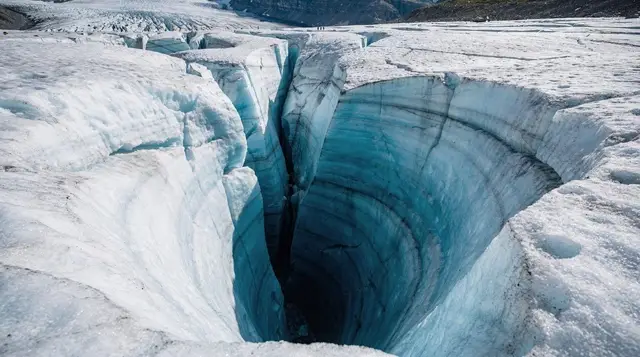
It is also the clearest illustration of the retreat. Aletsch has lost a substantial amount of length and thickness since systematic measurement began in the 19th century, and the pace has increased since the 1980s. Information boards at both viewpoints show historical photographs next to the current ice line, and the difference is not subtle even to a visitor with no glaciology background.
Reaching Fiesch takes about two hours from Zurich by train, then a cable car up to either viewpoint. There is no direct affiliate tour covering this route from Zurich in our current listings, so this is a self-guided rail trip: buy the connecting ticket at Zurich HB or through the SBB app, and check the Eggishorn cable car’s operating dates before travelling, since it closes for maintenance in both shoulder seasons. Our Swiss trains explained guide covers how to book this kind of multi-leg regional journey without missing a connection.
Morteratsch: walking to where the ice used to be
The Morteratsch Glacier, above Pontresina near St Moritz, is the outlier on this list because there is no cable car involved and no ticket to buy. A flat, well-marked path leads from the Morteratsch train station on the Bernina line up the valley toward the current glacier front, passing a series of signposts marking where the ice stood in 1900, 1950, 1980, 2000 and more recent years. The distance between the older markers and the current ice edge is the single most direct way to see glacier retreat in Switzerland without any interpretation needed.
The walk itself takes roughly one to one and a half hours each way on flat ground, suitable for anyone reasonably fit and without special footwear beyond decent trainers. The catch is the journey to get there: this is the far end of the country from Zurich, reached via the Bernina line through Chur and the Engadin, and the return trip alone can take the better part of a day, which is why we list it here for a planned two-day trip rather than a single-day dash.
Our Glacier Express guide and Bernina Express guide cover the scenic rail routes that pass through this area, and St Moritz and the Engadin covers where to base yourself if you want to combine the walk with skiing or a longer stay.
Choosing by the kind of day you want
The five trips suit different moods, and it helps to decide on the mood before looking at timetables. If you want something easy that works in mixed weather and with children, Titlis is the natural pick, and our Zurich with kids and family day trips from Zurich guides cover what else suits a younger group. If you want a dramatic backdrop and are happy to pay for it, Zermatt delivers the Matterhorn in a way no other option here does. If a bridge, a short ride and a good photograph are the priority, Glacier 3000 fits. If you want to understand what is happening to the ice, Aletsch and Morteratsch are the two that teach you something.
Weather matters more than most visitors expect. A glacier station in cloud is a white room with a cold wind, and the viewing platforms exist for views you will not get on a grey day. Look at the forecast for the specific valley the evening before, and be prepared to swap days rather than commit to a fixed one. The Zurich weather month by month guide explains why conditions in the city rarely match conditions in the high Alps, and the Mount Pilatus guide and Mount Rigi guide are good lower-altitude fallbacks when the glacier stations are clouded in.
What to wear and bring
Glacier stations are far colder than the valleys, even in summer, and the wind on an exposed platform can make a mild morning in Zurich feel like a different season. Bring layers, a hat and gloves, sunglasses, and sun protection, because light reflecting off snow is strong at altitude. Shoes with a decent grip matter on the prepared snow terraces and on the wet floors inside ice caves. Take water and a snack from the valley if you can, since food at the top stations is a captive-audience business. If you plan to stay for a full day, our luggage and left luggage guide explains how to travel light and store a bag in the city.
Altitude is worth a sentence too. Rising quickly by cable car to a high station can bring on a headache or breathlessness in some people, so walk slowly, drink water and give yourself a few minutes at the top before doing anything strenuous.
Combining a glacier with the rest of your trip
A glacier day slots easily into a longer stay if you plan around the weather rather than a fixed calendar. Many visitors keep one flexible day in a three- or four-day Zurich stay and use it for whichever mountain looks clearest; the Zurich 3 days itinerary and Zurich 4 days itinerary both leave room for this. For Titlis, the Engelberg and Titlis destination page covers the village at the foot of the lifts, and Lucerne makes a natural stop on the way back. If you are weighing a high-altitude lookout against a glacier, the Jungfraujoch guide and Jungfraujoch vs Schilthorn comparison show the alternatives, and Zermatt is worth reading about if you are considering the overnight option.
What’s still there, and what isn’t
The honest summary: Titlis and Glacier 3000 offer managed, reliable glacier experiences that will look broadly similar for the next decade because they sit on smaller ice bodies kept viable partly through snow management. Zermatt’s glacier area is larger and less managed, and the retreat is visible year over year to anyone who visits repeatedly, though the scale of the Klein Matterhorn’s surroundings means a single visit will not obviously show change. Aletsch and Morteratsch are the two places where the retreat itself is the point of interest as much as the ice that remains, and both give you dated evidence rather than a general sense that “glaciers are melting”.
If you are choosing between a manufactured glacier experience and a chance to see the actual scale of change, Aletsch is the better use of a long day, and Morteratsch is the better use of a planned two-day trip that includes St Moritz. If you have one day and want a sure thing, Titlis remains the pragmatic choice, even knowing it shows you the least.
Costs, timing and closures
All five glacier lifts run separately from any Swiss Travel Pass or Zurich Card allowance; expect to pay for the mountain section on top of your train fare. Winter and early summer are the more reliable windows for clear glacier views, since afternoon cloud builds over the high Alps more often in late summer. The detail that catches the most visitors out is the spring and autumn maintenance closures: most of these lifts, including Titlis and the Aletsch cable cars, shut for one to two weeks in April to May and again in October to November for annual servicing.
If you are making several mountain trips, a Half Fare Card that halves most train fares can be worth working out in advance, and our Swiss Travel Pass vs Half Fare guide helps with the sums.
Check the specific lift operator’s website for exact dates before booking trains, since there is no coordinated calendar across the five sites and a closed lift on the day is the single most common way a glacier trip from Zurich gets wasted. Our best time to visit Zurich guide covers this shoulder-season pattern in more general terms, and skiing day trips from Zurich covers the same mountain areas from a winter-sports angle rather than a sightseeing one.
For planning a longer mountain-focused trip around any of these, see the Zurich winter 5-day itinerary, which sequences Titlis with one of the more distant glaciers rather than trying to fit both into consecutive days.
Skiing & winter experiences on GetYourGuide
Verified deep-linked GetYourGuide tours. Book through these links and we earn a small commission at no cost to you.
GetYourGuide does not provide a product photo for this activity — the image shows the meeting point, photographed by us.