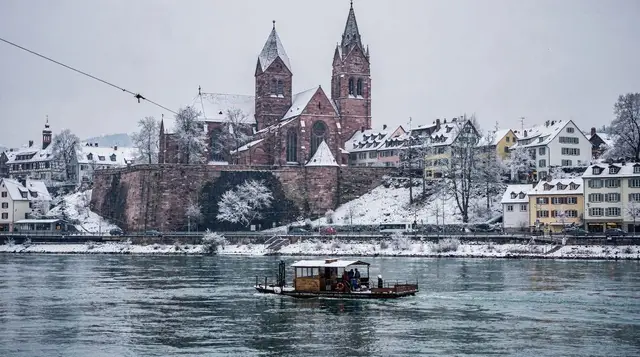
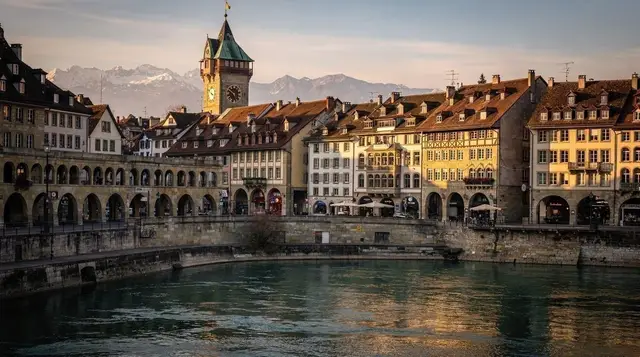
Chur calls itself the oldest town in Switzerland, and the claim is hard to dismiss: there’s been continuous settlement here since at least 3000 BC, and a Roman-era community, Curia Raetorum, gave the town its name and its role as the administrative centre of Raetia. What that history buys you today is a genuinely old core rather than a reconstructed one — narrow lanes, a cathedral that’s stood in some form since the ninth century, and a scale small enough to see properly in an afternoon. It’s also, more practically, the place where two of Switzerland’s best-known scenic trains actually start: the Bernina Express and one branch of the Glacier Express both depart from Chur station, not from Zurich or St. Moritz alone.
That combination — a real historic town plus a rail junction into the Grisons Alps — is what makes Chur worth planning around rather than just passing through. This guide covers what’s actually worth your time in the old town, how the Bernina and Glacier Express connections work from here, and the day-trip options into the surrounding valleys, with realistic prices and journey times throughout.
Getting to Chur from Zurich
Direct InterCity trains leave Zurich HB roughly every hour and take about 1 h 15 to Chur, which makes it a comfortable day trip without an early start. There’s no reservation requirement for this leg, and Half Fare Card or Swiss Travel Pass tickets work exactly as they would on any other Swiss domestic route. If you’re building a longer rail trip, see the Swiss trains explained guide for how the ticketing and pass system fits together, and Swiss Travel Pass guide for whether the pass pays for itself on your itinerary.
From Chur, the onward connections are part of the appeal. The table below covers the routes most visitors actually use.
| Destination | Journey time from Chur | Notes |
|---|---|---|
| Zurich HB | 1 h 15 | Direct IC, roughly hourly |
| Arosa | 1 h | Rhaetian Railway narrow-gauge line, scenic in its own right |
| Flims-Laax | 25–30 min | Postbus from outside the station |
| Lenzerheide | 30 min | Postbus from outside the station |
| St. Moritz | 2 h | Via the Albula line or the Bernina Express |
| Davos | 1 h 10 | Change at Landquart |
| Tirano, Italy | 4 h | Full Bernina Express run, seat reservation required |
Chur station itself is compact enough that changing trains or catching a connecting bus rarely takes more than the scheduled gap. Left-luggage lockers are available if you’re using Chur as a stopover between Zurich and somewhere further into the mountains.
Chur’s old town: what’s actually worth your time
The old town (Altstadt) is small enough to cover on foot in two to three hours without rushing, which is roughly what most visitors give it. The obvious anchor is the Chur Cathedral (Kathedrale St. Mariä Himmelfahrt), a Romanesque and Gothic building on the Bischöflicher Hof hill that has been the seat of the Diocese of Chur since the fifth century — one of the oldest continuously active dioceses north of the Alps. The choir screen and treasury are worth the short detour up the hill, and entry to the church itself is free outside of services.
Below the cathedral, the streets around Arcas square and Poststrasse hold most of the shops, cafés and the town hall, with enough surviving medieval and baroque façades that it doesn’t feel like a reconstruction. St. Martin’s Church, with Augusto Giacometti’s stained glass, is another stop most people make while they’re in the area, and it’s a five-minute walk from the cathedral.
For a structured version of the same ground, a themed walk works well if you’d rather have context than wander unguided — a city tour built around a fictional crime story woven through the old town’s real history covers most of the same streets while giving the visit a narrative thread, which suits visitors who find a plain architectural walk hard to hold attention through. If you’d prefer German-language local commentary instead, a guided old-town walk run by local guides covers the cathedral quarter and main squares at a slower pace.
Either way, the old town is genuinely walkable without a guide too — it’s small, well signposted, and the main sights are within ten minutes of each other on foot.
Museums and rainy-day options
Chur has two museums that justify a stop if the weather turns or you want more than a walk. The Rätisches Museum (Rhaetian Museum), in a former patrician house just off the old town, covers the canton’s history from prehistoric finds through the Roman period to more recent Grisons life; entry runs around CHF 10, with concessions closer to CHF 8. The Bündner Kunstmuseum (Graubünden Museum of Fine Arts) pairs a nineteenth-century villa with a modern extension and holds a collection heavy on Swiss and Alpine-connected artists, including work by the Giacometti family; entry is around CHF 14.
Both are modest by international standards, but neither takes more than an hour, which makes them easy to fit around lunch on a day when you’re not spending the whole afternoon outdoors. For broader museum planning around the region, the Zurich museums guide and Swiss National Museum guide cover the larger collections back in Zurich.
Chur as the starting point for the Bernina Express and Glacier Express
This is the reason a lot of visitors end up in Chur at all. The Bernina Express, the UNESCO-listed line that climbs to the Bernina Pass before descending into Italy at Tirano, begins its full run in Chur rather than St. Moritz — starting here gets you the entire climb rather than just the alpine section. The open-air panorama carriages run only from May to October; outside that window, the same route is covered by the standard panoramic-window service, still scenic but enclosed. A seat reservation is compulsory year-round, typically CHF 15–33 depending on season and distance, on top of your rail ticket or pass discount. The full guide to planning this trip is at Bernina Express guide.
The Glacier Express is usually associated with St. Moritz to Zermatt, but one of its regular through-services actually runs between Zermatt and Chur, which makes Chur a legitimate start or end point rather than a consolation for missing St. Moritz. The full journey from Chur to Zermatt takes around 7 hours with the same reservation requirement as the Bernina line. Details, seasonal timetables and what the ticket actually includes are covered in the Glacier Express guide.
Both trains draw large numbers of visitors in midsummer, and panorama-car seats for popular departures can sell out several days ahead in July and August — book before you arrive in Chur rather than assuming you can walk up.
Day trips from Chur: the Rhine gorge, Arosa and Flims-Laax
Chur’s other role is as a base for reaching places most Zurich-based visitors never get to. The Ruinaulta, sometimes marketed as Switzerland’s Grand Canyon, is a Rhine gorge carved by a prehistoric landslide, and the Rhaetian Railway line towards Ilanz runs directly through it — the train itself is most of the experience, though hiking trails near Versam-Safien station let you get down into the gorge on foot. A there-and-back trip with a short stop fits comfortably into half a day, leaving the afternoon free for the old town.
Arosa, an hour away on its own narrow-gauge line, is a ski and hiking resort with a lake at its centre and enough of a village feel that it works as a half-day trip beyond the Bernina and Glacier routes; it’s also one of the more scenic short rail journeys in the region in its own right. Flims-Laax, roughly half an hour away by postbus, is better known for skiing in winter but draws summer visitors for the turquoise Caumasee lake and mountain-bike trails.
For a single outing that strings several of these together rather than choosing one, a private day trip covering Arosa, Chur and the Caumasee at Flims avoids the logistics of separate train and bus connections. If whitewater is more the goal than lake views, a half-day rafting trip on the Vorderrhein near Flims and Ilanz runs through the same stretch of river the gorge train overlooks.
Further afield, St. Moritz and Davos are both reachable within a couple of hours, but they’re substantial destinations in their own right rather than add-ons to a Chur day — see the St. Moritz & Engadine and Davos & Klosters pages if either is on your list separately. Liechtenstein, a short hop from Chur via Sargans, and the Heidiland-Walensee area are two more nearby regions worth knowing about if you’re building a longer loop through this part of Switzerland — see Liechtenstein and Heidiland & Walensee.
Where to eat and what it costs
Chur is noticeably cheaper than Zurich, which is one of its underrated advantages as a day trip. A coffee in an old-town café runs about CHF 4.50–5.50, close to Zurich prices, but a casual restaurant lunch is typically CHF 22–32, against closer to CHF 30–40 for the equivalent in central Zurich.
Grisons specialities are easy to find here and worth prioritising over generic Swiss options — Bündnerfleisch (air-dried beef), Capuns (a chard-wrapped pasta dish), and Maluns (a shredded-potato dish traditionally served with apple sauce and cheese) all originate in this canton rather than being tourist inventions. If you want a broader sense of what a day of eating actually costs across the country, the Zurich travel costs guide breaks down comparable prices city by city.
Practical tips and mistakes to avoid
The most common planning mistake is treating Chur as a full-day destination on its own. The old town genuinely takes two to three hours; pair it with a train connection, a museum, or one of the nearby valleys rather than budgeting an entire day for the town alone, unless you’re specifically here to catch the Bernina or Glacier Express and want a relaxed morning beforehand.
The second mistake is assuming panorama-car seats on the scenic trains are available on the day. In peak summer they routinely sell out several days ahead — reserve before you travel rather than on arrival at Chur station. Outside the May–October panorama season, don’t expect the open-air carriages at all; the standard enclosed panoramic service runs instead, which is still worth taking but is a different experience.
Finally, if you’re combining Chur with a Rhine gorge visit, check which trains actually route through the Ruinaulta before boarding — not every Chur–Ilanz service takes the scenic alignment at the same speed, and a fast connection can pass through with less time to look than a stopping service would give you.
Frequently asked questions about visiting Chur
How do I get from Zurich to Chur by train?
Direct InterCity trains run roughly every hour from Zurich HB and take about 1 h 15. No reservation is needed for this leg; you can use a Swiss Travel Pass or Half Fare Card ticket as you would on any other domestic route.
Do I need a reservation for the Bernina Express or Glacier Express from Chur?
Yes, both require a seat reservation on top of your rail ticket or pass, typically around CHF 15–33 depending on the season and the section of the route. Book at least a few days ahead in July and August, when the panorama cars sell out.
Is Chur’s old town free to visit?
Walking the old town costs nothing; you only pay to enter specific sights such as the Rätisches Museum or Bündner Kunstmuseum, or to join a guided walk. Churches are generally free to step into outside of services.
Can I combine Chur with the Rhine gorge in one day?
Yes. Trains on the Rhaetian Railway line towards Ilanz pass directly through the Ruinaulta gorge, and the round trip with a short stop can be done in half a day, leaving the afternoon for Chur’s old town.
Is Chur expensive compared to Zurich?
It’s noticeably cheaper. A casual restaurant lunch typically runs CHF 22–32 against closer to CHF 30–40 in central Zurich, and there’s no equivalent of Zurich’s premium hotel pricing.
What’s the best time of year to visit Chur?
May to October if the Bernina Express’s open-top panorama coaches matter to you, since they’re stored for winter. Outside that window Chur still works well as a day trip, since its main sights are the old town and museums, both indoors or covered.
Can I use the Swiss Travel Pass to get to Chur and around town?
The Swiss Travel Pass covers the Zurich–Chur train and Chur’s local buses, and gives a discount rather than free travel on the Bernina Express and Glacier Express, where the seat reservation is always payable separately.
For onward planning, Day trips from Zurich sets Chur against the region’s other options, and How many days in Zurich or a longer route like Zurich rail-only, 7 days covers where a Chur stop fits into a longer Switzerland trip. For a sense of why the connections here work as reliably as they do, Why Swiss trains run on time is worth a read before you build a tight interchange into your day.