Zurich's museums: which ones are worth the CHF
Which Zurich museums are actually worth paying for?
The Rietberg and Kunsthaus are the strongest collections for the money, and the Zoological Museum is free and excellent for families. The FIFA Museum is well made but narrow, worth it only if you actually follow football. The Swiss National Museum is free most days and covers more ground than its modest ticket price suggests.
What Zurich actually offers beyond the Kunsthaus
Zurich has more museums per resident than most cities its size, and the quality is genuinely mixed. Some are world-class collections in beautiful buildings; others are single-subject tourist draws charging tourist prices for a visit that runs under two hours. If you’re working out where to spend an afternoon and where to save your CHF for something else, this is a straightforward comparison of the ones visitors actually ask about: the Rietberg, the FIFA Museum, the Museum für Gestaltung and the Zoological Museum, with the Kunsthaus and the Swiss National Museum thrown in because any honest list has to include them.
None of this requires a car. Everything below sits inside Zurich’s ZVV network, most of it within a 20-minute tram ride of the old town, so you can string two or three together in a day if you pace yourself. For a wider view of what else fills a day in the city, see the Zurich free things to do guide and the one-day itinerary.
Kunsthaus Zurich: the one to prioritise
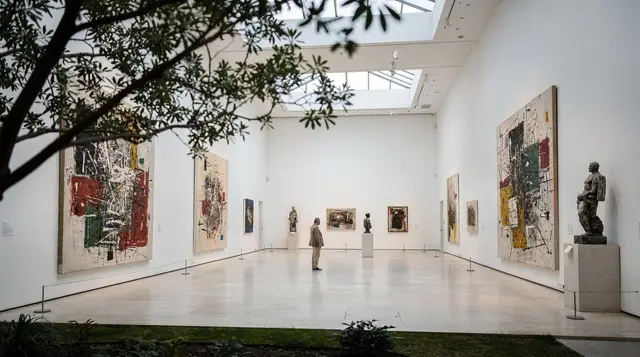
The Kunsthaus is Switzerland’s largest privately funded art museum and the obvious first stop for anyone interested in painting and sculpture. The collection runs from medieval altarpieces through Monet, Munch and Chagall to a genuinely strong postwar and contemporary wing, spread across the original 1910 building and the 2021 Chipperfield extension across the square.
Adult admission to the permanent collection runs around CHF 23, with special exhibitions typically adding CHF 5 to 10 on top. The museum is free on Wednesday evenings after 5pm for the permanent collection, which is worth timing a visit around if your schedule allows it. Budget two to three hours; the two buildings are connected by an underground passage, so you don’t need to go outside between them.
It’s closed on Mondays. For a walking route that takes in the Kunsthaus alongside the old town’s other sights, see the old town walking guide.
Rietberg Museum: smaller, quieter, underrated
The Rietberg sits in Enge, a short tram ride south of the centre, in and around the Villa Wesendonck and its park overlooking the lake. It holds one of Europe’s better collections of non-European art: African masks and sculpture, South and Southeast Asian religious art, Chinese and Japanese works, and pre-Columbian pieces, shown in a modern underground extension that connects to the historic villa.
Permanent collection entry is around CHF 18, with special exhibitions higher. The permanent collection itself is free for visitors under 25 and free for everyone on Wednesday evenings, mirroring the Kunsthaus’s policy. The park around the villa is open and free even when the museum is closed, and it’s one of the better quiet green spaces in the city if you just want a bench with a lake view.
It’s smaller than the Kunsthaus and rarely crowded, which makes it a better fit for a shorter visit or a rainy afternoon that doesn’t call for a three-hour commitment.
FIFA Museum: fine if you actually care about football
The FIFA Museum sits inside the Haus zur Enge building near Bürkliplatz, a few minutes from the lake. It covers the history of football and the World Cup across three floors, with a replica of the trophy, historical shirts and boots, and interactive sections that lean towards younger visitors.
Adult tickets run around CHF 26 on the door, a little less if booked online in advance. That’s a high price for a museum most visitors finish in under two hours, and non-football fans regularly describe it as thin for the money. Fans of the sport tend to disagree and rate it highly, so the honest answer is that this one depends entirely on how much you care about football history going in.
a guided visit to the FIFA Museum adds context that the self-guided route misses, which is worth considering if you’re paying the full price anyway.
Museum für Gestaltung: design, free wing, easy to combine
The Museum für Gestaltung (Museum of Design) has its main site inside the Toni-Areal building in Zurich West, alongside the Zurich University of the Arts. It covers graphic design, industrial design, poster art and applied arts, with rotating exhibitions rather than one fixed permanent display.
Some areas of the Toni-Areal complex, including exhibition spaces run by the university itself, are free to enter, while the Museum für Gestaltung’s own ticketed exhibitions run around CHF 14 to 18 depending on what’s showing. It’s a good pairing with a look around Zurich West’s converted industrial buildings and the district’s better coffee roasters; see the Zurich West guide for the rest of the area.
Zoologisches Museum: free, and better than the price suggests
The Zoological Museum of the University of Zurich, on Karl-Schmid-Strasse near the main university buildings, costs nothing to enter and is open six days a week. It holds a large taxidermy and skeleton collection, an aquarium and a vivarium with live reptiles and insects, and it’s compact enough to cover properly in an hour without children losing patience halfway through.
For a free museum this punches well above its price. It’s one of the better wet-weather options with young children in the city, alongside the ideas in the Zurich with kids guide.
Swiss National Museum: the free one people skip by mistake
The Landesmuseum, next to the main train station, covers Swiss history from prehistory to the present in a large neo-Gothic building. It’s free on the first Saturday of every month and otherwise costs around CHF 10, which makes it one of the cheapest serious museums in the city regardless of when you go.
The permanent exhibition is large enough to fill two hours comfortably, covering everything from early Swiss archaeology to the country’s neutrality and political system, and it’s a genuinely useful primer if you’re travelling on to other parts of Switzerland afterwards. It sits directly beside Zurich HB, so it slots neatly into a morning before or after a train.
Comparing the main museums at a glance
| Museum | Typical adult price | Time needed | Closed |
|---|---|---|---|
| Kunsthaus Zurich | ~CHF 23 (+ exhibitions) | 2–3 hours | Mondays |
| Rietberg Museum | ~CHF 18 | 1.5–2 hours | Mondays |
| FIFA Museum | ~CHF 26 | 1.5–2 hours | None fixed |
| Museum für Gestaltung | ~CHF 14–18 | 1–1.5 hours | Mondays |
| Zoologisches Museum | Free | 1 hour | None fixed |
| Swiss National Museum | ~CHF 10 (free 1st Sat) | 2 hours | Mondays |
Prices move year to year, so treat these as a planning guide rather than a quote, and check each museum’s own site before you go if the figure matters to your budget. For a wider view of what a day in the city costs beyond museum tickets, see Zurich travel costs.
Does the Zurich Card pay for itself here
The Zurich Card includes free entry to most municipal and cantonal museums, the Kunsthaus and Rietberg’s permanent collections among them, plus unlimited ZVV transport for its validity period. Add up two or three museum entries plus a day or two of trams and it comfortably beats buying everything separately. If your plan is one museum and a short stay, though, single tickets are cheaper — the card is a volume play, not a discount on its own.
Museums as a rainy-day backup, not the whole trip
Zurich’s weather is changeable enough that it’s worth keeping two or three museums in reserve for a wet afternoon rather than scheduling them all on your best-weather day. The Zoological Museum and Swiss National Museum both work well as last-minute plan-B options since neither requires advance booking. For sunnier days, the money is usually better spent outdoors — see best hikes near Zurich or a Lake Zurich boat trip instead.
Beyond Zurich: museum-focused day trips
If the city’s own collections don’t fill your appetite, two day trips extend the theme well. Lucerne’s Swiss Museum of Transport is the country’s most visited museum, built around full-size trains, aircraft and a planetarium, and it needs closer to a full day than an afternoon; Lucerne itself is 45 minutes from Zurich HB.
Further afield, Stuttgart’s car museums draw a different crowd entirely. a day tour to the Mercedes-Benz and Porsche museums in Stuttgart covers two of Europe’s best-regarded car collections in a single long day, which suits anyone whose museum interests run to engineering rather than art.
For something between a museum and a living heritage site, a day trip to St. Gallen’s abbey and its Baroque library is one of the better-value additions on this list — the Abbey Library is a UNESCO World Heritage site in its own right, and St. Gallen is roughly an hour from Zurich by train. See the St Gallen destination guide for more on the town itself.
Working museums into a wider day
Most of central Zurich’s museums sit close enough together that you don’t need to plan transport carefully between them; the bigger question is how much walking and standing you want to do in one day. If you’d rather break up gallery time with something more active, a guided city bike tour covers many of the same neighbourhoods — the old town, the lake shore, Zurich West — at a faster pace than museum-hopping on foot, and works well either side of a single museum visit rather than stacked against two or three.
How to choose when you only have one afternoon
Most visitors do not have time for every museum here, and trying to see them all is the quickest way to leave tired and unimpressed. A better approach is to decide what kind of visit you want. If you like paintings and sculpture and want a collection with real depth, the Kunsthaus is the obvious answer, and the Kunsthaus Zurich guide goes further into what to look for once you are inside. If you would rather see something less familiar, the Rietberg rewards curiosity more than name recognition, and it suits people who have already seen a lot of European art elsewhere.
If your priority is understanding the country you are in, the Swiss National Museum is the better use of a morning, especially before you head out to the mountains. The Swiss National Museum guide explains how the collection is laid out so you can skip what does not interest you. And if you are travelling with children, start with the Zoological Museum and treat everything else as optional.
Pairing a museum with the rest of your day
A museum visit works best when it has a clear shape around it. A gallery in the morning, a long lunch and a walk by the water in the afternoon will feel more relaxed than two museums back to back. The Kunsthaus sits close to the old town, so it pairs naturally with a stroll through the lanes described in the old town walking guide. The Rietberg, being further south, goes well with time in the park and a slow walk towards the lake, and the Lake Zurich boat trips guide shows how to turn that into an easy outing on the water.
If you are short on time overall, the Zurich in one day itinerary shows how much one museum can realistically fit alongside the main sights, while the two-day itinerary leaves room for a second gallery without rushing. Visitors on a tighter budget will find the budget three-day plan useful, because it leans on the free and low-cost options covered above.
What to expect from the visit itself
Zurich’s museums tend to be calm, well organised and quiet compared with those in larger European capitals. Staff are used to international visitors, and you will rarely need to queue for long outside the busiest exhibitions. That said, a major temporary show can change the picture at the Kunsthaus, so it is worth checking what is on before you arrive rather than discovering a crowd at the door.
Pace yourself inside the larger buildings. Gallery fatigue is real, and the best visits are the ones where you pick a handful of rooms and give them proper attention instead of walking every corridor. Most museums have a café or a place to sit, and using it halfway through makes the second half of the visit much more enjoyable. If you are visiting in colder months, museums also double as a warm break between outdoor sights, which is one reason they feature so often in the Zurich in winter guide and the Zurich weather month by month guide.
Museums and the seasons
The balance between indoor and outdoor plans shifts through the year. In winter and in the wetter shoulder months, museums move from optional extras to the backbone of a good itinerary, and it makes sense to plan around them. In summer, the long evenings favour the lake, the river and the parks, so one carefully chosen museum is usually enough. If you are travelling in autumn, the Zurich in autumn guide shows how to balance gallery time with the season’s better walking days.
Seasonal visitors should also keep the opening pattern in mind. Because several of the main museums close on Mondays, that day is a good one for a boat trip, a viewpoint or a day out of the city. The Zurich viewpoints guide and the day trips from Zurich guide both help fill a Monday without leaving you stranded at a locked door.
Practical notes before you go
Photography without flash is generally allowed in permanent collections but often restricted in temporary exhibitions; look for signage rather than assuming. Large bags need to go in lockers at most of the bigger museums, which are coin-deposit and refundable, not coin-operated. English-language information is standard at the Kunsthaus, Rietberg, FIFA Museum and Swiss National Museum; smaller collections can be German-only, so it’s worth checking a museum’s own site if that matters to you.
If you’re building a longer stay around galleries and history rather than mountains and lakes, the how many days in Zurich guide and the Zurich museums category page are the two places to start planning from next.
Museum & art tours on GetYourGuide
Verified deep-linked GetYourGuide tours. Book through these links and we earn a small commission at no cost to you.
GetYourGuide does not provide a product photo for this activity — the image shows the meeting point, photographed by us.