Lausanne sits on the northern shore of Lake Geneva, built on three hills, which means every walk between the station, the old town and the lakefront involves either a slope or the metro. It is not a typical Zurich day trip: at just over two hours each way by train, it takes longer to reach than Lucerne, Bern or Basel, and it rewards a full day rather than a rushed half-day between trains.
What makes Lausanne worth the distance is the combination rather than any single sight. The old town has a genuine Gothic cathedral, the International Olympic Committee has been headquartered here since 1915 and the museum it built overlooks the lake, Ouchy is a proper lakefront with paddle steamers rather than a token promenade, and the m2 metro connecting it all is, by gradient, the steepest in the world. None of this is dramatic in the way an Alpine peak is dramatic, but it is dense and walkable in a way few Swiss cities manage.
Getting from Zurich to Lausanne
Direct InterCity trains run roughly hourly from Zurich HB and take about 2 hours 15 minutes, running via Bern along the way. That makes Lausanne one of the longer rail journeys covered on this site, on a par with Zermatt or St Moritz rather than the sub-hour hops to Lucerne or the Rhine Falls.
Second-class fares start around CHF 79 one-way at full price. A Half Fare Card cuts that roughly in half and pays for itself if you are making more than one or two trips like this during your stay; a Swiss Travel Pass covers the journey outright and also covers Lausanne’s local buses and the m2 metro once you arrive. Because of the distance, this is a trip where checking your ticket strategy in advance matters more than on the shorter excursions covered in the day trips from Zurich overview.
Lausanne’s station sits below the old town, on the same steep terrain as the rest of the city, so the m2 metro is the practical way to reach both the cathedral above and Ouchy below rather than walking either direction with luggage.
Lausanne Cathedral: the Gothic heart of the old town
Notre-Dame de Lausanne is the largest Gothic cathedral in Switzerland, consecrated in 1275 in the presence of Pope Gregory X and Holy Roman Emperor Rudolf I. It has been a Reformed Protestant church since the 16th century, which shows in the plainer, whitewashed interior compared with Catholic cathedrals elsewhere in Europe, but the west front, the rose window and the carved Painted Portal on the south side survive largely intact.
Entry to the cathedral itself is free. Climbing the tower costs a small fee, typically a few francs, and 224 steps get you to a platform with a view over the old town’s rooftops to the lake and, on a clear day, the French Alps beyond. Lausanne also keeps one genuinely unusual tradition running: a night watchman still calls out the hour from the tower every night between 10pm and 2am, a role that has continued uninterrupted since the Middle Ages and that the city treats as living heritage rather than a tourist re-enactment.
The old town around the cathedral is small enough to cover in an hour or two on foot, with the Palais de Rumine housing several of the city’s museums on Place de la Riponne, and the covered wooden staircase of the Escaliers du Marché linking the cathedral square down towards Place de la Palud and its animal-themed fountain.
The Olympic Museum and the “Olympic capital”
The International Olympic Committee moved its headquarters to Lausanne in 1915 and has stayed ever since, which is why the city was formally granted the title “Olympic Capital” by the IOC in 1994 — a title with no equivalent status elsewhere, since there is only one. The Olympic Museum, opened in 1993 and extensively renovated in 2013, sits in Ouchy on landscaped terraces running down to the lake, with a sculpture park that is free to walk through even without a museum ticket.
Inside, the collection runs from the ancient Games at Olympia through to recent editions, with torches, medals and athletes’ equipment alongside multimedia exhibits on the organisation of the modern Games. Adult entry runs around CHF 20, with reductions for students, seniors and children, and a ticket covers the full day if you want to break the visit with lunch at the lakeside café. For anyone with even a mild interest in sport it is one of the better-value museum visits on Lake Geneva; for anyone without that interest, the gardens alone justify the walk down from the old town.
Ouchy: the lakefront everyone actually spends time in
Ouchy is Lausanne’s port district, and in practice it is where most visitors end up spending the bulk of their afternoon. The promenade along Lake Geneva runs for several kilometres, lined with plane trees, public gardens and the turreted Château d’Ouchy, now a hotel, which began as a 12th-century fortress before being rebuilt in a fanciful 19th-century style.
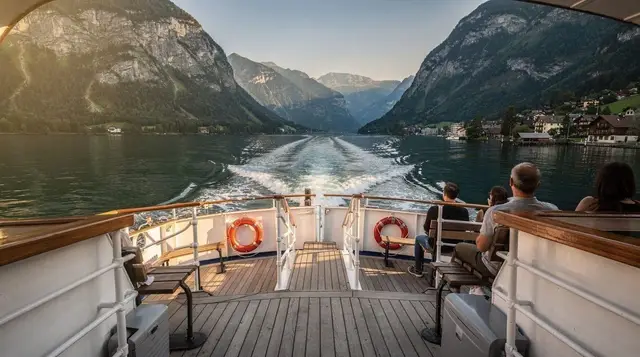
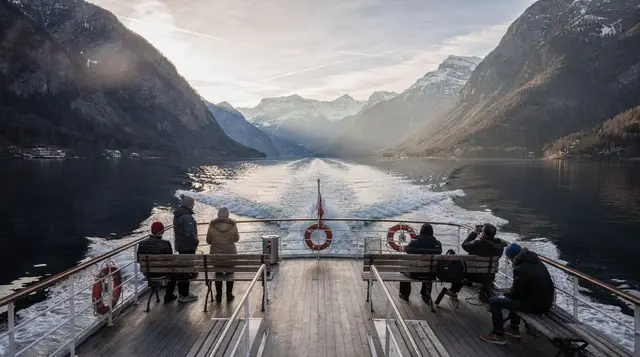
From the small harbour, CGN paddle steamers — the same historic fleet that serves Montreux and Vevey further along the shore — run scenic services along the Swiss Riviera and across to Evian on the French side of the lake. A round-trip lake cruise is a straightforward way to see the vineyard terraces and the Alps from the water rather than the shore, and pairs naturally with a walk back through the Olympic Museum gardens. Ouchy also has a public lido and swimming area in summer, and the promenade is where the outdoor café culture that Lausanne is genuinely good at is most visible, unlike the more formal restaurant scene up in the old town.
The m2: Switzerland’s steepest metro line
Lausanne’s m2 line, opened in 2008, is fully automatic and driverless, and it holds the Guinness World Record for the steepest metro line, with gradients reaching around 12 percent on some sections — steep enough that conventional rail adhesion would not work, so the trains use rubber tyres for grip. The line runs from Ouchy on the lakefront up through Flon, the old commercial district turned nightlife and shopping quarter, and on past the station to the upper neighbourhoods and Epalinges.
Riding it end to end takes under 15 minutes and is covered by the same tickets as Lausanne’s buses and the rest of the tl network, or included if you are travelling on a Swiss Travel Pass. It is not a sight to build a special trip around, but because it is genuinely the fastest way to move between Ouchy, Flon and the old town on Lausanne’s hillside terrain, most visitors end up riding it several times in a day regardless, and the steep sections and viaducts are noticeable enough to be mildly interesting rather than just functional.
Aquatis: Europe’s largest freshwater aquarium-vivarium
Aquatis opened in 2017 in Chavannes-près-Renens, a short bus or suburban train ride from central Lausanne, and describes itself as Europe’s largest freshwater aquarium-vivarium. The exhibits are organised by river system — Amazon, Mekong, Nile, Rhône among them — with tanks, a rainforest dome and reptile enclosures across several floors, aimed squarely at families rather than specialists.
It is not cheap: adult entry runs around CHF 32, with children’s tickets closer to CHF 20, and a family visit with the museum shop and café can add up quickly on top of an already expensive day in an expensive city. For families travelling with children, particularly on a day when the weather rules out the lakefront, it is one of the better indoor options in the wider Lake Geneva area; on a clear day, most visitors get more out of Ouchy’s free lakefront than an indoor aquarium that competes directly with it for time.
What a day in Lausanne actually costs
| Item | Typical cost (CHF) |
|---|---|
| Return train, Zurich–Lausanne (2nd class, no discount) | ~158 |
| Return train, Zurich–Lausanne (with Half Fare Card) | ~79 |
| Cathedral tower climb | ~5 |
| Olympic Museum, adult entry | ~20 |
| Aquatis, adult entry | ~32 |
| CGN lake cruise, short round trip | 25–40 |
| Lunch, casual restaurant | 25–35 |
| Coffee and pastry | 8–10 |
A day covering the cathedral, the Olympic Museum and Ouchy without Aquatis or a lake cruise runs to roughly CHF 60–80 per person beyond the train fare, which is in line with other Swiss cities rather than notably worse. Adding Aquatis or a paddle-steamer cruise pushes a family day well past CHF 150 per person once the train is included, which is worth budgeting for deliberately rather than discovering at the ticket counter.
Extending the trip: Gruyères, Montreux and Vevey
Because Lausanne already costs over two hours of travel each way, most visitors either commit to a single focused day in the city or extend the trip to make the distance worthwhile. Montreux is about 20 minutes further along the lake by train and pairs naturally with Lausanne for its belle-époque lakefront and the Freddie Mercury statue; Vevey, a few minutes short of Montreux, has a smaller but pleasant old town and lakefront market.
a private walking tour covering Montreux’s lakefront highlights is a compact way to see the town without planning the route yourself, and a two-hour cruise along the Riviera shoreline from Vevey covers much of the same coastline as the Ouchy paddle steamers from a different starting point.
Gruyères, the walled hill town behind its own cheese and chocolate industry, is roughly an hour from Lausanne with a change of train, which makes it a stretch to combine with a full Lausanne day but realistic as a second day. a guided day trip from Lausanne to Gruyères with a chocolate and cheese tasting removes the connection planning, and for anyone wanting to go higher, a day trip from Lausanne up to Glacier 3000 above Les Diablerets reaches genuine high-Alpine terrain in a way nothing in Lausanne itself does.
Travellers comparing this whole region against Zermatt or the Bernese Oberland should note that Lake Geneva’s strength is lakefront towns and vineyard terraces rather than glaciers on the doorstep — Glacier 3000 is the exception that requires a dedicated excursion, not a a short local funicular.
For a broader sense of how the Lake Geneva region compares to the Zurich-based itineraries most visitors are already planning, it is worth reading how Lausanne stacks up in the Zurich versus Geneva comparison, since Geneva itself is a further 40 minutes past Lausanne along the same lake and rail line.
When to visit, and when to skip it
April to October is the more rewarding window, since Ouchy’s promenade, the lido and the CGN cruise timetable are all running at full frequency, and the outdoor cafés that make the lakefront pleasant are open. The cathedral, Olympic Museum and Aquatis operate year-round regardless of season, so a winter visit is not wasted, but the lakefront itself is quieter and greyer, and some cruise schedules thin out considerably.
Given the length of the journey from Zurich, Lausanne makes more sense as a deliberate one- or two-day trip, ideally worked into a longer Swiss itinerary via Bern or Basel rather than treated as an add-on day. Anyone deciding between regions before booking trains should also check the general how many days in Zurich and Zurich travel costs guides, since a Lausanne extension changes both the length and the budget of a Zurich-based trip more than most of the closer excursions on this site.
Questions about visiting Lausanne from Zurich
Is Lausanne worth a day trip from Zurich?
Yes, but it is one of the longer day trips from Zurich at just over two hours each way by direct train. The cathedral, Olympic Museum, Ouchy lakefront and Aquatis aquarium are all reachable on foot or by metro from the station, so a full day covers the essentials without a car.
How long does the train from Zurich to Lausanne take?
Around 2 hours 15 minutes on the direct InterCity, which runs roughly hourly from Zurich HB. Second-class one-way tickets start around CHF 79 without a discount card, less than half that with a Half Fare Card or Swiss Travel Pass.
Is the Olympic Museum worth the entry fee?
For anyone with an interest in sport it is one of the better-value museums on Lake Geneva. Adult entry runs around CHF 20, the lakeside gardens with Olympic sculptures are free to walk through, and the collection covers everything from ancient Olympia to recent Games.
What is the m2 metro and is it worth riding?
The m2 is Lausanne’s fully automatic metro line, recognised as the steepest metro line in the world with gradients over 10 percent. It is worth riding simply to get between Ouchy, Flon and the upper town, and the steep sections and elevated viaducts make the ride itself mildly interesting rather than a detour in its own right.
Can I combine Lausanne with Gruyères or Montreux in one day?
Lausanne to Montreux is about 20 minutes by train and Lausanne to Gruyères is closer to an hour with a change, so combining Lausanne with one of the two is realistic in a single long day. Fitting in both, plus the cathedral and Olympic Museum, usually means rushing at least one stop, so two days works better.
Is Aquatis worth visiting with kids?
For families it is one of the stronger wet-weather options in the region, with Amazon, tropical and reptile sections across several floors. Entry is expensive at around CHF 32 for adults and close to CHF 20 for children, so it suits a rainy day more than a sunny one when Ouchy’s lakefront is free and arguably more pleasant.
Do I need a car to see Lausanne’s sights?
No. The cathedral, old town, Flon and Ouchy are connected by the m2 metro and are largely walkable, and Aquatis is a short bus or train ride from the centre. A car adds parking costs and no real time saving within the city.