A lakeside town that doesn’t try to be Lucerne
Neuchâtel gets a fraction of the visitors that Lucerne or Interlaken pull in, and that’s largely because it isn’t marketed as a mountain gateway. What it has instead is a genuinely well-preserved old town built almost entirely from the same pale yellow sandstone (locals call the effect “café au lait”), a long lake with proper swimming spots, a limestone amphitheatre carved into the Jura called the Creux du Van, and a valley behind it, the Val-de-Travers, where absinthe was invented and quietly kept being distilled through the decades it was banned. None of this is dressed up for tourists. Menus are in French, the pace is slower than Zurich, and prices, while still Swiss, are noticeably lower than the city you’re travelling from.
This makes Neuchâtel a good fit for a single long day trip if you’re focused on the old town and the lake, or a two-day trip if you want to add the Creux du Van hike or the Val-de-Travers absinthe villages without rushing either.
Getting there from Zurich
Direct IC5 trains link Zurich HB to Neuchâtel roughly once an hour, running via Olten and Biel/Bienne, with a journey time of around 1h20. No change is needed on the direct services; connecting trains via Bern take slightly longer. A standard second-class one-way ticket costs in the region of CHF 60–70 full fare, or roughly half that with a Half Fare Card, and Neuchâtel is fully covered by the Swiss Travel Pass, so pass holders travel free on the train itself.
If you’re combining Neuchâtel with other Swiss regions in the same trip, it’s worth reading the Swiss Travel Pass guide and the guide to how Swiss trains actually work before you book anything, since the pass only pays off past a certain number of travel days.
Neuchâtel’s own train station sits on a hill above the old town; it’s a flat ten-minute walk down, or a short ride on bus line 1 or 4, to reach the lakefront and the historic centre.
The old town: sandstone, not postcards
The Vieille Ville is small enough to see properly in two to three hours without rushing. The Collégiale, the town’s Gothic collegiate church, is the obvious anchor point: free to enter, notable for its polychrome roof tiles and the Cenotaph, a 15th-century sculpted frieze of 15 painted stone figures depicting Neuchâtel’s counts, which is one of the more significant pieces of medieval funerary sculpture still in its original setting in Switzerland. Next to it, the Château de Neuchâtel (still used for cantonal government offices) is viewable from its courtyard rather than as a paid attraction.
Below the church, Rue du Château and the surrounding lanes are lined with the sandstone facades that give the town its colour, along with a scattering of fountains and small squares that don’t get crowded even in August. The Musée d’art et d’histoire (MAHN), on the lakefront, charges around CHF 12 for adults and is worth the detour mainly for Jaquet-Droz’s 18th-century automata — three mechanical figures (a writer, a draughtsman and a musician) that are still demonstrated on set days, usually the first Sunday of the month. Check the current schedule before planning around it.
For something more specific to the region’s identity, the Laténium archaeology museum sits a short bus ride east of the centre on the lakeshore and covers 50,000 years of settlement around the lake, including the pile-dwelling (lake village) culture that gives the surrounding lakes UNESCO World Heritage status. Entry runs around CHF 17.
The lake: cruises, swimming, and a quieter shoreline
Lake Neuchâtel is the largest lake entirely within Switzerland, and its promenade is one of the more underrated stretches of lakefront in the country simply because it isn’t overrun. Public swimming spots (the Plage de Neuchâtel and several free bathing areas along the shore) are open and free from roughly May to September, with changing facilities and, at the main plage, a small entry fee for the pool area.
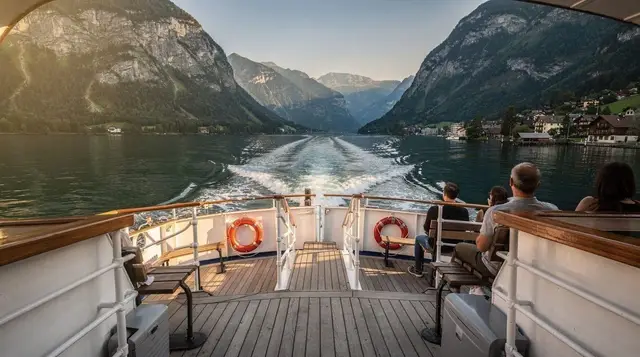
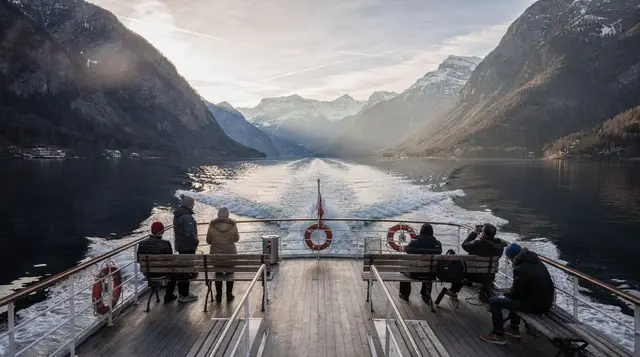
Boat services run from Neuchâtel across to Estavayer-le-Lac, Yverdon, Murten/Morat and Biel/Bienne between spring and autumn, operated by the regional lake navigation company. A return trip to Estavayer-le-Lac’s own well-preserved medieval old town costs in the region of CHF 30–40 and takes under an hour each way, making it a reasonable half-day add-on if the weather is good. Services thin out considerably outside the April–October season, so check timetables in advance if you’re visiting in winter.
For a lower-effort introduction to the town’s layout and history before or instead of a self-guided wander, a 60-minute walk through the old town with a local guide covers the Collégiale, the château courtyard and the main squares without needing to plan a route yourself.
The Creux du Van: the amphitheatre in the rock
The Creux du Van is a natural rock amphitheatre in the Jura mountains above the Val-de-Travers, roughly a two-hour drive or train-and-bus combination from Neuchâtel town, and it’s the single most photographed natural feature in the canton for good reason: a curved limestone cliff face over a kilometre wide and up to 160 metres high, wrapping around a forested bowl.
The most common approach is by train to Noiraigue (itself reached by regional train from Neuchâtel, changing if needed, in around 30–40 minutes), then a signed hiking trail of roughly 2 to 2.5 hours up to the rim, with the return leg taking a similar time. Sturdy boots are genuinely necessary; the path is steep and can be muddy or icy well into late spring.
Snow can linger on the plateau into May in a cold year, and the trail is not maintained in winter, so this is a fair-weather, snow-free-season hike rather than a year-round outing — treat June to October as the realistic window. There’s no cable car or lift here, unlike some of the mountain excursions closer to Zurich covered in the best hikes near Zurich guide, so this is a proper half-day commitment on foot, not a quick viewpoint stop.
If a full Creux du Van hike doesn’t fit your schedule, the Val-de-Travers valley below it is reachable on its own by regional train and worth visiting for reasons that have nothing to do with the rock formation above it.
Val-de-Travers: where absinthe survived a ban
Absinthe was first distilled in the Val-de-Travers in the late 18th century, and despite Switzerland banning it outright from 1910 to 2005, clandestine production never really stopped in this valley — it just moved underground, sometimes literally, into cellars and barns. Since legalisation, the valley has leaned into that history rather than hidden it.
Môtiers, one of the valley’s small villages, is home to the Maison de l’Absinthe, a small museum covering the drink’s chemistry, its ban, and the culture of clandestine distilling that kept it alive; entry runs around CHF 12, and several producers in the surrounding villages (Fleurier, Couvet, Boveresse) offer short tastings or distillery visits, generally CHF 15–25 depending on what’s included. This isn’t a boozy pub crawl — most visits are short, informative, and aimed at people curious about the history rather than looking for a night out — and there’s little to do here after early evening, so plan it as a daytime stop.
The same valley has a second, less-publicised identity: fine watchmaking. Away from the better-known UNESCO watchmaking towns of La Chaux-de-Fonds and Le Locle further north in the canton, Val-de-Travers is home to manufactures including H. Moser & Cie in Saint-Sulpice and Bovet 1822 in Môtiers, both producing high-end mechanical watches in the same valley that distils absinthe. Neither offers regular public tours in the way a museum does, so this is more a fact to appreciate while walking through than a bookable activity, but it explains why a valley this small has such a disproportionate concentration of precision-engineering jobs.
Watchmaking and craft, closer to town
If Val-de-Travers’s manufactures are off-limits to casual visitors, Neuchâtel’s own relationship with watchmaking and craft is easier to access. Several boutiques in the old town sell Swiss-made pieces at prices well below what you’d find on Zurich’s Bahnhofstrasse, and it’s worth reading the Swiss watches buying guide before committing to a purchase anywhere in the country, since authentication and warranty terms vary by retailer.
For a broader regional day built around similar rural Swiss craft and villages, Gruyère is roughly two hours further south by train and worth combining with cheese-making and chocolate rather than absinthe; a guided half-day covering the medieval village of Gruyère and its dairy heritage pairs well with a separate trip if you have more than a couple of days free in this part of Switzerland.
Where to eat
Neuchâtel’s food scene leans French-Swiss: expect fondue and filets de perche (a small lake fish, usually pan-fried, that appears on nearly every menu near the water) rather than the German-Swiss rösti-and-sausage combinations more common around Zurich. A sit-down lunch of filets de perche with a glass of the local Pinot Noir or Chasselas runs around CHF 30–40 in the old town; fondue moitié-moitié (half Gruyère, half Vacherin) is typically CHF 28–35 per person in winter months when it’s on the menu.
Bakeries and lakefront kiosks offer a cheaper CHF 12–18 lunch option if you’re trying to keep the day’s spend down, which is worth checking against the wider figures in the Zurich and Switzerland travel costs guide if you’re budgeting a longer trip.
Where to stay
Most visitors treat Neuchâtel as a day trip from Zurich rather than a base, and the train times above make that entirely workable. If you do want to stay over — mainly useful if you’re combining the old town with the Creux du Van or Val-de-Travers over two days — the options cluster around the station and the lakefront, with mid-range double rooms typically running CHF 150–220 a night, noticeably below equivalent Zurich or Lucerne rates.
Anyone weighing up a Zurich base against staying in the regions is better served by the general framework in where to stay in Zurich, since Neuchâtel itself has a small enough hotel stock that availability, not price tiers, tends to be the deciding factor in summer.
Costs at a glance
| Item | Typical cost (CHF) |
|---|---|
| Train, Zurich HB–Neuchâtel, one way | 60–70 (full fare) |
| Museum entry (MAHN, Laténium) | 12–17 |
| Lake cruise return (to Estavayer-le-Lac) | 30–40 |
| Maison de l’Absinthe entry | ~12 |
| Absinthe tasting or distillery visit | 15–25 |
| Lunch, sit-down (filets de perche) | 30–40 |
| Lunch, bakery or kiosk | 12–18 |
| Double room, mid-range hotel | 150–220 / night |
Day trip or overnight?
A single day works well if you’re prioritising the old town, the Collégiale, the lakefront and maybe a short cruise — that’s a comfortable six to seven hours including the return train, and matches the pace most people bring from a Zurich base, similar to the framework in the day trips from Zurich guide.
Adding the Creux du Van hike or a proper visit to Val-de-Travers pushes this into a two-day trip, since both require a train-and-bus (or train-and-hike) leg beyond the town itself, and rushing the Creux du Van trail in particular isn’t advisable given the terrain. If you’re still deciding how many days to allocate across the wider region, the how many days in Zurich guide covers how a stop like this fits into a longer itinerary.
Neuchâtel also works as a link between Zurich and destinations further southwest: it sits on lines connecting onward to Lausanne, Montreux and Vevey, and further towards Gruyères, so travellers building a longer Swiss rail loop sometimes route through it rather than treating it as a dead-end day trip.
For the Riviera end of that route, a guided stroll through Montreux’s Insta-worthy highlights or a day trip up to Glacier 3000 from Montreux both connect naturally onward from a Neuchâtel stop, and Bern and Basel sit within similar train times if you’re weighing alternative day trips from Zurich instead.
Practical notes before you go
Switzerland’s plugs are type J at 230V, tap water is safe and good everywhere including on the lake shore, and service is included on restaurant bills (rounding up is normal, tipping beyond that isn’t expected). The general emergency number is 112.
None of the mountain-rescue considerations relevant to Zermatt or higher alpine destinations apply here — the Creux du Van sits under 1,500 metres and doesn’t involve lifts or glacier terrain — but the trail is still steep enough that trainers rather than boots is a genuine mistake in wet weather. If Switzerland’s entry requirements are new to you, the Switzerland visa and ETIAS guide covers what’s needed before you travel.
Frequently asked questions about visiting Neuchâtel
How do you get from Zurich to Neuchâtel by train?
Direct IC5 trains run roughly hourly from Zurich HB to Neuchâtel, taking around 1h20 without a change. A one-way second-class ticket costs roughly CHF 60–70 full fare, less with a Half Fare Card, and the journey is included free of charge for Swiss Travel Pass holders.
Is Neuchâtel worth visiting as a day trip from Zurich?
Yes, particularly if you want a quieter, cheaper alternative to more heavily visited lake towns. The compact old town, the Collégiale and a lakefront walk fill a comfortable day, though adding the Creux du Van or Val-de-Travers is better split across two days.
What is the Creux du Van and how do you reach it?
It’s a curved limestone rock amphitheatre in the Jura mountains above the Val-de-Travers valley, over a kilometre wide and up to 160 metres high. It’s reached by train to Noiraigue followed by a steep 2 to 2.5-hour hike each way; there is no cable car, and the trail is best attempted between June and October when it’s clear of snow and mud.
Where can you try absinthe in the Val-de-Travers?
Môtiers’ Maison de l’Absinthe museum (around CHF 12 entry) explains the drink’s history and its decades as a banned product, and several nearby producers in Môtiers, Couvet and Fleurier offer short tastings or distillery visits for roughly CHF 15–25.
Is Neuchâtel expensive compared to Zurich?
It’s noticeably cheaper. Meals, museum entry and hotel rooms all run below Zurich equivalents, with a full day of sightseeing, a sit-down lunch and one museum typically costing CHF 90–150 per person before the train fare.
What is the best time of year to visit Neuchâtel?
May to September is the most flexible window: lake boats run their full timetable, the public swimming areas are open, and the Creux du Van trail is generally clear. Outside that period, boat services are reduced and the Creux du Van hike is less reliable underfoot.
Can you swim in Lake Neuchâtel?
Yes. Free and low-cost public bathing areas line the shore, including the main Plage de Neuchâtel, and they’re open with lifeguard cover roughly from May to September, in line with the lake’s warmer months.