The safest 3 days in Zurich for first-time visitors
Three days is enough to see why people come back to this part of Switzerland, and short enough that you don’t need to gamble on a mountain excursion that might be shut for lift maintenance. Zurich, Lucerne and the Rhine Falls are the three stops that work reliably for a first-timer: none of them depends on a cable car being open, none of them needs more than an hour on the train, and none of them requires booking weeks ahead. If you want mountains too, see best mountain excursions from Zurich for what to add on a longer trip.
Why this route works for a first trip
The mistake most first-time visitors make is trying to fit in a big-name peak — Jungfraujoch, Pilatus, Titlis — on a short trip, then losing half a day to weather or to spring and autumn revision closures that shut lifts for weeks at a time. Lucerne and the Rhine Falls don’t have that problem. Lucerne’s old town and lake are there whatever the weather, and the Falls are a waterfall, not a summit. If your trip is longer than three days, how many days in Zurich has guidance on when it’s worth adding a mountain day.
Trains do the work here. Zurich HB to Lucerne is 45 minutes, and Zurich HB to the Rhine Falls (via Schaffhausen or Neuhausen) is about 50 minutes. Both run several times an hour on CFF/SBB, so there’s no need to rent a car — see Swiss trains explained if you haven’t used the network before.
Day 1: Zurich old town and the lake
Start at Zurich HB. If you flew in, the train from the airport takes about 10 minutes and drops you at the main station — see Zurich airport to city centre for the fare and platform details. Leave bags at the station lockers if your hotel check-in is later.
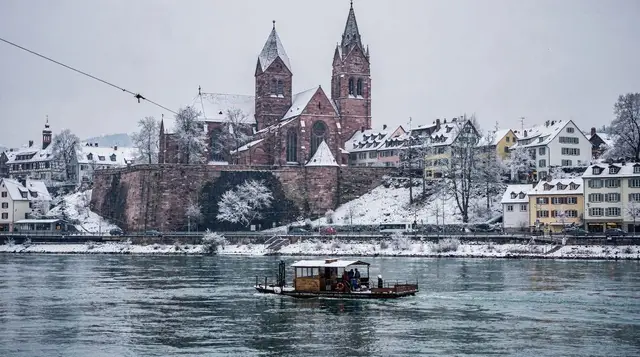
Walk down into the old town on the Limmat’s west bank: Lindenhof for the first view over the river, then the Fraumünster for the Chagall windows (small entry fee, worth it), then across to the Grossmünster on the east bank. This loop takes two to three hours at a slow pace and is free apart from the church interiors. For a fuller route, Zurich old town walking guide lays out the full circuit with timings.
Bahnhofstrasse is worth walking once for the shopfronts, not for buying — this is one of the most expensive retail streets in Europe and the prices are not a typo. If you want souvenirs at a normal price, Zurich markets and souvenirs points to better value.
In the afternoon, take the tram or a short walk to the lake promenade. Weather permitting, a short lake trip is a good way to see the city from the water without committing to a full day — this half-day option covers it:
a short walk and cable car combination over the city and Lake ZurichFor dinner, this is the night to try fondue or raclette if you haven’t budgeted for it later — fondue and raclette in Zurich has realistic prices, which run CHF 28–40 per person at a proper restaurant, not the tourist-menu inflated version. If you’d rather see the city from above before dark, Zurich viewpoints lists the free ones.
First-timer mistake to skip: assuming Zurich is a one-day city and rushing the old town in an hour. It isn’t a huge city, but the pace here is walking pace, not checklist pace — Zurich in one day is a useful stress-test if your schedule is even tighter than this one.
Day 2: Lucerne, day trip by train
Take the 45-minute train from Zurich HB to Lucerne — go early, ideally before 09:00, so you have a full day rather than a half one. Buy the ticket the same morning or the evening before; there’s no need to book Swiss domestic trains in advance, they don’t sell out and prices don’t move with demand the way flights do.
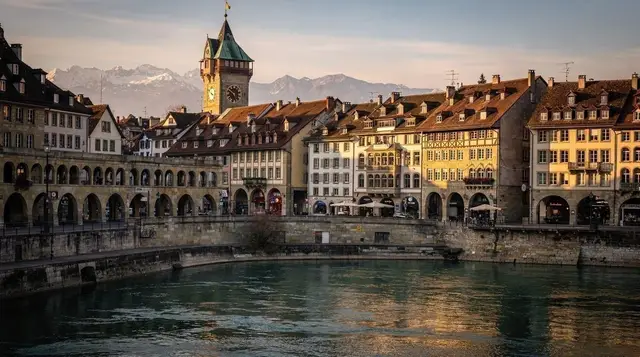
In Lucerne, the Chapel Bridge (Kapellbrücke) and the Water Tower are the obvious first stop, then the old town streets behind them, then the lakefront promenade with views towards Mount Pilatus. This half of the day needs no tickets and no booking.
For the afternoon, pick one of two directions, since trying to do both in a day trip is how people end up sprinting for the last train back:
- Rigi, reached by cogwheel railway and cable car from Lucerne’s lakeshore, with a boat ride included on some combination tickets — good views without technical hiking. Book this one if you’re set on it:
- Bürgenstock, a shorter and cheaper half-day option with a funicular and the cliff-side Hammetschwand lift, better if you’d rather not commit a whole afternoon:
Either way, check before you go: mountain lifts in this region close for scheduled maintenance in spring (typically April–May) and again in autumn (October–November), and this is the single most common thing that wrecks a first-timer’s Lucerne day. Confirm the lift is running on the operator’s own site the morning you travel, not from a blog post written months earlier. For the full comparison, see mount Pilatus guide and mount Rigi guide — Pilatus is the more dramatic ride but has a longer closure window most years.
Take the early-evening train back to Zurich; the last direct connections run until around midnight, but don’t cut it fine after a day trip when you’re tired and the timetable app has a strong signal but your phone battery doesn’t. For the transport museum if you have spare time before your train, Swiss museum of transport, Lucerne is next to the station on the lake side.
First-timer mistake to skip: trying to combine Lucerne and a mountain excursion with the Rhine Falls in one day. It’s three separate directions from Zurich and each deserves its own day at this pace — see Lucerne day trip for a Lucerne-only version of this day if you want more time there.
Day 3: Rhine Falls, then home
The Rhine Falls (Rheinfall) near Schaffhausen are Europe’s largest waterfall by volume, and they’re genuinely worth the roughly 50-minute train from Zurich HB — this is the stop most first-timers underrate before visiting and overrate afterwards, meaning don’t expect Niagara, but the boat ride right up to the rock in the middle of the falls is worth the ticket:
a short boat trip to the rock at the centre of the Rhine FallsGet off at Neuhausen Rheinfall station, not Schaffhausen, for the closest walk to the falls viewpoints on the south side; Schaffhausen station is a few minutes further and better if you also want to see the old town first. Full route and platform notes are in Rhine Falls visiting guide.
If your flight isn’t until evening, add on Stein am Rhein — a genuinely well-preserved medieval town on the Rhine, about 25 minutes further by train or a scenic hour by river boat from the Falls in summer. It’s smaller and less crowded than Lucerne, which makes it a good contrast on a last day.
Head back to Zurich HB with enough buffer for the airport train — allow at least 45 minutes from HB to ZRH check-in door, more at peak times. See luggage and left luggage Zurich if you need to store bags for a last few hours in the city first.
First-timer mistake to skip: treating the Rhine Falls as a full-day trip. Two to three hours including the boat is enough for most people; padding this day with Stein am Rhein or an early city stop is a better use of the time than lingering at the viewpoints.
A realistic budget for the three days
Zurich is one of the most expensive cities in Europe, and Lucerne isn’t far behind. These are real 2026 prices per person, not promotional ones.
| Item | Budget | Mid-range |
|---|---|---|
| Accommodation (per night) | CHF 90–140 (hostel dorm or basic hotel) | CHF 200–320 |
| Lunch | CHF 15–22 (bakery, kebab, self-service) | CHF 28–45 (sit-down restaurant) |
| Dinner | CHF 25–35 | CHF 45–75 |
| Zurich–Lucerne return train | CHF 44 (half fare) / CHF 88 (full fare) | same |
| Zurich–Rhine Falls return train | CHF 40 (half fare) / CHF 80 (full fare) | same |
| Rigi round trip from Lucerne | from CHF 65 | — |
| Rhine Falls boat trip | CHF 6–20 depending on route | — |
For transport, a Half Fare Card (CHF 120, valid one month) pays for itself over these two day trips alone if you’re travelling as an individual, and a Swiss Travel Pass is usually only worth it if you’re adding more train travel or museum visits beyond this three-day route — the full comparison is in Swiss Travel Pass guide and Zurich Card vs Swiss Travel Pass. For getting around Zurich itself on transit day and evenings, see getting around Zurich, ZVV.
Budget travellers can do these three days, excluding flights, for roughly CHF 280–380 total; mid-range travellers should plan for CHF 550–750. Full city-wide cost breakdowns are in Zurich travel costs and Zurich on a budget.
Mistakes worth avoiding on this route
A few things trip up first-timers on exactly this itinerary, beyond the lift-closure and one-day-too-many pitfalls already mentioned above:
- Assuming you need to book everything ahead. Domestic Swiss trains don’t require reservations and don’t sell out; the Rigi and Rhine Falls boats rarely do either outside peak August weekends.
- Over-tipping. Service is included on every bill in Switzerland. Rounding up to the nearest few francs is normal; a 15–20% tip on top, as in the US, is not expected and looks odd to staff.
- Expecting card payments everywhere without exception. Contactless is widely accepted, including on trains and at most kiosks, but small mountain huts and some market stalls are still cash-only — carry CHF 40–50 in notes as a buffer.
- Skipping Zurich itself to “save it for the mountains.” Zurich has more to it than a transit hub — see Zurich free things to do if the budget is tight on day one.
For a longer list that applies beyond this specific route, see first-time mistakes in Zurich.
FAQs: the 3-day Zurich, Lucerne and Rhine Falls route
Do I need the Swiss Travel Pass for this itinerary?
Not necessarily. For just these two return trips (Lucerne and Rhine Falls), paying with a Half Fare Card is usually cheaper than a Swiss Travel Pass, which pays off more clearly on trips of four days or longer with more train travel and museum entries included.
Is Lucerne really doable as a day trip from Zurich?
Yes. The train is 45 minutes each way, several times an hour, so a day trip gives roughly seven to eight hours in Lucerne if you leave by 09:00 and return by early evening.
How much should I budget for these three days?
Excluding flights, budget travellers should plan for roughly CHF 280–380 per person for accommodation, food, local trains and one paid excursion; mid-range travellers should plan for CHF 550–750.
When do mountain lifts near Lucerne close for maintenance?
Typically in spring (April–May) and again in autumn (October–November), though exact dates vary by operator and year. Always check the specific lift’s website on the morning you travel rather than relying on a fixed calendar.
Do I need to book the Rhine Falls boat trip in advance?
No, except on peak summer weekends. Tickets are normally sold on-site at Neuhausen or Schloss Laufen, and the boats run frequently through the day in season.
Can I fit Rigi and the Lucerne old town into the same day?
Yes, if you leave Zurich early. Allow roughly three hours for the Rigi round trip including transfers, and two to three hours for the old town and lakefront — a 09:00 departure from Zurich makes this comfortable.
Should I rent a car for this route?
No. All three legs — Zurich, Lucerne, the Rhine Falls — are well served by direct or one-change trains under an hour, and parking in central Zurich and Lucerne is expensive and limited. See car rental in Switzerland if you’re extending the trip into areas with less rail coverage.
What’s the best base for all three nights?
Zurich. Staying centrally there means you’re never more than an hour by train from either day trip, and you avoid packing and unpacking for a three-night stay — see where to stay in Zurich for area-by-area pricing.
tours.3 days
Verified deep-linked GetYourGuide tours. Book through these links and we earn a small commission at no cost to you.
GetYourGuide does not provide a product photo for this activity — the image shows the meeting point, photographed by us.