Zurich in spring: what to expect, month by month
What is Zurich like in spring?
Spring in Zurich (March to May) mixes early flowers in the old town with snow still lying on nearby peaks. Some mountain cable cars close for two to three weeks of annual maintenance in April and early May, and hotel rates sit well below summer levels except during the Sechseläuten holiday in mid-April.
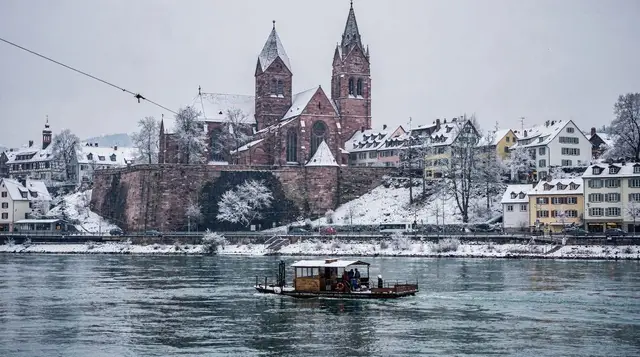
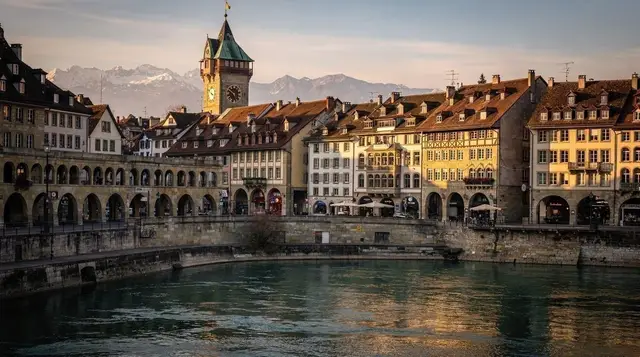
Spring is the season Zurich can’t quite make its mind up about. The old town fills with market stalls and outdoor seating the moment there’s a dry afternoon, then a cold front rolls down from the Alps and the terraces empty again. Understanding that split personality matters more than it does for Zurich in summer or Zurich in autumn, because spring is also the season when a chunk of the region’s biggest attractions are either half-open, fully closed for maintenance, or still buried in snow. Get the timing right and you get low prices and empty viewpoints. Get it wrong and you book a mountain excursion the week the cable car is shut.
How Zurich’s spring actually unfolds, month by month
The Swiss weather service and Zurich’s own long-term averages put spring’s daytime highs at roughly 10°C in March, 15°C in April and 19°C in May, with overnight lows still dipping close to freezing well into April. Rainfall is fairly evenly spread across the three months, at around 70 to 100mm each, so there’s no single “driest” week to chase — plan for showers in any given week and you won’t be caught out.
| Month | Typical daytime high | Typical overnight low | What’s actually going on |
|---|---|---|---|
| March | ~10°C | ~2°C | Old town cafés reopen terraces on dry days; snow still possible in the city itself; mountains fully wintry |
| April | ~15°C | ~5°C | Sechseläuten holiday mid-month; first cable car maintenance closures begin; parks turn green |
| May | ~19°C | ~9°C | Lidos open; most maintenance closures finished by late May; waterfalls near peak flow |
For a full year-round breakdown rather than just these three months, see Zurich weather month by month and the broader best time to visit Zurich guide.
Sechseläuten: the day Zurich declares winter over
The city’s spring centrepiece is Sechseläuten, held on the third Monday of April. Guild members from Zurich’s 26 historic guilds ride down Bahnhofstrasse in period costume, brass bands play, and the whole procession ends on Sechseläutenplatz at 6pm with the burning of the Böögg — a snowman built from cotton wool and packed with firecrackers, mounted on top of a bonfire. Tradition holds that the faster the head explodes, the better the summer will be; it’s taken seriously enough that the burn time gets reported in the local press the next morning.
Practically, this means Bahnhutstrasse and the surrounding old town streets close to traffic for most of the day, restaurants around Sechseläutenplatz get booked out, and hotel rates for that specific week rise above the spring average even though the rest of April is cheap. If a spring trip can be timed either side of Sechseläuten rather than during it, expect a calmer and cheaper city. For the fuller story of the guilds and the Böögg tradition, there’s a dedicated piece at Sechseläuten and the burning snowman, and it sits alongside the rest of the calendar in Zurich events and festivals.
The mountains are still half in winter
This is the detail that catches most spring visitors out: several of the cable cars and mountain railways that make day trips from Zurich worthwhile shut down for scheduled annual maintenance at some point between mid-April and late May. The exact dates move year to year and aren’t published far in advance, but the pattern is consistent — operators stagger the closures so the whole region isn’t shut at once, and each one typically lasts two to four weeks.
Titlis, Rigi and Pilatus have all closed sections of their networks in this window in recent years. It’s the single biggest way a spring day trip from Zurich gets ruined: someone builds an itinerary around a viewpoint, only to find the relevant gondola or cogwheel train is “closed for revision” when they check the operator’s site the week before.
The fix is simple but easy to skip — check the specific lift’s own maintenance calendar before booking transport or accommodation around it, not a general Switzerland Tourism page. The mountain excursions from Zurich overview flags which peaks tend to close when, and the individual guides for Titlis and Rigi carry more specific notes.
Lower, closer options fare better. The Uetliberg — Zurich’s own local hill, 20 minutes from Hauptbahnhof by train — rarely closes and can still have leftover snow on its summit ridge into March, which for many visitors is more of a novelty than an obstacle. If mountain scenery matters more than reaching a specific summit, exploring on two wheels while everything is still quiet is a reasonable spring alternative: a half-day city bike tour with a local guide covers the lakeside and old town at a pace that works even on a cool, showery morning.
Waterfalls in spate
Spring is genuinely a good reason to prioritise water over mountains. As snow at higher elevations starts melting through April and May, rivers and waterfalls swell noticeably. The Rhine Falls near Schaffhausen — Europe’s largest waterfall by volume, about 50 minutes from Zurich HB by train — carries far more water in late spring than it does in the low-flow months of late summer, and the extra volume is obvious even from the upper viewing platforms. The trade-off is spray: the lower platforms and boat trips get properly wet in high-flow weeks, so a rain jacket earns its place even on a dry day.
The full practicalities — train times, viewing platform layout, boat options — are in the Rhine Falls visiting guide, and it also works well paired with a short city stop: a combined Rhine Falls visit and open-top Zurich city tour covers both in a single day without needing a car. The Aare Gorge near Meiringen runs on a similar seasonal logic — walkways along the gorge floor sometimes stay closed into April if meltwater levels are still high, so it’s worth confirming the walkway is open before travelling out, rather than only checking opening months.
What spring actually costs
This is the season’s real advantage. Zurich is consistently ranked among the most expensive cities in Europe, and hotel rates track that reputation closely through the June-to-September peak and the Christmas market weeks. March and the first half of April sit well below that, with rates only climbing again around Sechseläuten week and whenever a trade fair is running at the Messe Zürich exhibition centre — worth checking against the calendar before booking, since fair dates can spike prices city-wide for a few days regardless of season.
Public transport costs don’t change with the season, but spring is a reasonable time to weigh up a multi-day pass against paying individually, since fewer excursions are viable anyway while some cable cars are shut. A Swiss Travel Pass covering unlimited second-class rail, bus and boat travel plus free entry to over 500 museums is worth it mainly for visitors doing several day trips in a short window; a Half Fare Card, which simply cuts every ticket in half, tends to work out cheaper for a slower spring trip built around two or three excursions rather than five.
Both are compared properly in Swiss Travel Pass versus Half Fare Card, and the pass itself gets a full breakdown in the Swiss Travel Pass guide. For a same-day, city-only pass, the Zürich Card bundles ZVV transport with free or discounted museum entry and is explained alongside the wider pass options in Zurich Card versus Swiss Travel Pass.
General cost expectations for the trip as a whole — meals, transport, typical daily spend — are covered in Zurich travel costs and Zurich on a budget, both of which apply just as well to a cheaper spring visit as to peak summer.
Day trips that make sense in spring — and ones that don’t
Lake and lowland trips hold up well from March onward. Lucerne, 45 minutes away by train, keeps its lakeside promenade and old town bridges open year-round regardless of mountain conditions. Bern, the federal capital about an hour from Zurich HB, is equally unaffected by altitude closures — a private option removes the need to plan around train timetables entirely, if a private day trip from Zurich to Bern fits the budget better than public transport for a group. Basel and its museums follow the same logic.
Rail journeys through dramatic scenery are a good middle ground: the route is fixed and rarely affected by seasonal closures even if the peaks either side of the line still have snow. A trip that combines the Gotthard line with a short hike, for instance, lets you see the Alps from a train window in early spring without depending on any single summit lift being open — a Gotthard line train journey and hike from Zurich is built around exactly that.
The full range of scenic rail options is in scenic trains and the dedicated Glacier Express and Bernina Express guides, both of which run through the shoulder season with only weather-related delays rather than scheduled shutdowns.
High-altitude trips are the ones to treat carefully. Jungfraujoch, at 3,454m, stays properly wintry until well into May regardless of what the weather is doing in Zurich, which for winter sports fans is an asset rather than a drawback — it’s one of the few places within day-trip range still guaranteeing snow in April. Zermatt and its glacier skiing run on the same logic.
If the goal is a mountain panorama rather than snow itself, mid-to-late May is the safer window, once most maintenance closures have finished and lower approach trails have cleared. For travellers who want mountain air without committing to a full cable car itinerary, a paragliding flight over the Alpine foothills near Zurich runs largely independent of any single lift’s maintenance schedule — a tandem paragliding flight near Zurich is weather-dependent rather than season-dependent.
For planning a spring itinerary end to end, day trips from Zurich lists the full set with rough travel times, and a general first visit works well against how many days in Zurich or a ready-made 3-day itinerary.
What to pack
Layers, not a single heavy coat. March can still produce a daytime high close to freezing and the odd snow flurry in the city itself, while a warm spell in late May can push into the low twenties. A proper waterproof jacket earns its place every month, given the fairly consistent 70–100mm of rain spread across March, April and May. Anyone heading up to a genuine mountain elevation, even for a few hours, should pack as if for winter — hat, gloves, proper footwear — independent of what the forecast says for Zurich itself, since a 20°C spring afternoon in the city can coexist with sub-zero conditions and packed snow at 3,000m.
Zurich in spring versus the rest of the year
Spring’s honest trade-off is choice against cost. Fewer mountain excursions are fully open, the lake is too cold to swim in, and the weather needs watching week to week — but hotel rates are close to their annual low outside Sechseläuten week, viewpoints and museums are markedly quieter than in summer, and the Rhine Falls are running fuller than at almost any other point in the year. For a full seasonal comparison against Zurich in summer, Zurich in autumn and Zurich in winter, the best time to visit Zurich guide lays out all four side by side.
Sechseläuten and Zurich’s spring calendar, answered
When exactly is spring in Zurich?
Meteorologically, spring runs from 1 March to 31 May. In practice, March still feels like winter in Zurich, with grey skies and a real chance of a late snow flurry, while May is the first month that reliably delivers t-shirt weather and long evenings.
What is Sechseläuten and when does it happen?
Sechseläuten is Zurich’s spring guild festival, held on the third Monday of April (with the parade sometimes shifting to the following Monday if it clashes with a public holiday). Guild members in historical costume parade down Bahnhofstrasse on horseback, and the day ends with the burning of the Böögg, a cotton-wool snowman packed with firecrackers, on Sechseläutenplatz.
Do mountain cable cars close in spring?
Yes, most operators schedule two to four weeks of annual maintenance between mid-April and late May, staggered so not everything shuts at once. Titlis, Rigi, Pilatus and Stanserhorn have all closed sections of their networks in this window in past years, so check the operator’s website for the exact dates before building a day trip around one peak.
Is it warm enough to swim in the Limmat or Lake Zurich in spring?
Not comfortably. The river and lake are fed by snowmelt and stay in single digits Celsius through March and April, warming into the low teens by late May. The lidos (Seebad Enge, Seebad Utoquai) open for the season around late April, but few people are actually swimming before June.
Are hotel prices lower in spring?
Generally yes. March and the first half of April are among the cheapest weeks of the year for Zurich hotels, sitting noticeably below the June to September peak. Prices spike around Sechseläuten week and any trade fair dates at the Messe Zürich exhibition centre, so check the city’s event calendar before booking.
What should I pack for Zurich in spring?
Layers and a proper waterproof jacket. March can still produce daytime highs near freezing and the odd snow shower; May can hit the low twenties. If a mountain excursion is planned, pack for winter regardless of the forecast in Zurich itself, since Titlis and Jungfraujoch sit well below freezing into May.
Is the Rhine Falls better in spring?
The flow increases through spring as alpine snow melts, and by late May the falls are noticeably fuller and louder than in the low-water months of late summer. The trade-off is that spray and mist are heavier too, so the lower viewing platforms get genuinely wet.
Which day trips work best in spring versus other seasons?
Lake and city-based trips (Lucerne, Rhine Falls, Bern) work well from March onward. High-altitude trips (Jungfraujoch, Titlis, Schilthorn) are more reliable from mid-May once maintenance closures have finished and lower mountain trails have lost most of their snow.
Seasonal experiences on GetYourGuide
Verified deep-linked GetYourGuide tours. Book through these links and we earn a small commission at no cost to you.
GetYourGuide does not provide a product photo for this activity — the image shows the meeting point, photographed by us.