Zug rarely makes the shortlist when people plan a Switzerland trip, which is exactly why it works as a half-day escape from Zurich. It is a small cantonal capital on a lake, with a compact medieval core, a striped clock tower older than the Swiss Confederation’s modern form, and a cake recipe the town has protected since 1915. None of it needs a full day, which is the point: you can be back in Zurich for dinner having seen something most visitors never do.
What actually makes Zug worth the detour
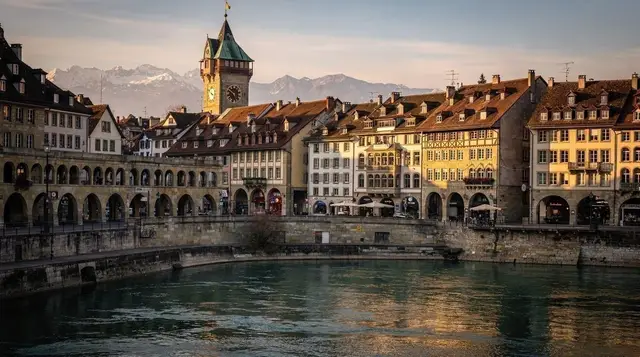
Zug’s old town survived largely intact, so the lakeside facades in ochre, red and pale green are original rather than reconstructed. The whole historic core is walkable in under an hour, which keeps a Zug stop honest: budget two to three hours for the town itself, add the Zugerberg or a slice of cake and you have filled a satisfying half-day without padding it out. This is not a place to build a two-night stay around, and treating it as one will leave you hunting for things to do on day two. As a stop bolted onto a wider Central Switzerland trip, or a deliberate slow afternoon out of Zurich, it earns its place.
Getting from Zurich to Zug
Direct trains leave Zurich HB roughly every 15 to 30 minutes and reach Zug in about 25 minutes, making it one of the closer day-trip options covered in this guide, alongside day trips from Zurich further afield. A second-class single costs around CHF 15-18; a return on the Swiss Travel Pass or with a Half Fare Card cuts that meaningfully if you are already carrying either for a longer stay.
Zug’s own station, Zug Bahnhof, sits a five-minute walk from the lake and the edge of the old town, so there is no local transfer needed on arrival. For the wider logistics of moving around the region by rail, see Swiss trains explained and getting around Zurich on the ZVV for the city end of the journey.
| From Zurich HB | Journey time | Typical fare (2nd class, one way) |
|---|---|---|
| Direct IR/IC train | ~25 minutes | CHF 15-18 |
| With Half Fare Card | ~25 minutes | CHF 8-9 |
| With Swiss Travel Pass | ~25 minutes | included |
The old town and the Zytturm clock tower
The Zytturm, Zug’s clock tower, dates from the 13th century and carries a blue-and-white tiled roof and a clock face with a rare 24-hour dial alongside a smaller astronomical one. It once formed part of the town’s fortifications and is now the visual anchor of every postcard shot of Zug, framed against the lake. Walking under its arch takes you into the old town proper: narrow lanes lined with oriel windows, a fish-market square, and the parish church of St Oswald with a Gothic tower that predates the Reformation. None of these sights charge admission and none need more than a passing look, which is why the whole circuit fits inside an hour if you are not lingering over coffee.
If you want the fuller Central Switzerland picture before committing to a single stop, Zug vs Lucerne and the best mountain excursions from Zurich both help place Zug against its better-known neighbours.
Lake Zug and the waterfront promenade
The Zugersee is smaller and quieter than Lake Lucerne, and the town’s waterfront promenade, the Seepromenade, runs along it with benches, occasional public swimming spots in summer and views south towards the Rigi and the Mythen peaks on a clear day. It is a genuinely pleasant place to sit for twenty minutes with a coffee rather than a must-do attraction, and that low-key quality is consistent with Zug generally: nothing here is spectacular, but little of it disappoints either. Boat trips run seasonally on the lake; if cruising is the priority for your day, the routes on Lake Lucerne boat trips are more developed and frequent.
Zuger Kirschtorte: the cake worth the calories
Zuger Kirschtorte is a layered sponge and almond-meringue cake, soaked in kirsch (cherry brandy) rather than made with fresh cherries, which surprises first-time visitors expecting a fruit tart. Recipes have been protected in the canton since the 1910s, and several bakeries in the old town, including long-standing family patisseries near the Kolinplatz, sell it by the slice for around CHF 7-9 or as a whole cake vacuum-packed for travel, typically CHF 35-50 depending on size.
It is genuinely alcoholic in flavour, not a token hint, so it is not one for children or anyone driving straight afterwards. If chocolate and cheese interest you more than kirsch cake, Swiss chocolate experiences in Zurich and a Swiss cheese dairies day trip cover those separately.
Up to the Zugerberg
A funicular (the Zugerbergbahn) runs from a stop a short bus ride from the old town up to the Zugerberg, a forested ridge above the town, in about 10 minutes. From the top, on a clear day, you get a view down over the lake towards the Alps, plus walking trails and a restaurant. It is a modest outing rather than a headline mountain excursion on the scale of the ones covered in best mountain excursions from Zurich or the best hikes near Zurich, and cloud cover erases the payoff entirely, so check the forecast before committing the time. Return fare is roughly CHF 10-14.
Day trips and add-ons from Zug
Zug’s real strength is as a hinge point rather than a solo destination. It sits on the direct line between Zurich and Lucerne, with onward connections towards Schwyz and Einsiedeln, so it slots naturally into a longer loop through Schwyz and Einsiedeln or Lucerne rather than standing alone.
Zug is also the base for reaching the Mythen and Stoos region without backtracking through Zurich. A guided option covering the area is the Zug Mythen region guided hike with gondola rides, which handles transport and gondola tickets for a half-day out. For a ridge walk closer to Zug itself, the guided Stoos ridge hike with transport from Zug covers one of the more scenic short hikes in the canton without needing your own car.
Zug’s newer identity as “Crypto Valley” — a nickname earned when the canton’s low taxes and early acceptance of Bitcoin for municipal payments drew a cluster of blockchain firms to the town from 2016 onward — is now covered by a dedicated walking tour, the Zug Crypto Valley walking tour with a Swiss aperitif, which mixes the old town with this more recent history and a drink at the end.
If you would rather have the old town and the Ägerisee (Lake Ägeri) covered for you from Zurich, the private day trip from Zurich to Zug’s old town and Lake Ägeri is the closest thing to a guided version of this whole page.
Anyone extending the day towards Lucerne can add the Rigi separately: the classic Rigi round trip from Lucerne is a well-worn combination, though note that mountain gondolas and cable cars in the region routinely close for maintenance in spring and autumn, so check operating dates before building a whole day around one summit — see Mount Rigi and the Rigi guide for the detail.
Where to eat, and what to skip
Lunch options cluster around the old town and the lakefront: a bratwurst or sandwich from a bakery runs CHF 8-12, a sit-down lunch with a main course CHF 22-30, and a proper dinner with a drink CHF 45-65, in line with the rest of Central Switzerland. What is skippable is the handful of lakeside cafés charging a premium purely for the view with mediocre food; walking one or two streets back into the old town usually finds better value for the same quality. Do not plan a Zug visit around Sunday shopping — like most of Switzerland, shops here close, and only cafés and restaurants stay open.
| Item | Typical cost |
|---|---|
| Coffee | CHF 5-6 |
| Slice of Zuger Kirschtorte | CHF 7-9 |
| Simple lunch | CHF 20-28 |
| Sit-down dinner with a drink | CHF 45-65 |
| Zugerberg funicular return | CHF 10-14 |
A relaxed half-day plan
The simplest way to use Zug is to resist the urge to schedule it. Arrive by train, walk the short stretch to the lake, and start at the water rather than in the old town: the light on the facades is easier to read from the promenade, and you get a feel for the town’s scale before you head into the lanes. From there, loop back through the Zytturm arch, wander the old town without a fixed route, and stop for cake when something looks good. The town is small enough that you cannot really get lost, and the pleasure of the place comes from that lack of pressure.
If the weather turns, Zug is forgiving. Cafés and bakeries are plentiful, the old town is compact enough to dip in and out of between showers, and the train home is never far away. A grey day costs you the Zugerberg view and the lake colours, but not the whole trip, which is more than can be said for many mountain-led excursions.
Choosing the right season
Autumn is a quiet favourite: the crowds that fill the larger lake towns are absent, and the lakefront is pleasant for a long walk. Summer suits anyone who wants to linger by the water, while winter brings the weekend Christmas market and a cosier, indoor-leaning visit. For month-by-month planning, Zurich in autumn and Zurich in summer give a good sense of what the weather and the daylight will allow on either side of a Zug stop.
Zug with children
Zug is an easy first day trip for families because nothing in it is demanding. The flat lakefront path suits small legs and pushchairs, the old town is short enough to hold a child’s attention, and a funicular ride is an event in itself for younger travellers. Keep the Kirschtorte for the adults, since it is properly alcoholic, and offer a plain bakery treat instead. For more ideas on keeping a younger group busy, see family day trips from Zurich and Zurich with kids.
Zug or Lucerne?
Many visitors weigh Zug against its better-known neighbour and wonder whether one day is enough for both. They are different experiences: Lucerne is busier, with more to see and a stronger sense of occasion, while Zug is calmer and more local in feel. If you only have time for one and want the classic postcard, the comparison in Zurich vs Lucerne will help; if you want an unhurried afternoon with few other tourists around, Zug is the easier choice. Doing both is possible on the same rail line, as long as you accept that each gets a shorter visit.
Small practical tips
- Check opening times for any bakery or café you have your heart set on before you travel, since small independent places keep their own hours.
- Carry a light layer even in summer, because the lakefront can feel breezy.
- Wear comfortable shoes: the old town is flat, but cobbled lanes are tiring over a long afternoon.
- If you are using a rail pass, confirm the route is covered before you buy a separate ticket.
- Leave a little slack in the schedule for the return train so the last hour is not spent watching the clock.
How much time to give Zug
Half a day covers the old town, the Zytturm and a cake stop comfortably. A full day allows the Zugerberg and a slow lunch by the lake, or an onward hop to Schwyz or Lucerne. Zug does not justify an overnight stay on its own merits; if you are building a longer Central Switzerland itinerary, it fits better as a stop within a 2-day or 3-day Zurich-based trip than as a base itself. For the broader question of how long to spend in the region as a whole, how many days in Zurich is the better starting point, and the day trips hub lists the full set of comparable options within reach of the city.
Frequently asked questions about visiting Zug
How do I get from Zurich to Zug?
Direct IR and IC trains run from Zurich HB to Zug roughly every 15-30 minutes and take about 25 minutes. A single second-class ticket costs around CHF 15-18 one way; the Swiss Travel Pass and Half Fare Card both cover the route.
Is Zug expensive?
It sits at the typical Swiss level: a coffee costs CHF 5-6, a simple lunch CHF 20-28, and a restaurant dinner with a drink CHF 45-65. It is not noticeably cheaper or pricier than Zurich or Lucerne.
What is Zuger Kirschtorte?
It is a layered almond-meringue cake soaked in kirsch (cherry brandy), a specialty of the canton since the early 1900s. A slice at a café bakery costs roughly CHF 7-9; whole cakes to take away are sold vacuum-packed for travel.
Is the Zugerberg worth the trip up?
The funicular from Zug takes about 10 minutes and gives a view over Lake Zug towards the Alps on a clear day. It is a modest excursion rather than a headline mountain trip, best treated as a bonus if you already have a few hours free.
Can I combine Zug with Lucerne or Schwyz in one day?
Yes. Zug sits on the direct rail line between Zurich and Lucerne, and Schwyz/Einsiedeln are a short onward connection, so a loop through two of these towns in a single day is realistic if you keep each stop to two or three hours.
Why is Zug called Crypto Valley?
Zug’s low cantonal taxes and early acceptance of Bitcoin for municipal payments in 2016 drew a cluster of blockchain and crypto companies to the town, and the nickname stuck. Guided walks now cover the district alongside the historic old town.
Is Zug family-friendly for a day trip?
Yes: the lakefront path, playgrounds and gentle old-town streets suit children well, and there is little steep walking unless you add the Zugerberg or a hike further into the mountains.