Zurich vs Lucerne: where to base yourself
Should I base myself in Zurich or Lucerne?
Zurich has more flights, more train connections and a livelier city itself, and works well if you want museums, nightlife and easy day trips in several directions. Lucerne sits directly on its own lake with Pilatus and Rigi a short boat or train ride away, which suits travellers whose main goal is mountains and scenery rather than a big city. Both are roughly 45 minutes apart by train, so neither choice locks you out of the other.
The real choice: gare and galleries, or a lake outside your window
Zurich and Lucerne get compared constantly, and the comparison usually collapses into “Zurich is a city, Lucerne is a postcard.” That is true as far as it goes, but it skips the part that actually affects your trip: what you can reach from each base, what each one costs per night, and how much time you burn getting to the mountains you probably came for.
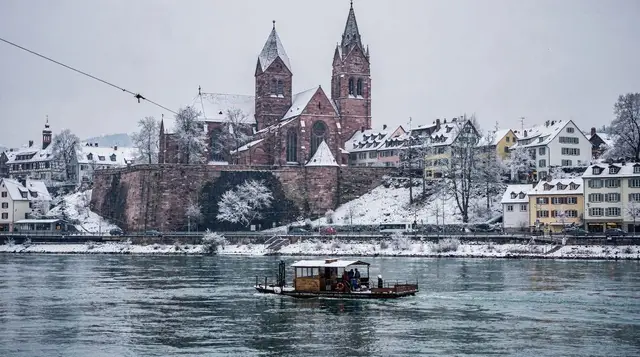
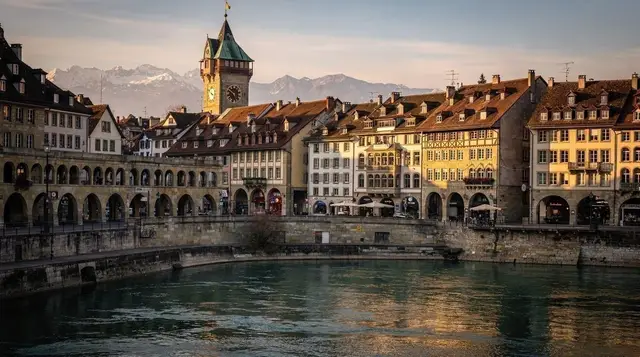
Zurich is Switzerland’s largest city, built around a lake but organised around a railway station, museums, banks and a serious food and nightlife scene. Lucerne is smaller, sits directly on Lake Lucerne, and has the Chapel Bridge, a compact old town, and two accessible mountains, Pilatus and Rigi, visible from its own waterfront. Neither is “better” in the abstract. The right base depends on whether your trip is mountain-led or city-led, and on how many nights you actually have.
They are also close enough that the decision is lower-stakes than it looks. Zurich HB to Lucerne is about 45 minutes by direct train, with departures roughly twice an hour. You are never more than a short train ride from the option you didn’t pick.
Prices: what each city actually costs
Zurich is consistently ranked among the most expensive cities in Europe, and Lucerne is not far behind it, so “cheaper” is relative rather than dramatic. Here is what a realistic budget looks like in each.
| Item | Zurich | Lucerne |
|---|---|---|
| Mid-range hotel double, per night | CHF 220-320 | CHF 180-260 |
| Budget hotel or hostel private room | CHF 130-180 | CHF 110-160 |
| Coffee, sitting down | CHF 4.50-6 | CHF 4.50-5.50 |
| Draft beer (5 dl) | CHF 7-9 | CHF 6.50-8.50 |
| Two-course dinner, mid-range restaurant | CHF 45-65 per person | CHF 40-60 per person |
| Sit-down fondue for two | CHF 80-110 | CHF 75-100 |
The gap narrows further once you account for what you get for the money. A Zurich hotel room in that price bracket is more often a functional city room; a Lucerne hotel in the same bracket more often has a lake or old-town view, simply because more of the city sits directly on the water. If a view matters to you, Lucerne’s money goes further even when the number on the invoice is similar. For a fuller breakdown of what a Swiss trip costs day to day, see Zurich travel costs and, if you’re weighing the wider budget question, Zurich on a budget.
Neither city rewards impulse spending. Restaurant menus rarely have anything under CHF 25, and a taxi from either main station to a hotel outside walking distance will run CHF 20-35. Budget accordingly rather than assuming Lucerne’s smaller size makes it meaningfully cheap.
Mountain access: this is where Lucerne wins outright
If your Switzerland trip is really an Alps trip with a city attached, this is the section that should decide things. From Lucerne’s lakefront, both Mount Pilatus and Mount Rigi are same-morning outings: a short boat crossing or train ride, then the ascent itself.
| Mountain | From Lucerne | From Zurich |
|---|---|---|
| Mount Pilatus | Boat + cable car/cogwheel, roughly 2-2.5 hours door to summit | Train to Lucerne first, then as left, add 45 min each way |
| Mount Rigi | Boat + cogwheel railway, roughly 1.5-2 hours door to summit | Train to Lucerne or Arth-Goldau first, add 45-60 min each way |
| Mount Titlis (Engelberg) | Train, roughly 1-1.5 hours to base station | Direct train from Zurich HB, around 1.5 hours |
Titlis is actually about even from either base, since the Engelberg line doesn’t route through central Lucerne. Pilatus and Rigi, though, clearly favour a Lucerne base: staying there buys you an extra hour or more on the mountain, which matters if you want to walk a section of trail rather than just ride up and back down. For side-by-side detail on all three, see Pilatus vs Rigi vs Titlis, or the individual Mount Pilatus guide and Mount Rigi guide.
One seasonal note that catches people out regardless of base: cable cars and cogwheel railways on both Pilatus and Rigi close for scheduled maintenance in spring and again in autumn, typically for one to two weeks at a time. Check the operator’s calendar before booking a mountain day around either peak, particularly if you’re travelling in April, May, or late October.
Zurich, meanwhile, is the better launchpad if your mountain ambitions run further afield: Jungfraujoch and the Bernese Oberland, St Gallen and Appenzell, or the Rhine Falls are all direct or near-direct from Zurich HB, whereas doing them from Lucerne usually means routing back through Zurich or Bern anyway.
a private day trip from Zurich that combines Mount Pilatus with time on Lake Lucerne is one way to get the mountain payoff without changing your hotel, if you’d rather keep Zurich as your base for the whole trip.
Getting around: transit, walkability, day trips in other directions
Zurich runs on the ZVV network — trams, buses, S-Bahn — and almost everything in the city centre is walkable regardless. Lucerne’s old town is smaller still and largely car-free; you can cross the entire centre on foot in 20 minutes. Neither city requires a car, and renting one adds parking costs (CHF 25-45 a day in either centre) without adding much, since the trains do the work.
Where Zurich pulls ahead is connectivity beyond the mountains. Basel, Bern, and St Gallen are all under an hour by direct train from Zurich HB, and the airport itself is about 10 minutes away by train, which matters if you’re flying in and out and want to minimise transfer time on both ends. Lucerne has good rail links too, but more of them route through Zurich or Bern rather than running direct, so a Lucerne base often means one extra change for anything beyond the immediate region.
If you’re using a rail pass, this asymmetry is worth factoring in: see Swiss Travel Pass vs Half Fare Card and, for the city-specific version of the same question, Zurich Card vs Swiss Travel Pass.
a direct transfer between Zurich Airport and Lucerne is worth pricing against the train if you’re arriving with heavy luggage and want to go straight to a Lucerne hotel without the change at Zurich HB.
Zurich: the case for and against
For: more flights and better long-distance rail; the wider museum and gallery scene, including the Kunsthaus and the Swiss National Museum; genuine nightlife in Zurich West and Langstrasse; the largest hotel selection at every budget; swimming in the lake and the Limmat in summer, for free.
Against: it’s a working city first and a tourist destination second, so the postcard moments take more seeking out; the old town is smaller and less immediately photogenic than Lucerne’s; nightly rates run somewhat higher on average.
Zurich suits travellers who want a real city base with day trips radiating outward in several directions — see day trips from Zurich for the fuller list — and who value flight and rail connectivity over having mountains on the doorstep. For a first Zurich visit specifically, Zurich in one day and how many days in Zurich cover the practical planning.
Lucerne: the case for and against
For: the Chapel Bridge and the old town are genuinely attractive rather than merely pleasant; Pilatus and Rigi are both same-morning outings from the lakefront; the city is small enough to see properly in a single afternoon, leaving the rest of your stay for the mountains and the lake; hotel views are more often lake or old-town rather than street.
Against: far fewer flights, so most visitors arrive via Zurich or Geneva anyway; nightlife is limited and the city quiets down early; the museum and gallery scene, while present, is a fraction of Zurich’s; onward rail connections beyond the immediate region more often involve a change.
Lucerne suits a shorter, mountain-focused trip, or a couple of nights added onto a longer Zurich-based itinerary specifically to be closer to Pilatus and Rigi. a guided day trip to Lucerne from Zurich covers the old town and a lake cruise if you decide a full overnight stay isn’t necessary.
If you can’t choose: base in Zurich, sleep once in Lucerne
The pragmatic answer for most itineraries of four days or more: keep Zurich as your main base for the flights, the connections and the city itself, and add one or two nights in Lucerne specifically to do Pilatus or Rigi properly without a return train hanging over the afternoon. This avoids re-packing for a full relocation while still buying you the extra mountain time that a Lucerne base provides.
a private cruise on Lake Lucerne is a reasonable way to use that overnight stay if the weather rules out a mountain ascent — the lake itself, ringed by Pilatus, Rigi and the Bürgenstock, is worth an evening on its own.
For structured planning either way, Zurich 3 days works as a city-only trip, while a longer Zurich rail-only 7 days itinerary naturally folds in a Lucerne overnight along the way.
How the two cities feel once you are there
Numbers only tell part of the story, so it helps to picture an ordinary evening in each place. In Zurich you finish a day at a museum or on the lakefront, then have a real choice: a restaurant in the old town, a bar in the west of the city, or simply a long walk along the water before an early night. The city keeps going whether or not visitors are in it, which is exactly why it feels like somewhere people live rather than somewhere people pass through. If you enjoy that texture, Zurich rewards a slow approach, and the old town walking guide is a good way to start.
In Lucerne the rhythm is different. The day revolves around the water and the mountains behind it: a morning on a boat or a summit, an afternoon wandering the old town and the covered bridge, a quiet dinner and an evening by the lake. It is a gentler, more scenic pace, and for many travellers it is precisely the Switzerland they pictured before they booked. The trade-off is that you will have seen most of the centre quickly, so the city itself is rarely the reason to stay long.
Choosing by trip length and style
A useful way to settle the question is to start from how many nights you have and what kind of traveller you are, rather than from the cities themselves.
- A short stay built around scenery: Lucerne gets you onto a boat or a mountain with the least fuss, and the old town fits comfortably around the edges.
- A city break with a day or two of excursions: Zurich gives you the museums, the food and the evenings, with Lucerne available as a single easy outing.
- A longer trip covering several regions: Zurich’s rail connections make it the more practical hub, as explained in Swiss trains explained.
- A trip with children or mixed interests: Zurich’s variety of things to do tends to keep everyone busy, while Lucerne’s lake and transport-themed attractions suit families who want to stay outdoors.
- A trip centred on nightlife, shopping or dining: Zurich, without much debate.
If you are still undecided after reading that list, the extra detail in where to stay in Zurich will help you judge which neighbourhood would suit you if Zurich wins, and the same logic applies to choosing a spot near the lake if Lucerne does.
Practical tips whichever base you choose
A few habits make either choice smoother. First, book your accommodation early for the months when the mountains and lakes are at their busiest, because both cities fill up quickly and the best-located rooms go first. Second, travel light between the two: a single carry-on bag makes the change between bases painless, and if you are flying in, the guide to getting from the airport to the city centre explains how simple the first leg is.
Third, build some slack into mountain days. Weather in the Alps changes quickly, and a clear morning in the city can turn into cloud on the summit, so keep one flexible day in your plan rather than fixing every outing in advance. Finally, remember that the lake itself is an attraction, not just a backdrop. If you want to see more of it than a single crossing allows, Lake Lucerne boat trips lays out the options, and a slow cruise is one of the most relaxing ways to spend a day whichever city you sleep in.
A final word on the decision
Most visitors agonise over this choice more than it deserves. Both cities are safe, clean, well connected and easy to navigate, and the train between them is quick enough that a wrong guess costs you very little. Pick Zurich if you want the city, the connections and the variety; pick Lucerne if you want the lake and the mountains outside your window. Whichever you choose, the other remains close at hand for a day, and that flexibility is the real advantage of travelling in a country this compact.
Popular Zurich experiences on GetYourGuide
Verified deep-linked GetYourGuide tours. Book through these links and we earn a small commission at no cost to you.
GetYourGuide does not provide a product photo for this activity — the image shows the meeting point, photographed by us.